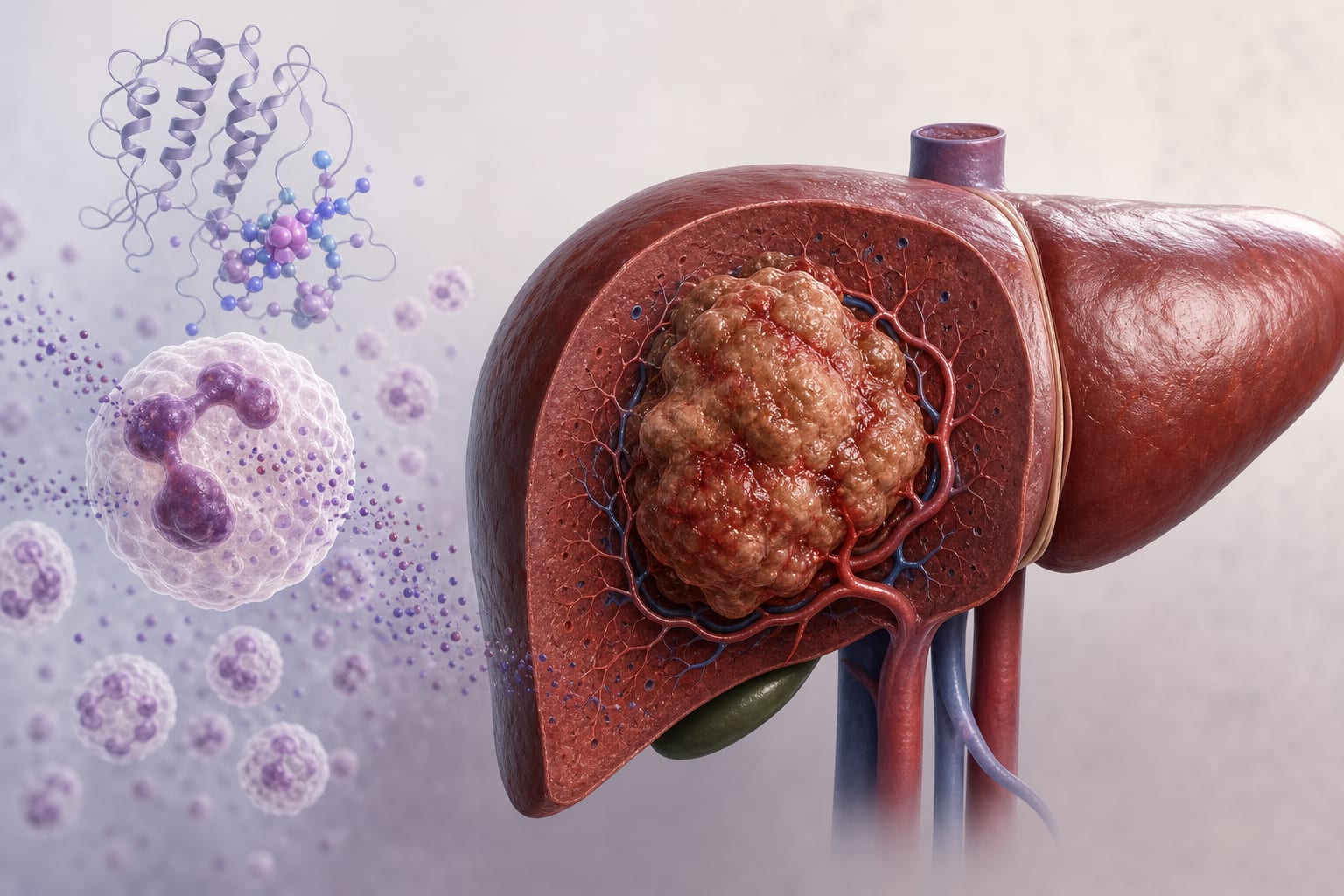
Clinical Report: Effective conversion therapy in a case of suspected hepatocellular carcinoma producing granulocyte colony-stimulating factor
Overview
This report describes a rare case of G-CSF-producing hepatocellular carcinoma (HCC) that was successfully downstaged through a combination of transcatheter arterial chemoembolization (TACE), targeted therapy, and immunotherapy, allowing for curative surgical resection. The patient exhibited significant leukocytosis but no specific symptoms, highlighting the atypical presentation of this malignancy.
Background
Granulocyte colony-stimulating factor (G-CSF) is linked to tumor progression in various malignancies, including hepatocellular carcinoma (HCC). G-CSF-producing HCC is rare and often associated with aggressive behavior and poor prognosis. Understanding its management is crucial for improving outcomes in patients with advanced HCC.
Data Highlights
No specific numerical data was provided in the article.
Key Findings
The patient had a massive tumor in the right hepatic lobe with significant leukocytosis but no symptoms.
Combination therapy with TACE, targeted therapy, and immunotherapy successfully downstaged the tumor to a resectable state.
Postoperative analysis confirmed strong G-CSF expression in the HCC tissue.
No recurrence was observed at the 6-month follow-up, and the patient remained in good general condition.
Clinicians should consider G-CSF-producing HCC in patients with unexplained leukocytosis.
Clinical Implications
This case underscores the potential for conversion therapy in managing initially unresectable HCC. Clinicians should be vigilant for G-CSF-producing HCC in patients presenting with leukocytosis, as timely intervention may lead to successful surgical outcomes.
Conclusion
The successful management of this rare case of G-CSF-producing HCC through conversion therapy provides valuable insights into treatment strategies for similar patients. Further studies are needed to validate these findings and optimize therapeutic approaches.
High-risk localized and locally advanced prostate cancer patients treated with apalutamide — a next generation neoadjuvant androgen-receptor pathway inhibitor (ARPI) — plus hormone therapy before and after prostate cancer surgery resulted in more major pathologic responses and reduced the risk of metastasis or death, meeting both primary endpoints, in an international phase 3 clinical trial led by principal investigator Mary-Ellen Taplin, MD, medical oncologist at Dana-Farber Cancer Institute, and Adam Kibel, MD, chair of the Department of Urology at Mass General Brigham.