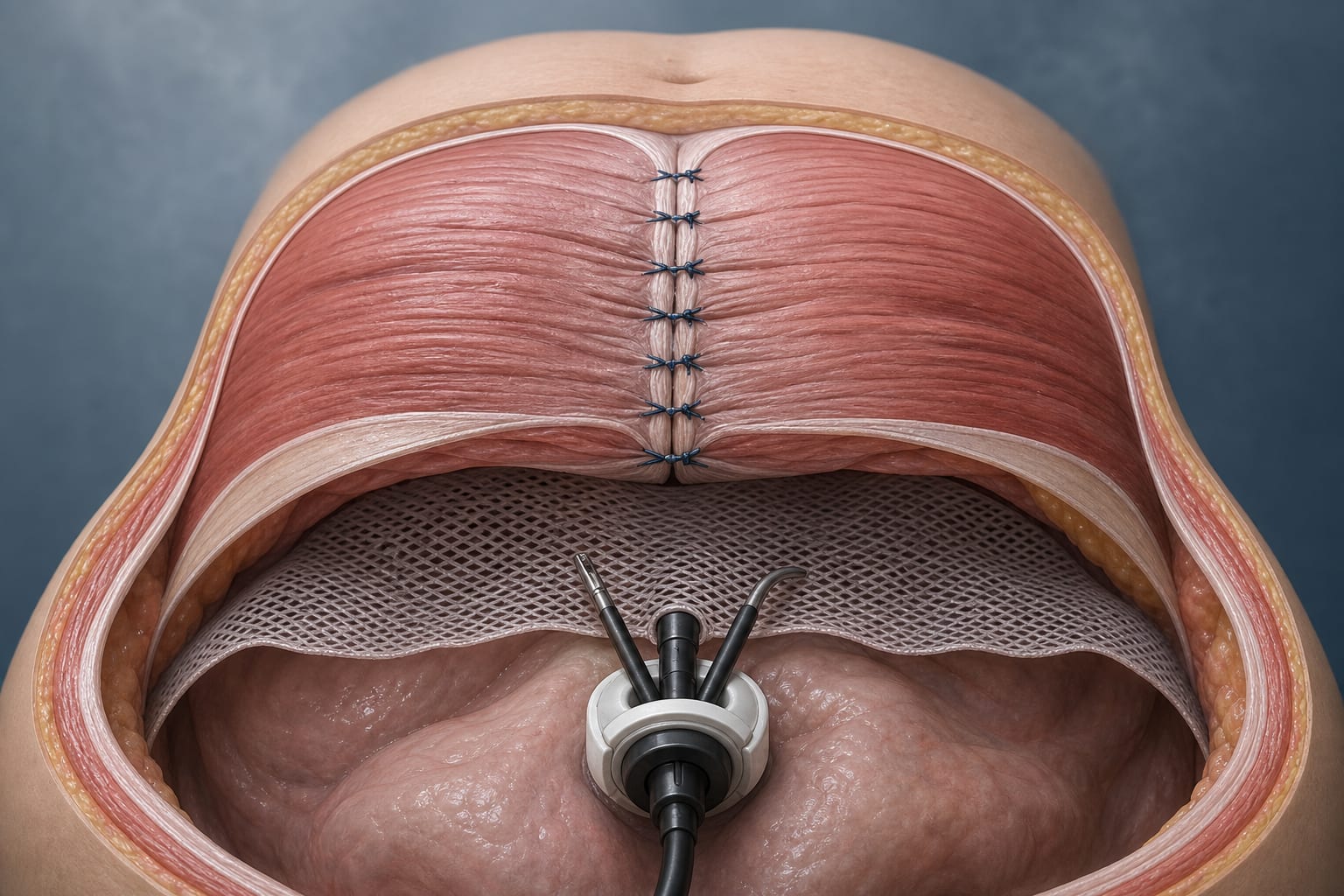
Omentopexy after laparoscopic sleeve gastrectomy in children and adolescents: is it effective in reducing post-operative complications? - Report - MDSpire
Efficacy of Omentopexy After Laparoscopic Sleeve Gastrectomy in Pediatric Obesity
Overview
This prospective study evaluated whether adding omentopexy to laparoscopic sleeve gastrectomy (LSG) in pediatric patients reduces early postoperative gastrointestinal complications and bleeding. Forty-eight morbidly obese children were randomized to LSG with or without omentopexy, with outcomes including postoperative nausea, vomiting, regurgitation, bleeding, and recovery parameters assessed.
Background
Pediatric obesity has risen significantly, with limited success from lifestyle and medical interventions in achieving sustainable weight loss. Laparoscopic sleeve gastrectomy (LSG) has emerged as an effective surgical option for managing severe pediatric obesity. However, early postoperative gastrointestinal complications such as leakage, nausea, vomiting, and regurgitation remain common. Omentopexy, a technique to fix the gastric sleeve and prevent torsion, has been proposed to reduce these complications and postoperative bleeding.
Data Highlights
Parameter
LSG with Omentopexy (n=24)
LSG without Omentopexy (n=24)
Mean Age (years)
Not specified
Not specified
Mean BMI (kg/m2)
≥35 with comorbidities or ≥40
≥35 with comorbidities or ≥40
Postoperative Nausea/Vomiting
Reduced incidence (exact values not provided)
Higher incidence (exact values not provided)
Postoperative Regurgitation
Reduced incidence
Higher incidence
Intraoperative Bleeding
Lower bleeding (quantitative data not specified)
Higher bleeding
Postoperative Hemoglobin Drop (POD1)
Less decrease
Greater decrease
Hospital Stay Duration
Shorter
Longer
Return to Normal Activities
Earlier
Delayed
Key Findings
Omentopexy during LSG significantly reduced early postoperative gastrointestinal symptoms such as nausea, vomiting, and regurgitation.
Fixation of the gastric sleeve by omentopexy likely prevents torsion and gastric stricture, contributing to symptom reduction.
Patients undergoing omentopexy experienced less intraoperative bleeding and smaller postoperative hemoglobin drops, indicating reduced surgical blood loss.
Omentopexy was associated with shorter hospital stays and quicker return to normal activities compared to LSG alone.
The randomized design ensured balanced distribution of patients, strengthening the validity of the comparative outcomes.
Clinical Implications
Incorporating omentopexy into laparoscopic sleeve gastrectomy for pediatric patients may enhance postoperative recovery by minimizing gastrointestinal complications and bleeding. Surgeons should consider omentopexy as a stabilizing technique to improve patient outcomes and reduce hospital stay duration. This approach could optimize the safety profile of LSG in the pediatric population.
Conclusion
Omentopexy performed alongside laparoscopic sleeve gastrectomy in pediatric patients appears to decrease early postoperative gastrointestinal complications and bleeding, facilitating faster recovery. This technique represents a valuable adjunct to improve surgical outcomes in pediatric bariatric surgery.
References
Al-Azhar University Hospitals Study (2015-2024) -- Evaluating Omentopexy in Pediatric LSG
Surgery and histopathology identified retained silk ligature with chronic inflammation at the site of a rare fistula presenting 3 years following vasectomy.