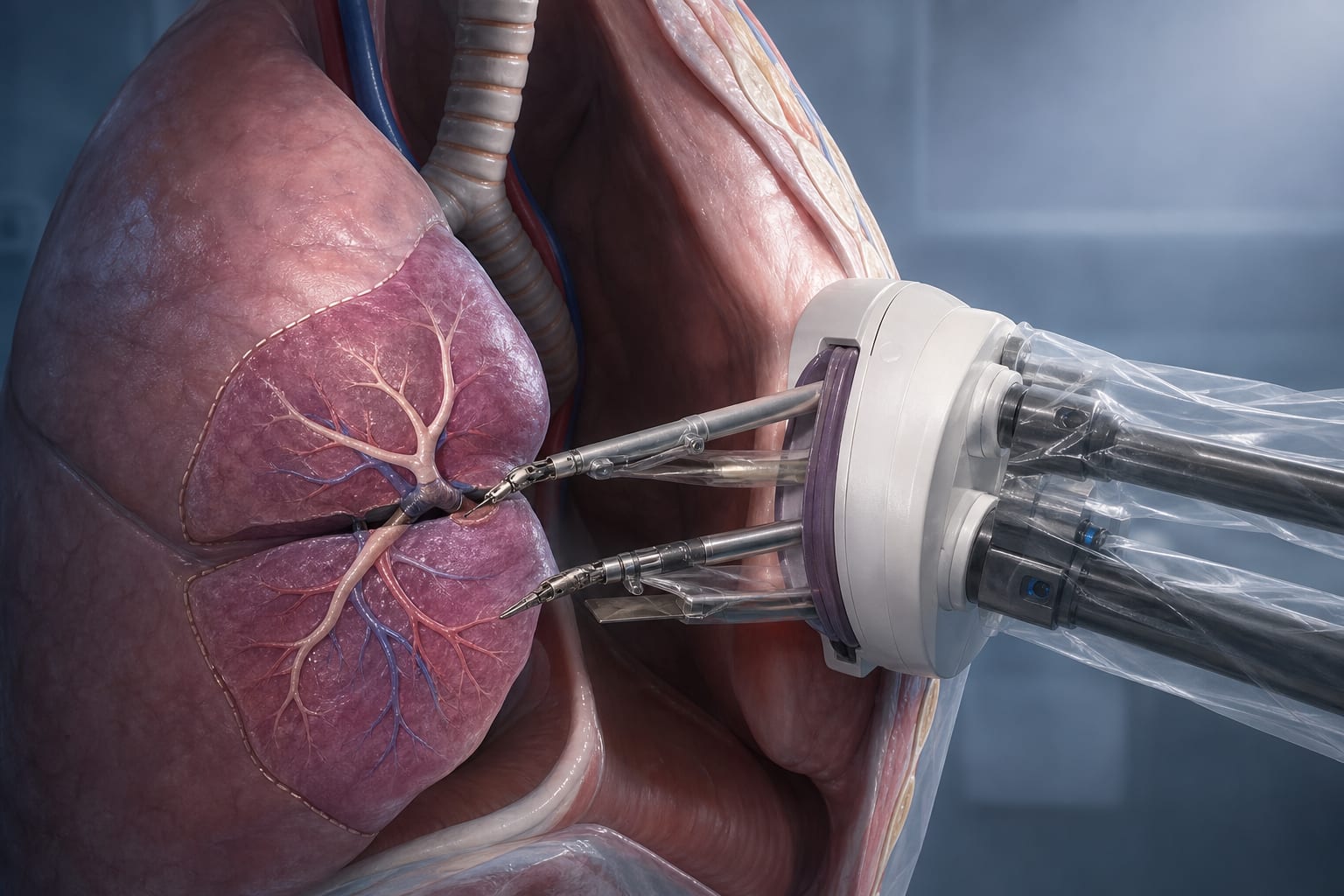
Clinical Report: Single-Port Robotic Segmentectomy for Non-Small Cell Lung Cancer
Overview
This study evaluates the safety and feasibility of single-port robotic segmentectomy using the da Vinci SP system for patients with non-small cell lung cancer.
Background
Robotic-assisted thoracic surgery has gained traction as a minimally invasive approach for anatomical segmentectomy in non-small cell lung cancer (NSCLC). The shift towards segmentectomy is driven by the increased detection of early-stage lung cancers through low-dose CT screening. Understanding the efficacy and safety of single-port robotic techniques is essential as they may offer advantages over traditional surgical methods.
Data Highlights
Group
Patients (n)
Operative Time (p-value)
Chest Tube Duration (p-value)
SP-RATS
50
< 0.001
0.015 (vs MP-RATS), 0.039 (vs VATS)
MP-RATS
75
VATS
220
Key Findings
All patients in the SP-RATS group achieved complete resection (R0) without conversion to open thoracotomy.
The SP-RATS group had a significantly shorter total operative time compared to the MP-RATS group.
No significant differences in postoperative complications or pain were observed among the groups.
The duration of chest tube drainage was significantly shorter in the SP-RATS group compared to both MP-RATS and VATS groups.
Pathological outcomes, including the number of harvested lymph nodes, were similar across all surgical approaches.
Clinical Implications
The results indicate that single-port robotic segmentectomy is a safe and effective option for patients with early-stage NSCLC.
Conclusion
Single-port robotic segmentectomy using the da Vinci SP system demonstrates promising short-term outcomes, warranting further investigation through larger prospective trials.