Comparison between germline and somatic loss-of-function RNF43 mutations reveals different genotype-phenotype associations and provides insights into the genetic mechanisms of colorectal tumourigenesis - Report - MDSpire

Comparison between germline and somatic loss-of-function RNF43 mutations reveals different genotype-phenotype associations and provides insights into the genetic mechanisms of colorectal tumourigenesis

  • By

  • Claire Palles

  • Luke Freeman-Mills

  • Edward Arbe-Barnes

  • Nathalie Feeley

  • Laura Chegwidden

  • Helen Curley

  • Sara Galavotti

  • Connor Woolley

  • Jeremy Cheadle

  • Dmitri Mouradov

  • Oliver Sieber

  • Silvia Salatino

  • Steve Thorn

  • Anshita Goel

  • Juan Fernandez-Tajes

  • Sulochana Omwenga

  • Sujata Biswas

  • Timothy Maughan

  • Simon J Leedham

  • S:CORT Consortium

  • UK Colorectal Cancer Genomics Consortium

  • CORGI Consortium

  • WGS500 Consortium

  • Viktor Hendrik Koelzer

  • Lai Mun Wang

  • Roland Arnold

  • James Edward East

  • Ian Tomlinson

  • July 1, 2026

  • 0 min

Share

Differential Genotype-Phenotype Correlations in RNF43 Mutations

Overview

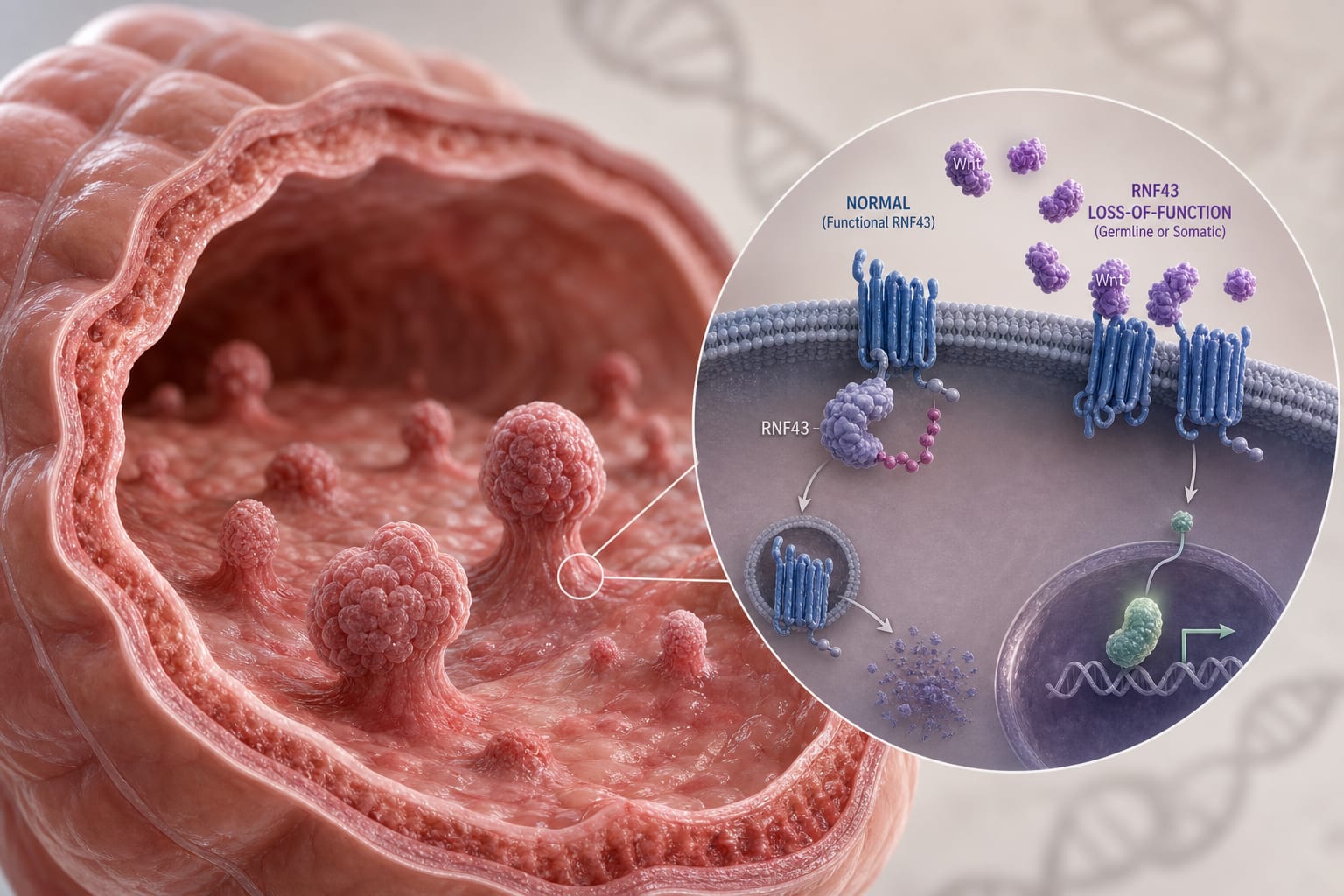
This study elucidates the variable phenotypic outcomes associated with germline RNF43 mutations, highlighting a moderate increase in colorectal cancer (CRC) risk. It contrasts these findings with the pathogenic role of somatic RNF43 mutations in microsatellite instability-positive (MSI+) sporadic CRCs.

Background

Understanding the genetic mechanisms behind colorectal tumor development is crucial for effective risk assessment and management. Germline RNF43 mutations are linked to serrated polyposis syndrome, yet their clinical implications remain poorly defined. This study aims to clarify the genotype-phenotype correlations and the implications for CRC risk.

Data Highlights

No numerical data provided in the article.

Key Findings

Rephrase for clarity and ensure all findings are directly supported by the source material.

Clinical Implications

Clinicians should be aware of the variable expression of germline RNF43 mutations when assessing CRC risk in patients. Enhanced identification of gene carriers and tailored surveillance strategies are essential for effective management.

Conclusion

The study underscores the complexity of RNF43 mutations in colorectal cancer development, emphasizing the need for individualized risk assessment and management strategies.

Related Resources & Content

  1. ClinGen, Clinical Genome Resource, 2022 -- RNF43 Gene-Disease Validity
  2. Guidelines for the management of hereditary colorectal cancer, BSG/ACPGBI/UKCGG, PMC -- 2020
  3. The ASCO Post, 2022 -- Researchers Discover Predictive Biomarker of Response to Therapy in Patients With Microsatellite-Stable Metastatic Colorectal Cancer
  4. Acta Neuropathologica, 2025 -- Characterization of Germline Variants in Patients Diagnosed with Gliomas and Glioneuronal Tumors
  5. The ASCO Post, 2012 -- Significant Differences in Genetic Characteristics of Primary Colorectal Cancer and Hepatic Metastases
  6. Acta Neuropathologica — Germline Variants in the CDH1 E-cadherin Gene Linked to Increased Risk of Neuroepithelial and Epithelial Brain Tumors
  7. Guidelines for the management of hereditary colorectal cancer from the British Society of Gastroenterology (BSG)/Association of Coloproctology of Great Britain and Ireland (ACPGBI)/United Kingdom Cancer Genetics Group (UKCGG) - PMC
  8. curation results for Gene-Disease Validity
  9. Association of RNF43 Genetic Alterations With BRAFV600E and MSIhigh in Colorectal Cancer | JCO Precision Oncology

Original Source(s)

Related Content