Clinical Report: Case Study of Guillain-Barré Syndrome with Reproductive System Involvement
Overview
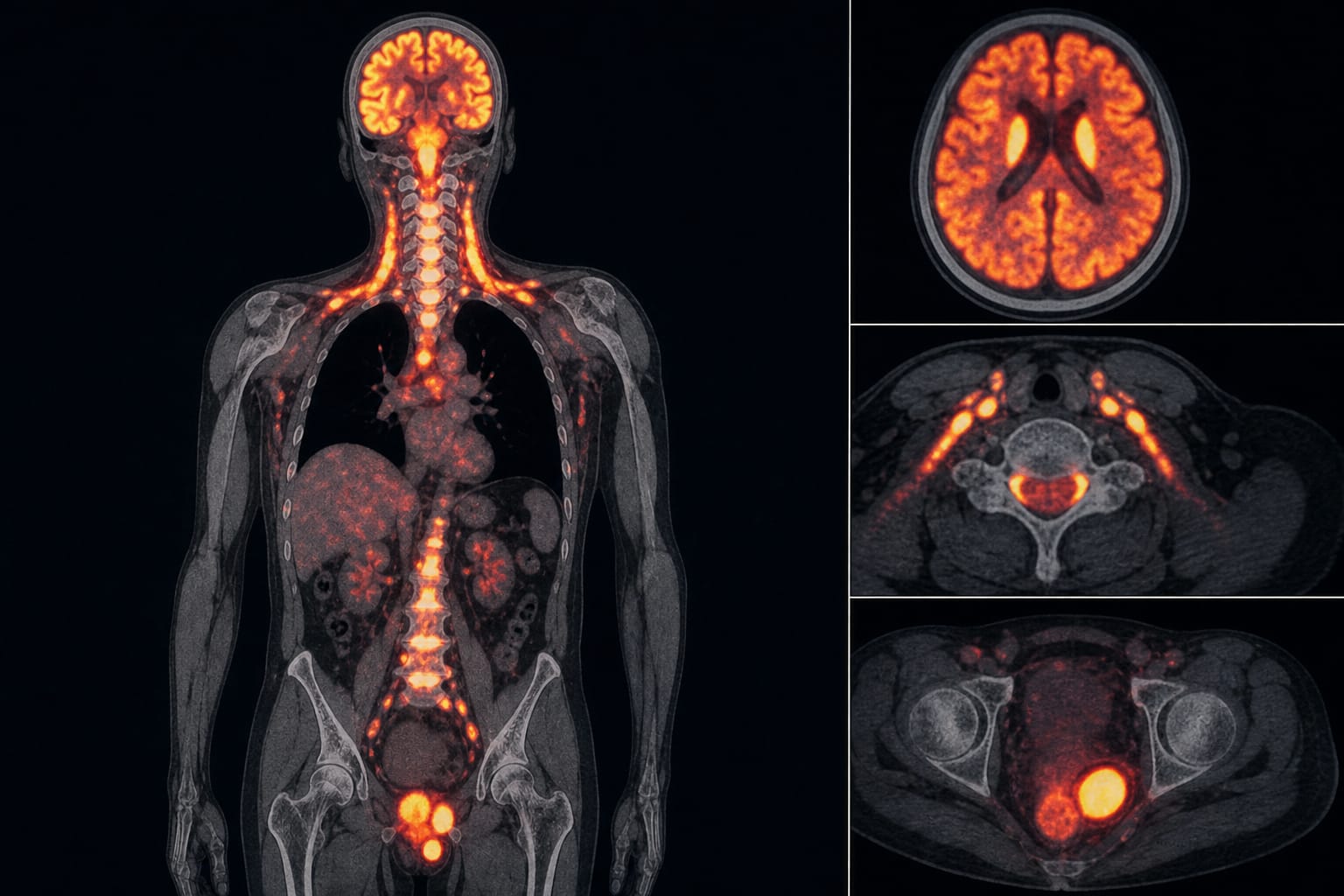
This report details a rare case of Guillain-Barré syndrome (GBS) in a 67-year-old man, where 18F-FDG PET/CT imaging revealed significant inflammatory involvement of the reproductive system. The findings highlight the utility of advanced imaging techniques in identifying atypical manifestations of GBS.
Background
Guillain-Barré syndrome is an acute inflammatory neuropathy that can lead to severe neurological deficits and respiratory failure. While peripheral nerve involvement is common, central nervous system and reproductive system involvement is rare, making this case particularly noteworthy. Understanding these atypical presentations is crucial for timely diagnosis and management.
Data Highlights
Imaging Findings
Description
18F-FDG PET/CT
Demonstrated multifocal hypermetabolism along nerve roots, cerebral cortex, hypothalamus, and medulla oblongata.
Right Testis
Significant inflammatory involvement identified.
Right Prostate
Increased FDG uptake indicating inflammation.
Histopathology
Revealed inflammatory infiltration with mixed T-cell and B-cell presence.
Key Findings
Guillain-Barré syndrome can present with atypical manifestations, including reproductive system involvement.
18F-FDG PET/CT is effective in assessing systemic inflammatory activity in GBS.
The case involved significant hypermetabolism in the right testis and prostate.
Histopathological examination confirmed orchitis with a mixed inflammatory infiltrate.
Standard treatment with intravenous immunoglobulin led to significant symptom improvement.
Clinical Implications
Healthcare professionals should consider the possibility of atypical presentations of GBS, including reproductive system involvement, especially in patients with unexplained systemic inflammatory responses. Advanced imaging techniques like 18F-FDG PET/CT can aid in the comprehensive assessment of such cases.
Conclusion
This case underscores the importance of recognizing rare manifestations of Guillain-Barré syndrome and the role of advanced imaging in guiding diagnosis and treatment.