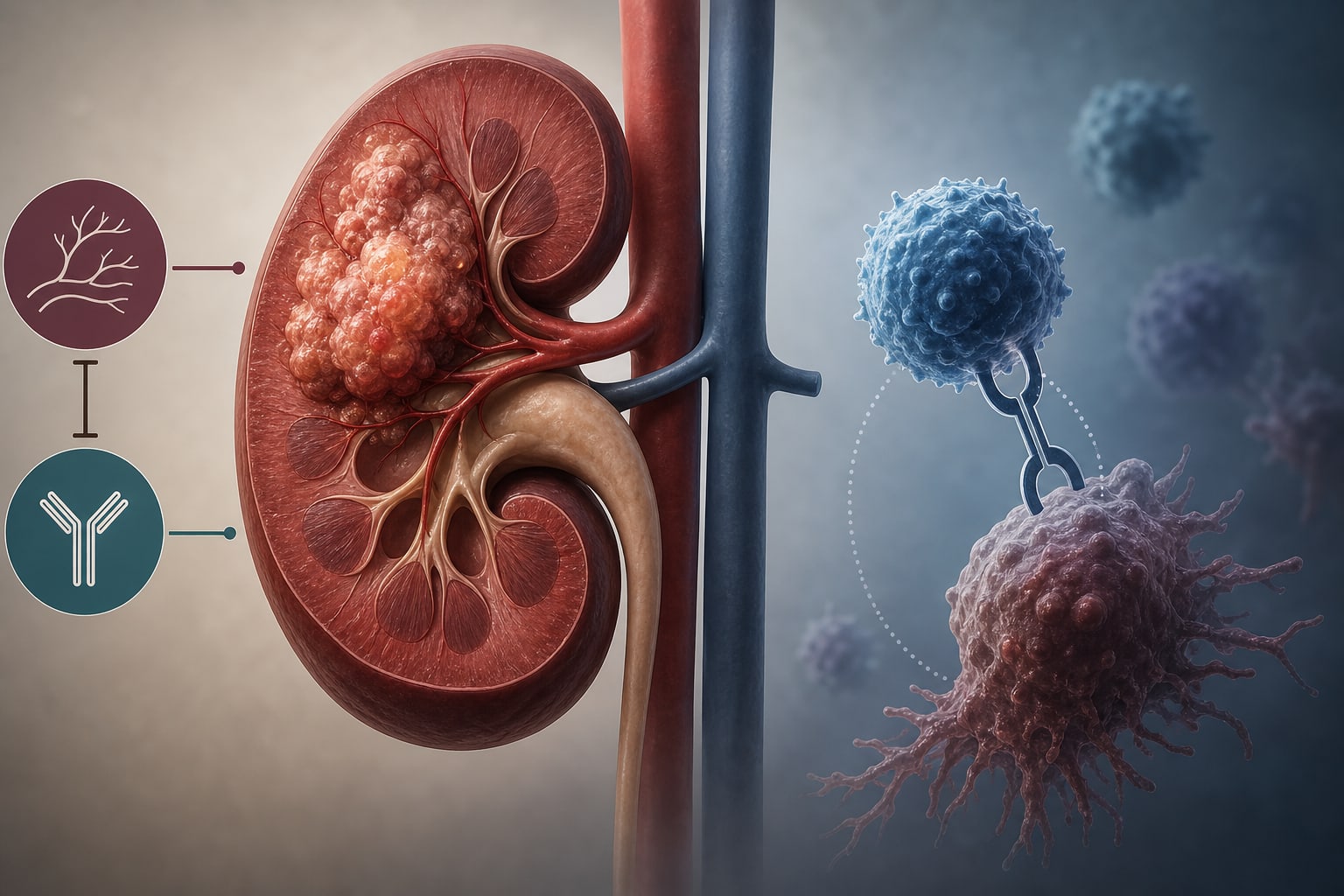
Clinical Report: Radiogenomic Assessment of NK Cell Cytotoxicity in ccRCC
Overview
This study presents a noninvasive CT-based radiogenomic framework for identifying biomarkers associated with NK cell cytotoxicity in clear cell renal cell carcinoma (ccRCC). Key findings include the identification of ICAM1 and RAET1E as significant indicators of tumor stage and survival outcomes.
Background
Clear cell renal cell carcinoma (ccRCC) is characterized by tumor heterogeneity and a complex immune microenvironment. Traditional tissue sampling methods can be invasive and may not accurately reflect the tumor's molecular landscape. This study explores the potential of CT imaging to noninvasively assess biomarkers related to NK cell activity, which could enhance patient stratification and treatment planning.
Data Highlights
Biomarker
AUC
Expression Association
ICAM1
75.7%
Higher in advanced tumor stage
RAET1E
67.3%
Lower in advanced tumor stage
Key Findings
Identification of 835 imaging-associated genes enriched in immune-related pathways.
ICAM1 and RAET1E showed strong radiogenomic associations with AUCs of 75.7% and 67.3%, respectively.
Immunohistochemistry confirmed increased ICAM1 and decreased RAET1E expression in ccRCC tissues.
Higher ICAM1 and lower RAET1E expression correlated with advanced tumor stage and poorer survival outcomes.
External validation of the L1-SVM model achieved predictive accuracies of 76.92% for ICAM1 and 73.08% for RAET1E.
Clinical Implications
The findings suggest that CT-derived radiomic features can serve as noninvasive indicators of immune activity in ccRCC. Clinicians may consider integrating these imaging biomarkers into routine assessments to better inform treatment decisions and patient management.
Conclusion
This study highlights the potential of radiogenomic analysis in ccRCC, particularly in identifying biomarkers related to NK cell cytotoxicity. Further research is warranted to validate these findings and explore their clinical applications.