Integrative single-cell and bulk transcriptomic analyses identify DRAM1 as a candidate gene from fibroblast-associated transcriptional programs in colorectal cancer - Report - MDSpire
Advertisement
Integrative single-cell and bulk transcriptomic analyses identify DRAM1 as a candidate gene from fibroblast-associated transcriptional programs in colorectal cancer
Clinical Report: DRAM1 as a Potential Gene Linked to Fibroblast Networks in CRC
Overview
Expand on the implications of DRAM1's role in tumor progression and therapeutic targeting.
Background
Colorectal cancer (CRC) is a leading cause of cancer-related mortality, with significant challenges in treatment resistance and recurrence. The tumor microenvironment, particularly the role of fibroblasts, is crucial in influencing tumor behavior and therapeutic responses. Understanding the transcriptional programs of fibroblasts may provide insights into CRC progression and potential therapeutic strategies.
Data Highlights
No numerical data available.
Key Findings
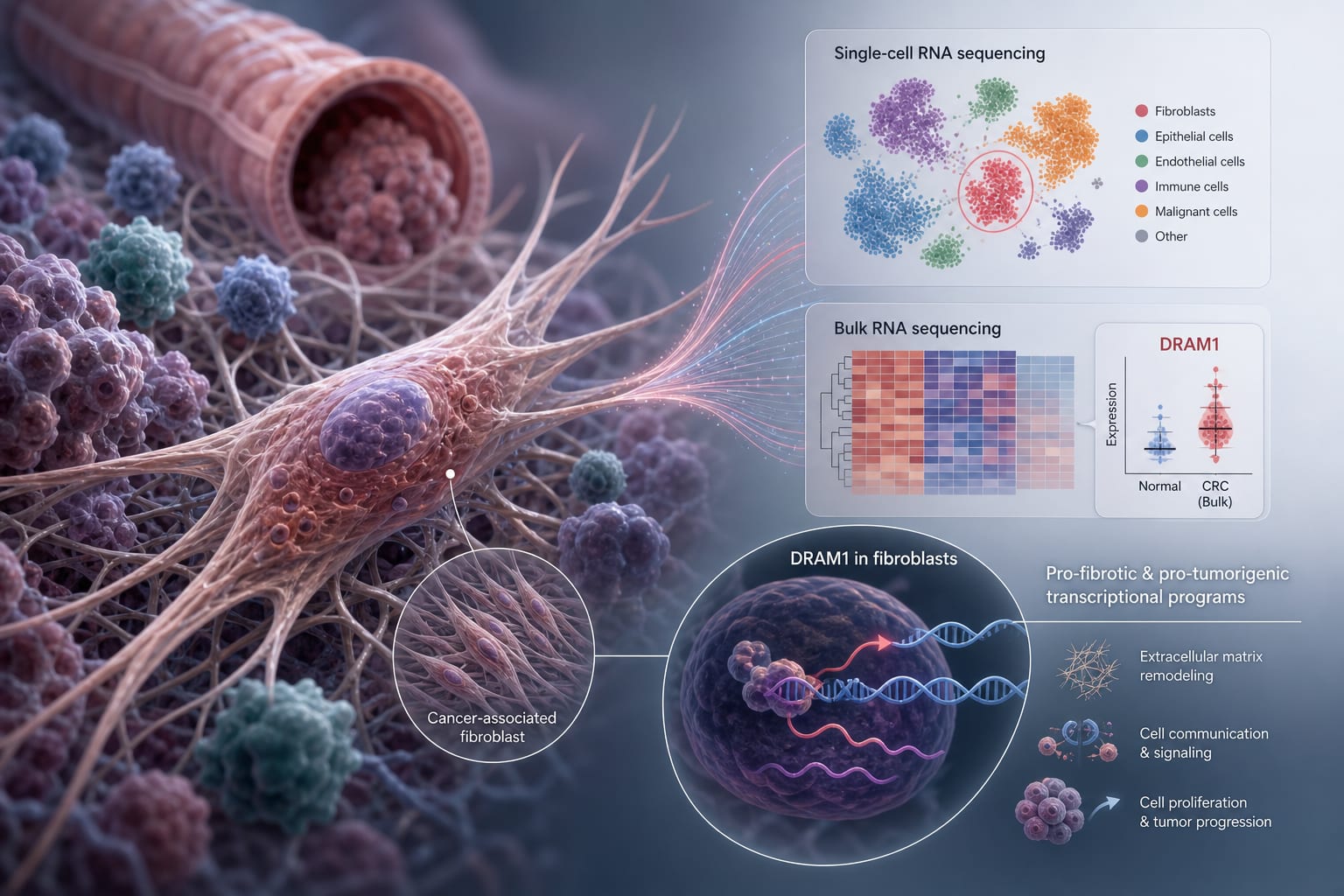
Seventeen cell clusters corresponding to ten major cell lineages were identified in CRC tissues.
Extensive signaling interactions among stromal, epithelial, endothelial, and immune cells were observed, with fibroblasts playing a central role.
DRAM1 was validated as a core gene with elevated expression in CRC tissues and cell lines.
Loss-of-function assays indicated that silencing DRAM1 enhanced CRC cell proliferation, migration, and invasion.
Clinical Implications
The identification of DRAM1 as a candidate gene linked to fibroblast networks in CRC suggests that targeting this gene may influence tumor behavior and therapeutic responses. Further investigation into the role of DRAM1 in fibroblast-mediated interactions could enhance understanding of CRC progression and inform treatment strategies.
Conclusion
Highlight the necessity for further research on DRAM1 in the tumor microenvironment.