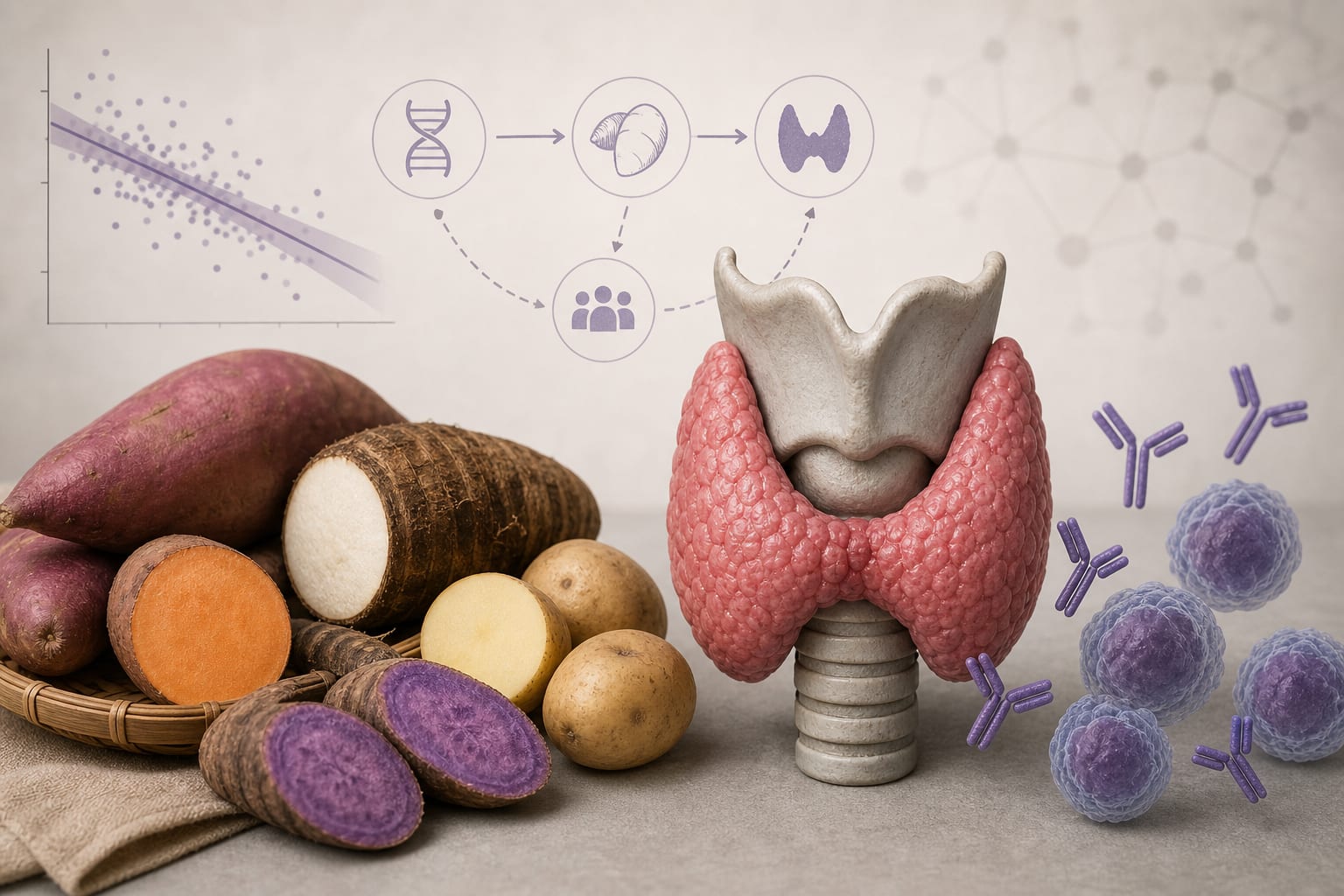
Consumption of tubers is linked to a lower likelihood of developing Hashimoto’s thyroiditis
Overview
This study investigates the relationship between tuber consumption and Hashimoto's thyroiditis (HT) prevalence in a large community cohort. It also examines the association of high-dose folic acid supplementation with HT risk.
Background
Hashimoto's thyroiditis is the leading cause of autoimmune hypothyroidism, with increasing incidence linked to environmental and lifestyle factors. This study investigates dietary influences on HT risk in a community-based cohort.
Data Highlights
Variable
Odds Ratio (OR)
95% Confidence Interval (CI)
P-value
Female sex
1.97
1.68 to 2.33
-
Total cholesterol
1.13
1.02 to 1.26
-
Fasting glucose
0.95
0.91 to 1.00
-
Tuber intake (50-100 g/day)
0.75
0.64 to 0.88
0.001
Vegetable intake
0.87
0.79 to 0.96
0.006
Excessive tuber intake (>100 g/day)
1.50
-
-
Key Findings
HT prevalence was 29.3% in the study cohort.
Female sex, elevated total cholesterol, and lower fasting glucose were identified as independent metabolic predictors of HT.
Adequate tuber intake (50–100 g/day) was associated with a reduced risk of HT (OR 0.75).
Excessive tuber intake (>100 g/day) was linked to an increased risk of HT (OR 1.50).