A study on the correlation between novel inflammatory indices and severity of coronary artery lesions in patients with stable coronary artery disease - Report - MDSpire
Advertisement
A study on the correlation between novel inflammatory indices and severity of coronary artery lesions in patients with stable coronary artery disease
Clinical Report: Investigation of the Relationship Between New Inflammatory Markers and the Extent of Coronary Artery Lesions in Individuals with Stable Coronary Artery Disease
Overview
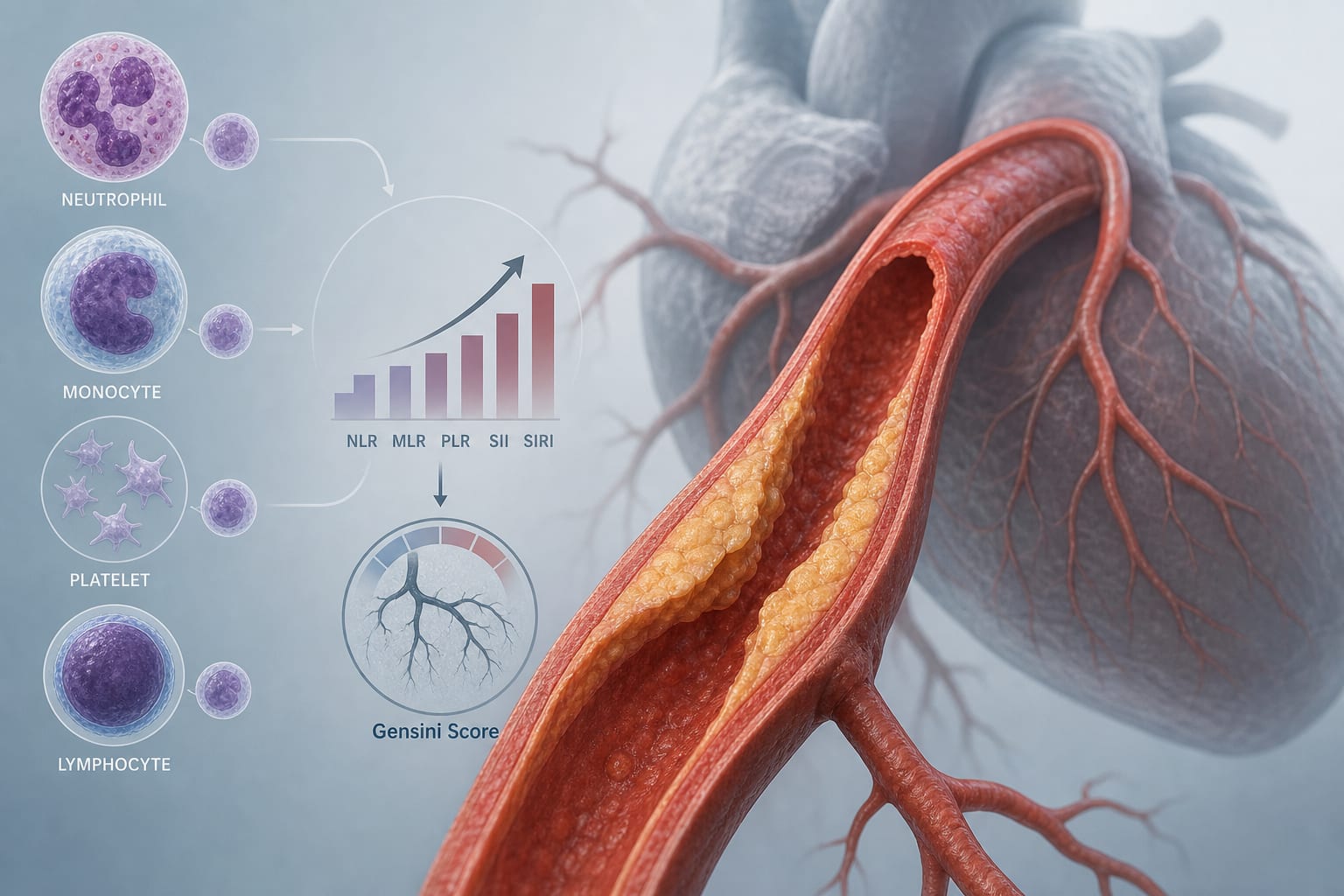
This study investigates the association between novel inflammatory indices and the severity of coronary artery lesions in patients with stable coronary artery disease (SCAD). Findings indicate that the neutrophil-lymphocyte ratio (NLR), monocyte-lymphocyte ratio (MLR), and systemic inflammatory response index (SIRI) are significant predictors of severe coronary artery lesions.
Background
Coronary atherosclerotic heart disease (CAD) is a major public health issue, with stable coronary artery disease (SCAD) being a prevalent form characterized by chronic inflammation and plaque development. Accurate assessment of lesion severity is crucial for effective clinical management. Traditional inflammatory markers have limitations, prompting interest in novel inflammatory indices that may better reflect the inflammatory status in SCAD patients.
Data Highlights
Inflammatory Index
Correlation with Gensini Score
Odds Ratio (OR)
95% Confidence Interval (CI)
P-value
NLR
r = 0.154
1.20
1.09–1.32
P < 0.001
MLR
-
4.19
1.46–11.98
P = 0.008
SIRI
r = 0.156
1.31
1.11–1.54
P = 0.001
Key Findings
All novel inflammatory indices showed positive associations with the Gensini score (P < 0.05).
SIRI and NLR demonstrated the strongest correlations with the Gensini score (r = 0.156 and r = 0.154, respectively).
MLR, NLR, and SIRI were identified as independent predictors of severe coronary artery lesions.
The study involved a cohort of 2,424 SCAD patients undergoing coronary angiography.
Novel inflammatory indices may serve as non-invasive risk assessment indicators in SCAD.
Clinical Implications
The findings suggest that NLR, MLR, and SIRI could be utilized as non-invasive tools for assessing the risk of severe coronary artery lesions in patients with SCAD. Clinicians may consider incorporating these indices into routine evaluations to enhance risk stratification.
Conclusion
NLR, MLR, and SIRI are significantly associated with the extent of coronary artery lesions in SCAD patients, offering new avenues for non-invasive risk assessment in this population.