The Growing Importance of Cell-Free DNA in Systemic Lupus Erythematosus: Insights into Mechanisms and Potential Therapeutic Applications
-
By
-
Emily Jones
-
Kiki Cano-Gamez
-
June 23, 2026
Clinical Report: The Growing Importance of Cell-Free DNA in Systemic Lupus Erythematosus
Background
Systemic lupus erythematosus (SLE) is a complex autoimmune disease that can affect multiple organs and is characterized by dysregulated immune responses. The study of cell-free DNA (cfDNA) has emerged as a promising area of research, as it may serve as a biomarker for disease activity and provide insights into the pathogenesis of SLE.
Data Highlights
No numerical data or trial data provided in the source material.
Key Findings
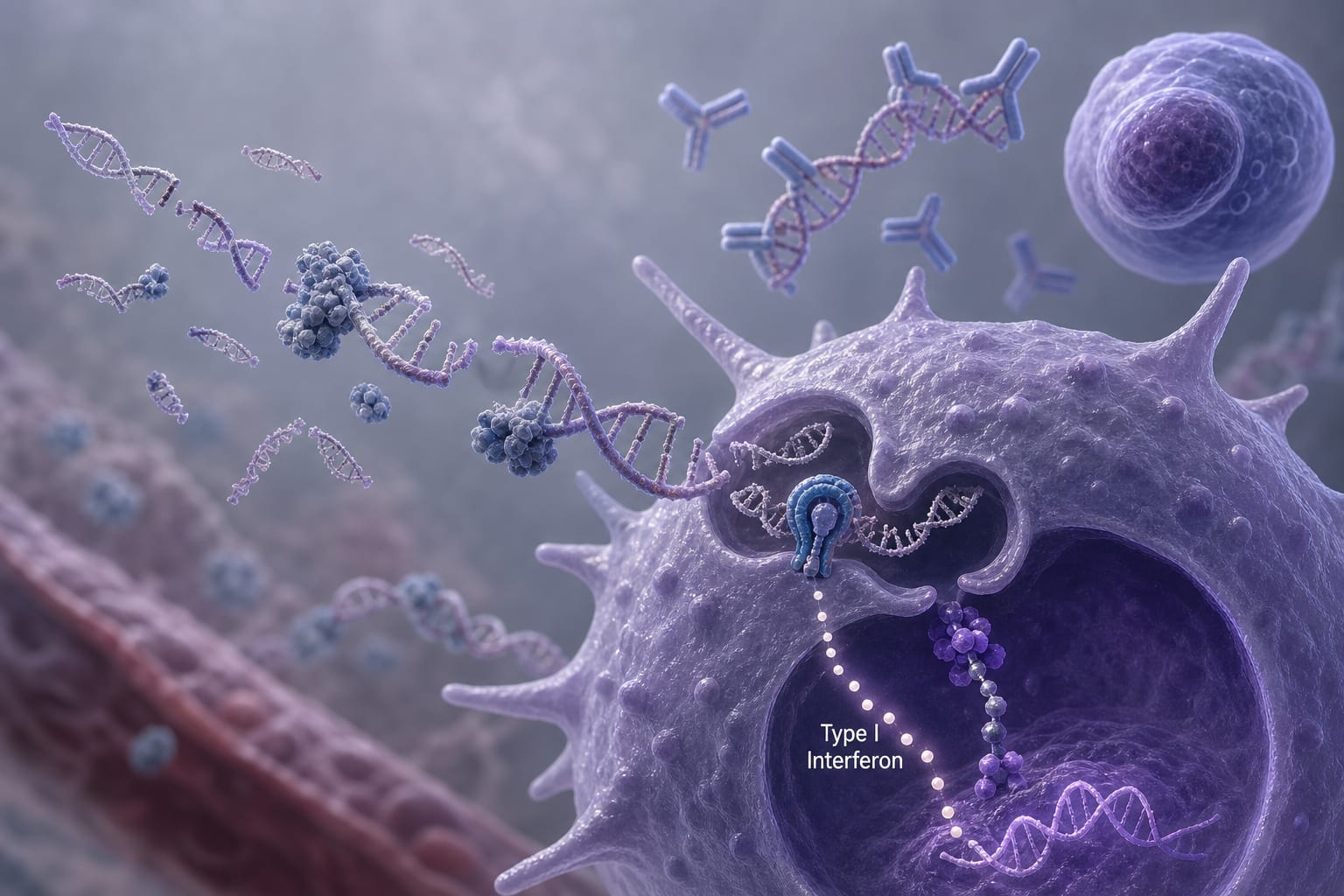
- cfDNA is released during cell death and is cleared by nucleases such as DNASE1L3.
- Alterations in cfDNA characteristics, including fragment length and epigenetic modifications, can indicate disease activity in SLE.
- Deficiencies in DNASE1L3 lead to increased immunogenic potential of cfDNA and enhanced type I interferon signaling.
- Autoantibodies can neutralize DNASE1L3, impairing DNA clearance and exacerbating inflammation.
- cfDNA has a dual role as both a disease mediator and a potential diagnostic tool.
- Large-scale validation and standardization of cfDNA insights are essential for precision medicine in SLE.
Clinical Implications
The findings indicate that monitoring cfDNA characteristics may provide insights into disease activity and progression in SLE patients.
Conclusion
The exploration of cfDNA in SLE warrants further research and validation.
Related Resources & Content
- 2025 American College of Rheumatology (ACR) Guideline for the Treatment of Systemic Lupus Erythematosus - PubMed
- Efficacy and safety of the CD40 ligand inhibitor dapirolizumab pegol in systemic lupus erythematosus (PHOENYCS GO): a randomised, double-blind, placebo-controlled, phase 3 trial - PubMed
- Frontiers in Medicine — Stem cell-derived extracellular vesicles as immunomodulatory agents: targeting pathological crosstalk in systemic lupus erythematosus and multiple sclerosis
- Frontiers in Immunology — Immune regulation and cell metabolism in B cell subsets in patients with systemic lupus erythematosus
- The ASCO Post — Liquid Biopsies Show Promise in Diffuse Large B-Cell Lymphoma Related Articles
- Clinical Rheumatology — The Advent of Biologic Therapies for Systemic Lupus Erythematosus Management
- Stem cell-derived extracellular vesicles as immunomodulatory agents: targeting pathological crosstalk in systemic lupus erythematosus and multiple sclerosis
- Immune regulation and cell metabolism in B cell subsets in patients with systemic lupus erythematosus
- 2025 American College of Rheumatology (ACR) Guideline for the Treatment of Systemic Lupus Erythematosus - PubMed
- Efficacy and safety of the CD40 ligand inhibitor dapirolizumab pegol in systemic lupus erythematosus (PHOENYCS GO): a randomised, double-blind, placebo-controlled, phase 3 trial - PubMed
- Frontiers | Plasma cell-free DNA genome-wide methylation profiling enables detection and activity assessment in systemic lupus erythematosus
Based on findings from:
The emerging clinical relevance of cell-free DNA in lupus: from mechanistic insights to therapeutic opportunities
Emily Jones, Kiki Cano-Gamez. Frontiers In Immunology, 2026.
https://www.frontiersin.org/journals/immunology/articles/10.3389/fimmu.2026.1824772/full
This content is an AI-generated, fully rewritten summary based on a published scholarly article. It does not reproduce the original text and is not a substitute for the original publication. Readers are encouraged to consult the source for full context, data, and methodology.