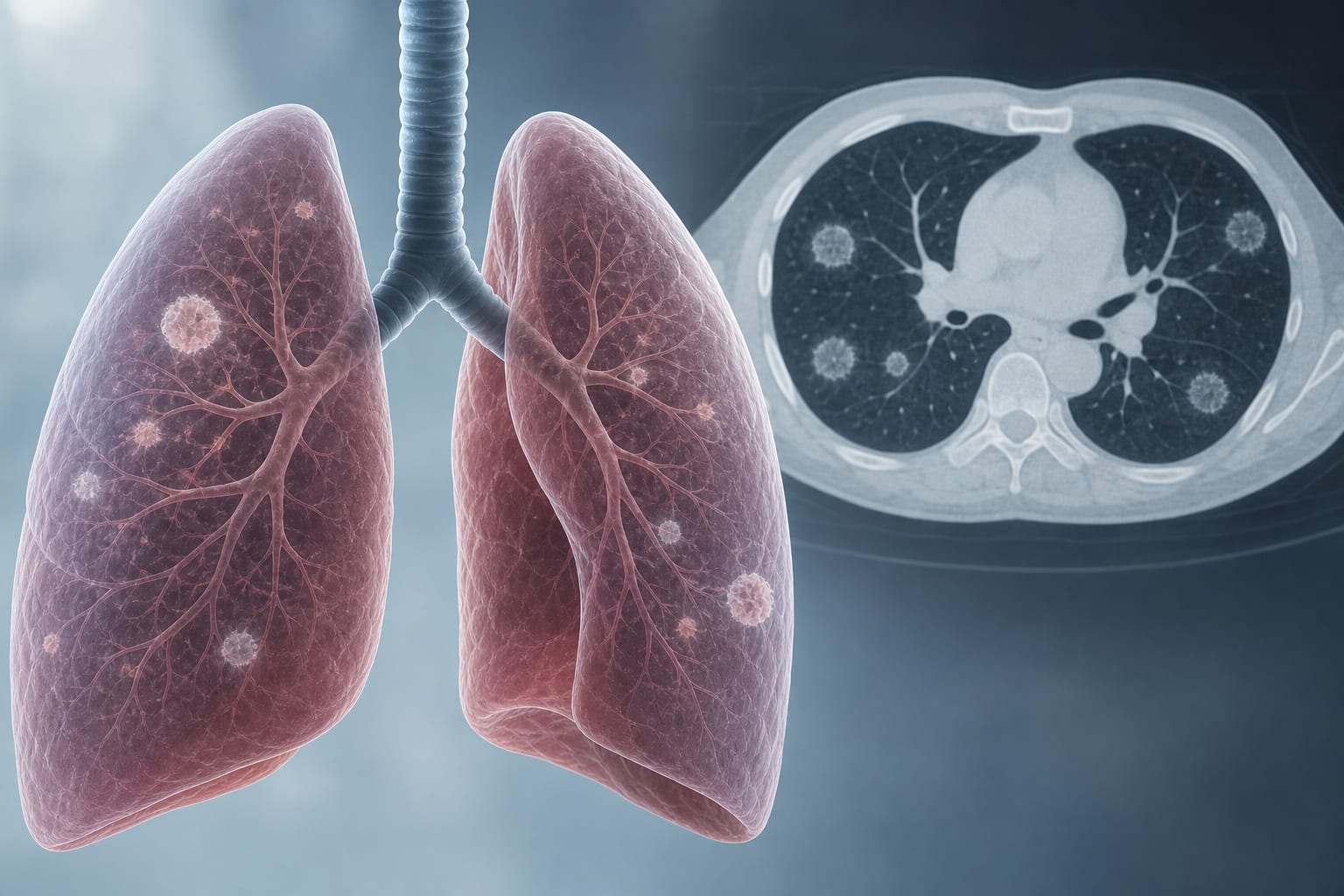
Hierarchical Deep CNNs Enhance Breath Analysis for Multi-Cancer Detection
Overview
This study presents a breath-based diagnostic platform integrating a multimodal gas sensor array with a hierarchical deep convolutional neural network (HD-CNN) for simultaneous detection of lung and gastric cancers. The HD-CNN outperformed conventional models by accurately distinguishing healthy controls from cancer patients and further differentiating between lung and gastric cancer using exhaled breath VOC profiles.
Background
Cancer remains a leading cause of mortality worldwide, with lung and gastric cancers among the deadliest due to late-stage diagnosis and poor survival rates. Noninvasive early detection methods are urgently needed to improve outcomes. Breath analysis, which detects volatile organic compounds (VOCs) altered by cancer metabolism, offers a promising alternative to traditional diagnostics. However, multi-cancer detection from breath is challenging due to overlapping biomarkers and complex VOC patterns requiring advanced analytical models.
Data Highlights
The developed breath analysis system uses a multimodal sensor array combining semiconductor metal oxide, electrochemical, and photoionization detectors to capture complex VOC signatures. A hierarchical deep CNN framework first classifies samples as healthy or cancerous, then distinguishes lung from gastric cancer. System improvements included enhanced thermal control for sensor stability and real-time VOC detection. Comparative analyses demonstrated superior classification accuracy of the HD-CNN over conventional 1D CNN models.
Key Findings
The multimodal sensor array effectively captures subtle biochemical signatures in exhaled breath related to lung and gastric cancers.
The hierarchical deep CNN architecture enables a two-stage classification: first separating healthy controls from cancer patients, then differentiating lung cancer from gastric cancer.
Thermal control enhancements in the breath analyzer improve VOC measurement reliability and sensor lifespan.
The HD-CNN outperforms traditional single-layer CNN models in multi-class cancer classification accuracy.
Preprocessing sensor responses into 2D response maps facilitates deeper feature extraction by the HD-CNN.
This approach supports scalable, noninvasive, real-time multi-cancer screening from a single breath sample.
Clinical Implications
The integration of multimodal breath sensors with hierarchical deep learning models offers a practical, noninvasive tool for early multi-cancer detection, potentially improving screening accessibility and reducing diagnostic burden. This technology could enable real-time, point-of-care cancer screening, facilitating timely intervention and better patient outcomes.
Conclusion
This study demonstrates that hierarchical deep convolutional neural networks combined with multimodal breath sensors can accurately detect and differentiate lung and gastric cancers from exhaled breath. Such advances pave the way for scalable, noninvasive multi-cancer screening platforms.
References
Global Cancer Statistics 2022 -- Lung and Gastric Cancer Mortality
Breath Analysis for Cancer Detection -- Volatile Organic Compounds as Biomarkers
Deep Learning in Breath-Based Multi-Cancer Classification