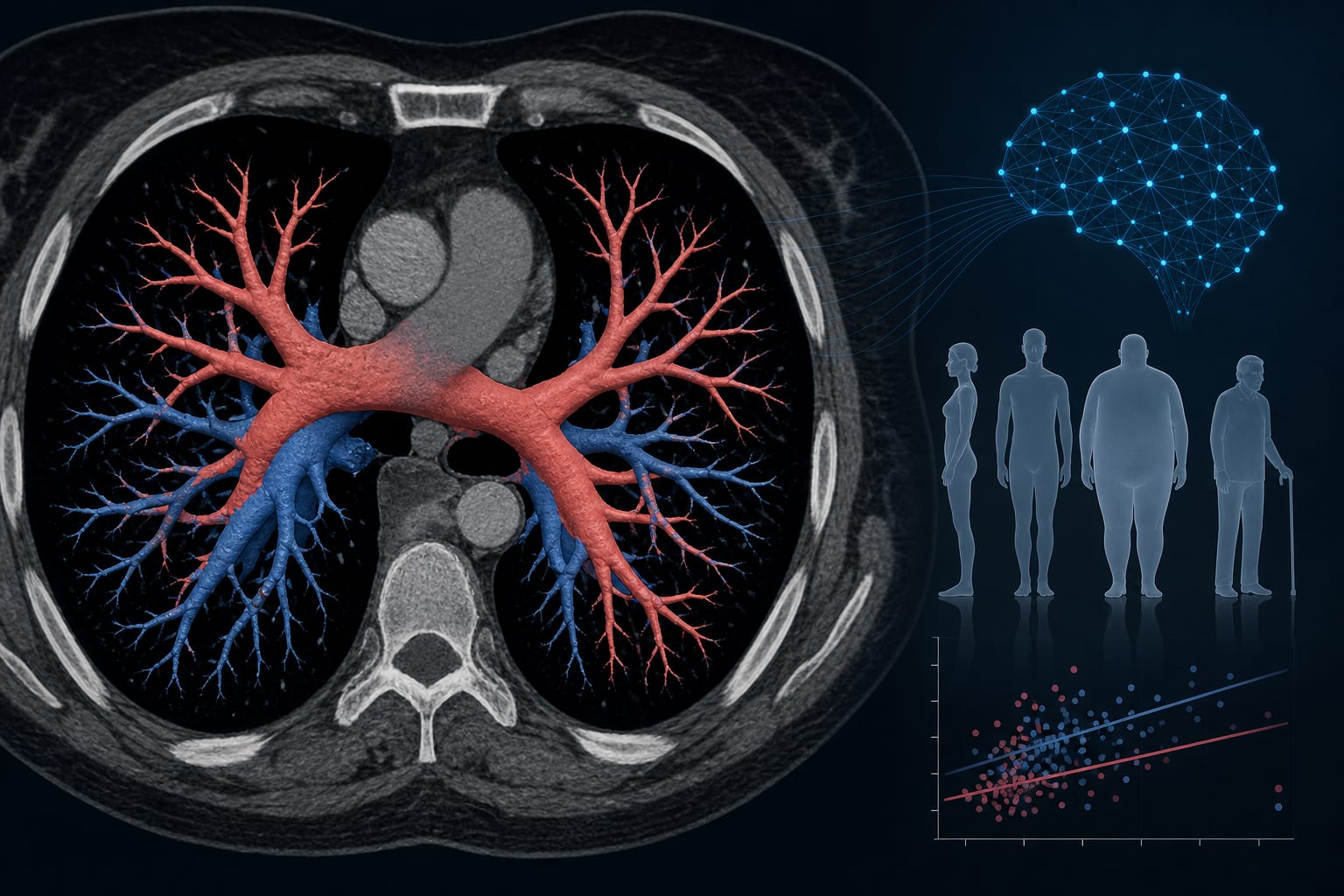
Clinical Report: Automated Deep Learning for Non-Calcified Coronary Plaques
Overview
This study presents an automated pipeline combining deep learning and radiomics to detect non-calcified coronary plaques using non-contrast calcium score CT. The approach demonstrated moderate to good diagnostic performance, indicating its potential for enhancing coronary artery disease screening.
Background
Coronary artery disease (CAD) is a leading cause of mortality worldwide, often progressing silently until acute events occur. Current imaging techniques, such as coronary artery calcium scoring (CACS), primarily assess calcification but may overlook non-calcified plaques, which are critical for risk stratification. This study addresses the need for improved detection methods for non-calcified plaques, which are associated with higher risks of adverse cardiovascular events.
Data Highlights
Model Type
AUC Range
Coronary Artery Model
0.700 - 0.855
PCAT Model
Comparable AUCs
Key Findings
The SegResNet models achieved optimal performance in coronary segmentation.
Radiomics models showed moderate to good vessel-level diagnostic performance for non-calcified plaques.
AUCs for the models ranged from 0.700 to 0.855 across datasets.
Combined-region models generally outperformed or matched the PCAT model.
The automated pipeline facilitates efficient detection of non-calcified plaques in CACS.
Clinical Implications
The automated detection of non-calcified plaques using deep learning and radiomics may enhance early identification of at-risk patients for coronary artery disease. This approach could support the clinical translation of non-contrast CT for large-scale CAD screening, potentially improving patient outcomes.
Conclusion
The study validates an innovative automated pipeline for detecting non-calcified coronary plaques, highlighting its promise for future clinical applications in CAD screening. Further research is warranted to explore its integration into routine practice.