Application Value of Resting-State fMRI in Preoperative Lateralization of Language Areas in Epilepsy with Left-Sided Epileptogenic Foci - Report - MDSpire
Advertisement
Application Value of Resting-State fMRI in Preoperative Lateralization of Language Areas in Epilepsy with Left-Sided Epileptogenic Foci
Clinical Report: Utilization of Resting-State fMRI for Preoperative Language Area Lateralization
Overview
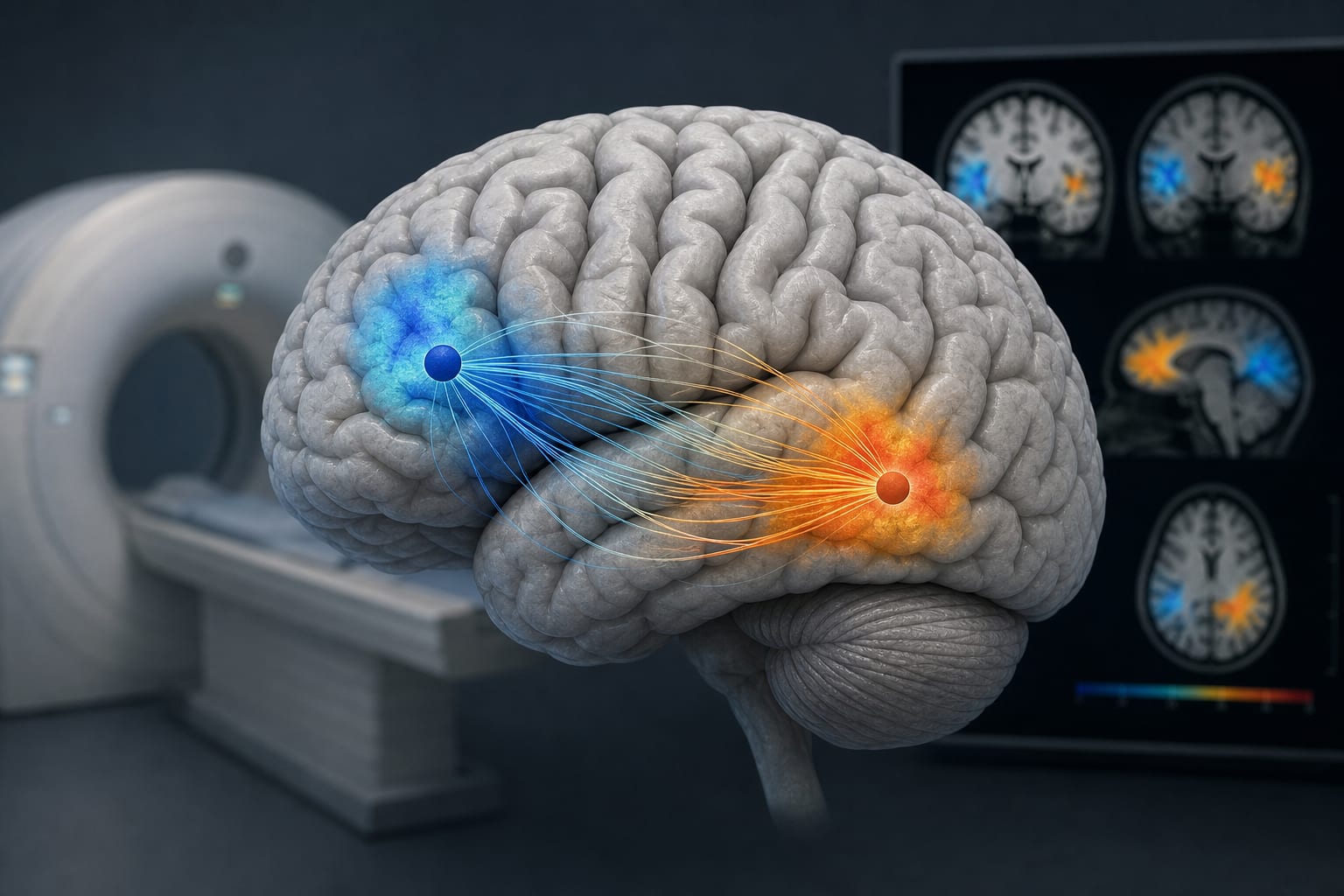
This study investigates language lateralization in patients with left-sided epileptogenic foci using resting-state fMRI.
Background
Understanding language lateralization is crucial for optimizing epilepsy surgery and minimizing postoperative language impairments. This study aims to clarify these differences and provide a reliable framework for preoperative assessment.
Data Highlights
Group
Non-Classical Language Dominance (%)
Epilepsy Patients
69.4
Healthy Controls
45.5
Key Findings
Non-classical language dominance was observed in 69.4% of epilepsy patients versus 45.5% of controls (P=0.024).
Wernicke's area showed a higher rate of non-classical dominance (81.8%) compared to Broca's area (50.0%).
The consistency of the laterality index–activation map was 83.3% (Kappa=0.586).
Regional laterality index consistency was 75.0% (Kappa=0.40).
SEEG stimulation confirmed that the left Broca's area retained core language function.
Only 10.0% positive stimulation rate was observed in the left Wernicke's area, indicating significant functional impairment.
Clinical Implications
Preoperative language lateralization assessments using resting-state fMRI can identify language dominance shifts in epilepsy patients.
Conclusion
This study highlights the importance of using resting-state fMRI for preoperative language mapping in epilepsy.
These 10 states make it more practical for physicians to participate in hospital ownership by aligning statutory structure, corporate practice of medicine rules, and population trends.