Clinical Report: Daily Patterns of Fatigue in Childhood Cancer Survivors
Overview
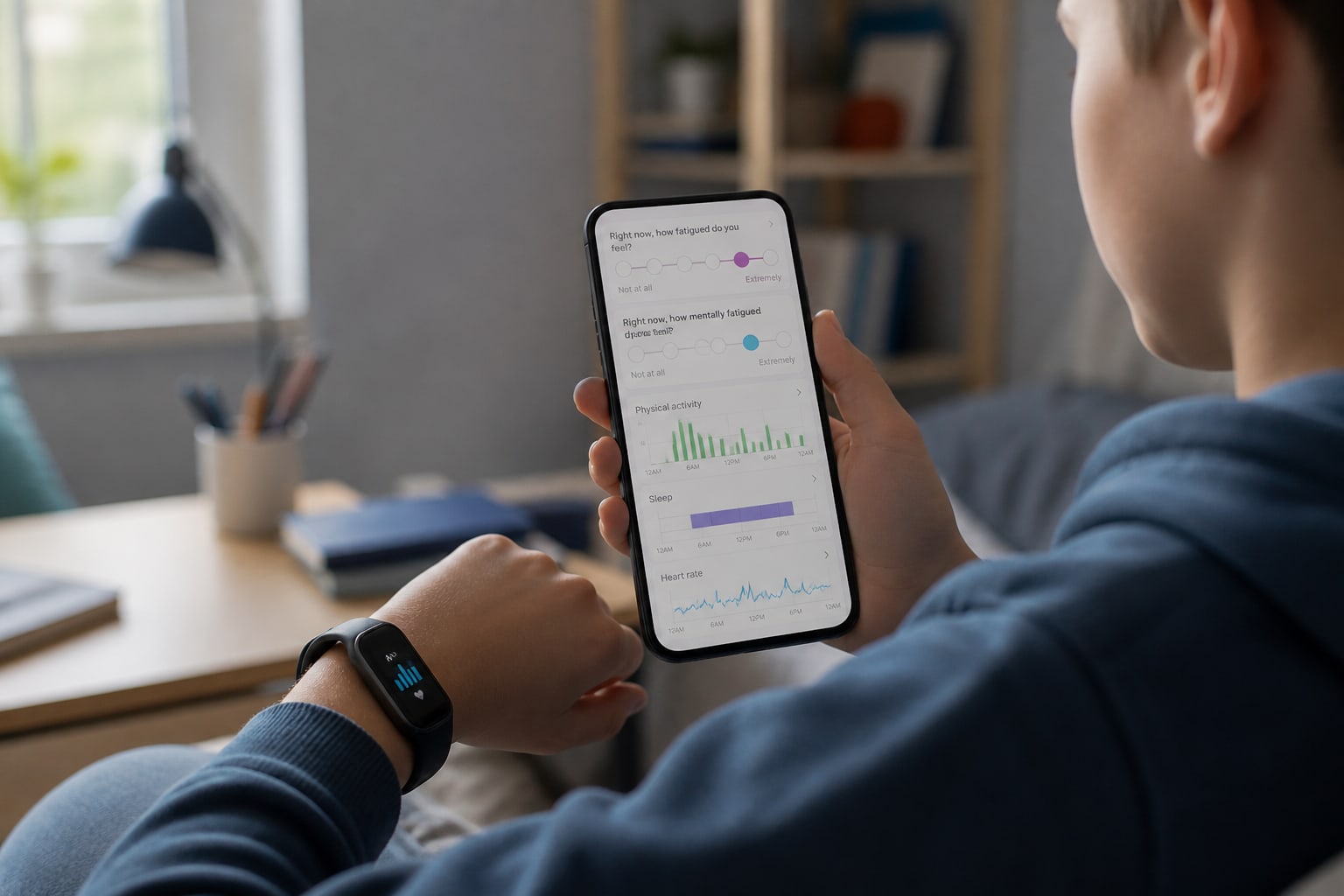
The article frames general and cognitive fatigue as distinct experiences that may vary within childhood cancer survivors (CCS) during daily life. It identifies momentary tension, sleep, recent physical activity, and symptom inertia as potential influences, while emphasizing that their short-term, within-person relationships remain insufficiently understood in the supplied text.
Background
Fatigue can persist for years after childhood cancer treatment and is associated with impaired quality of life, everyday functioning, and psychosocial well-being. General fatigue describes overall tiredness and reduced energy, whereas cognitive fatigue concerns difficulty sustaining mental effort, concentration, and cognitive functioning. Prior CCS research has more often examined general or overall fatigue, although the source reports that the two dimensions have partly distinct correlates. The supplied introduction identifies a need to characterize how each dimension changes over short periods in everyday life.
Data Highlights
The supplied article text contains no study sample size, numerical results, or trial estimates. It describes the study as using experience sampling and wearable devices but does not provide methods or findings beyond the introduction.
Key Findings
The article distinguishes general fatigue from cognitive fatigue and notes that prior work in CCS has linked these dimensions to partly different correlates.
In the authors’ prior work, cognitive fatigue was especially associated with cognitive and school/work functioning; general fatigue and sleep/rest fatigue had broader relationships with psychosocial functioning.
The introduction reports that poorer sleep quality was associated with greater general fatigue, while its relationship with cognitive fatigue varied by cardiorespiratory fitness.
Momentary tension is presented as a possible predictor of later fatigue, but the supplied text states that this temporal relationship remains uncertain.
Prior sleep findings in CCS have mainly concerned retrospective general fatigue and between-person differences, leaving short-term within-person fluctuations less understood.
Related guidance supports regular fatigue surveillance in childhood, adolescent, and young adult cancer survivors; the International Late Effects of Childhood Cancer Guideline Harmonization Group recommends regular screening with validated measures.
Clinical Implications
The supplied context supports distinguishing general from cognitive fatigue when assessing survivors, rather than assuming that the same factors influence both. It also describes guideline recommendations for regular fatigue screening using validated measures; the provided article excerpt does not report results that establish specific moment-to-moment triggers or interventions.
Conclusion
The supplied introduction presents daily variation in general and cognitive fatigue as an important but incompletely characterized aspect of survivorship. The study’s results are not included in the provided material, so its empirical findings cannot be summarized here.
by Deveny Vanrusselt, Charlotte Sleurs, Nicolas Leenaerts, Stefan Kirsch, Nel Van Ermengem, Jurgen Lemiere, Inez Myin-Germeys, Anne Uyttebroeck, Sabine Verschueren