Clinical Report: Meta-Analysis of Deep Learning Approaches for Detecting Pancreatic Cancer via CT Imaging
Overview
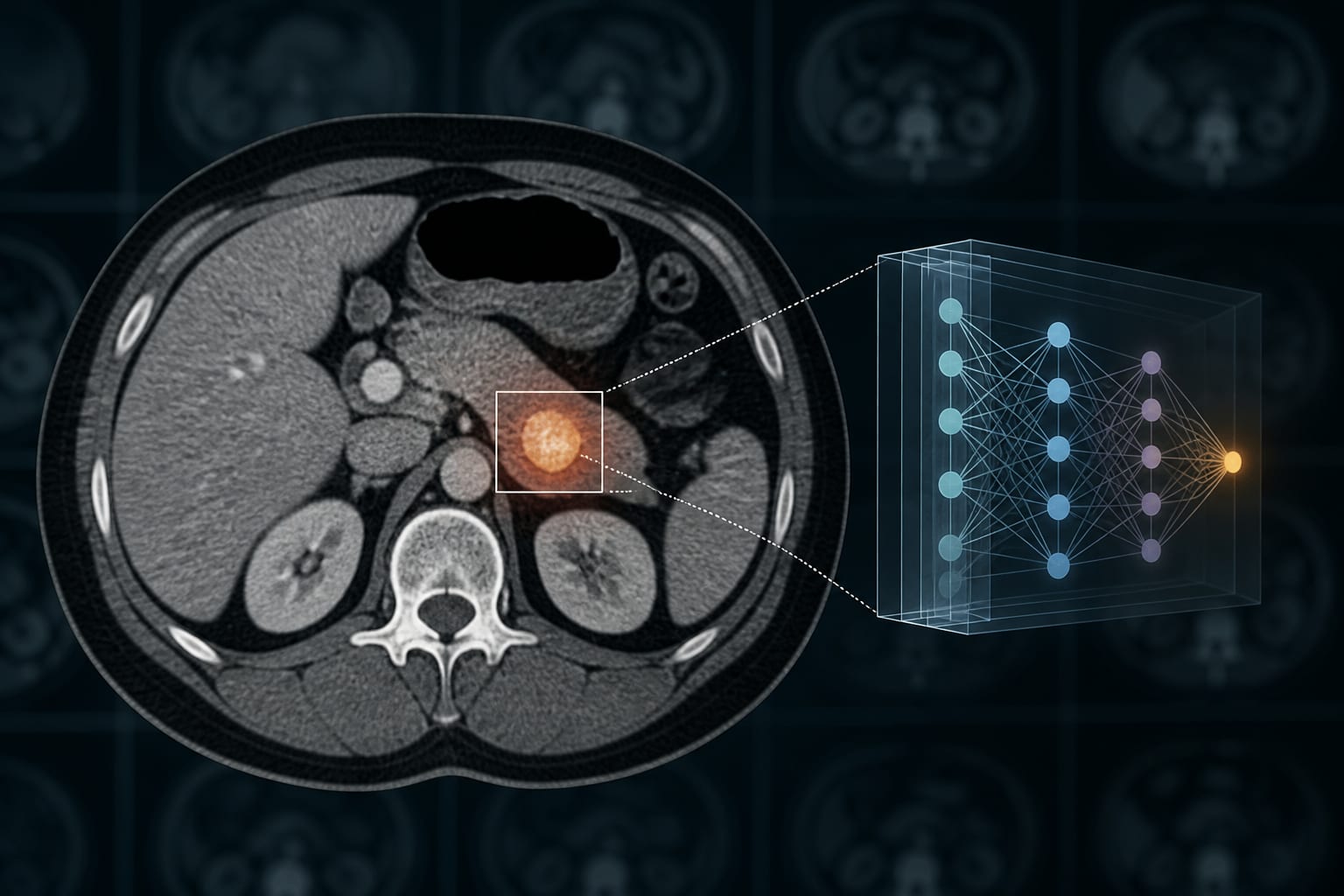
This meta-analysis evaluates the diagnostic accuracy of deep learning models for detecting pancreatic ductal adenocarcinoma (PDAC) using CT scans. The findings indicate high pooled sensitivity and specificity.
Background
Pancreatic ductal adenocarcinoma is a highly lethal cancer with a low 5-year survival rate, emphasizing the need for improved early detection methods. Traditional diagnostic approaches often fail to identify the disease at an early stage due to nonspecific symptoms and variability in radiologist interpretations.
Data Highlights
Outcome
Pooled Value
95% Confidence Interval
Sensitivity
0.92
0.88–0.94
Specificity
0.96
0.92–0.98
Diagnostic Odds Ratio
285.00
97.00–839.00
Area Under the Curve
0.97
0.95–0.98
Preclinical Sensitivity
0.73
N/A
Preclinical Specificity
0.92
N/A
Key Findings
Pooled sensitivity of deep learning models for PDAC detection was 0.92.
Pooled specificity reached 0.96, indicating high accuracy in identifying non-cancerous cases.
The pooled diagnostic odds ratio was 285.00, suggesting a strong ability to differentiate between PDAC and non-PDAC cases.
The area under the curve was 0.97, reflecting excellent overall diagnostic performance.
In the preclinical diagnosis subgroup, sensitivity was lower at 0.73, with specificity at 0.92.
All included studies were retrospective, highlighting the need for prospective validation.
Clinical Implications
The high diagnostic accuracy of deep learning models for PDAC detection on CT scans requires cautious interpretation due to variability in external validation and the absence of prospective evidence.
Conclusion
This meta-analysis highlights the diagnostic accuracy of deep learning approaches in detecting pancreatic cancer via CT imaging, while noting the need for further validation in prospective studies.