Nonlinear Association of Serum Sodium with Urine Output in Postoperative Pediatric Cardiac Patients Receiving Furosemide: A Retrospective Study - Report - MDSpire
Conexiant’s news site is now MDSpire News. Learn more
Advertisement
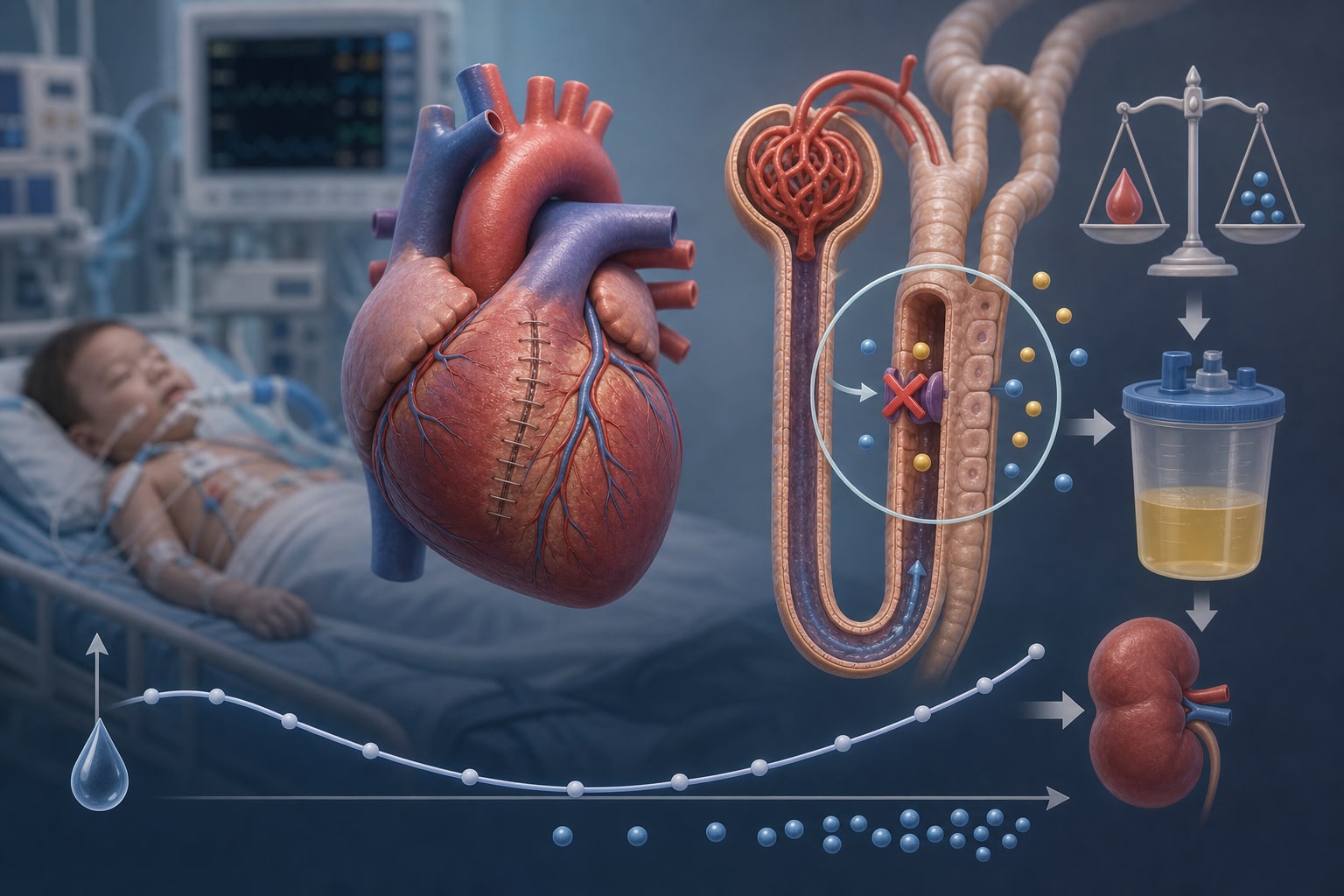
Exploring the Nonlinear Relationship Between Serum Sodium Levels and Urine Output in Pediatric Cardiac Patients Post-Surgery Treated with Furosemide: A Retrospective Analysis
Clinical Report: Exploring the Nonlinear Relationship Between Serum Sodium Levels and Urine Output in Pediatric Cardiac Patients Post-Surgery Treated with Furosemide
Overview
This study investigates the association between serum sodium levels and urine output in pediatric cardiac surgery patients receiving furosemide.
Background
Fluid overload in pediatric cardiac surgery patients is linked to increased morbidity and mortality, making effective diuretic management crucial. Furosemide is commonly used to manage postoperative fluid overload, but its effectiveness can vary, particularly in children. Understanding the relationship between serum sodium levels and urine output may help optimize diuretic therapy in this vulnerable population.
Data Highlights
The source material describes an investigation of the relationship between serum sodium levels and urine output in pediatric cardiac surgery patients treated with furosemide. It does not provide numerical results, sample size, or specific statistical estimates.
Key Findings
Furosemide is essential for managing postoperative fluid overload in pediatric cardiac patients.
Serum sodium levels are influenced by effective circulating volume and ADH activity rather than directly affecting urine output.
Hyponatremia in the postoperative period is often associated with low urine output due to non-osmotic ADH release.
Furosemide responsiveness can predict the risk of AKI and longer hospital stays in children after cardiac surgery.
The study utilized flexible statistical modeling to assess the nonlinear relationship between serum sodium and urine output.
Clinical Implications
Clinicians should consider serum sodium levels in the context of water balance and hemodynamic status.
Conclusion
The authors concluded that the relationship between serum sodium and urine output in pediatric cardiac surgery patients treated with furosemide is nonlinear. Their findings underscore that serum sodium should be interpreted alongside clinical factors affecting water balance and hemodynamics, rather than as a direct determinant of urine output. The source material does not provide further details about the authors’ specific conclusions or numerical results.
Related Resources & Content
Pediatric Cardiology, 2025 -- Urine Output Following Furosemide Infusion in Infants Post-Cardiopulmonary Bypass as an Indicator of Acute Kidney Injury Risk
Pediatric Cardiology, 2026 -- A Novel, Interpretable Machine Learning Model Predicts Furosemide Dosing After Congenital Cardiac Surgery
Outcomes and Management Strategies for Postoperative Hyponatraemia After Transsphenoidal Surgery: A Retrospective Observational Analysis, 2022
Evaluating Copeptin's Significance in Emergency Department Admissions for Patients with Hypotonic Hyponatremia, 2025
Fluid assessment, fluid balance, and fluid overload in sick children: a report from the Pediatric Acute Disease Quality Initiative (ADQI) conference, 2024
Loop Diuretics - StatPearls, NCBI Bookshelf
Fluid assessment, fluid balance, and fluid overload in sick children: a report from the Pediatric Acute Disease Quality Initiative (ADQI) conference - PMC