Subjective sleepiness and objective sleep propensity in adults with attention-deficit/hyperactivity disorder referred for multiple sleep latency testing - Report - MDSpire
Clinical Report: Assessment of Sleepiness in Adults with ADHD
Overview
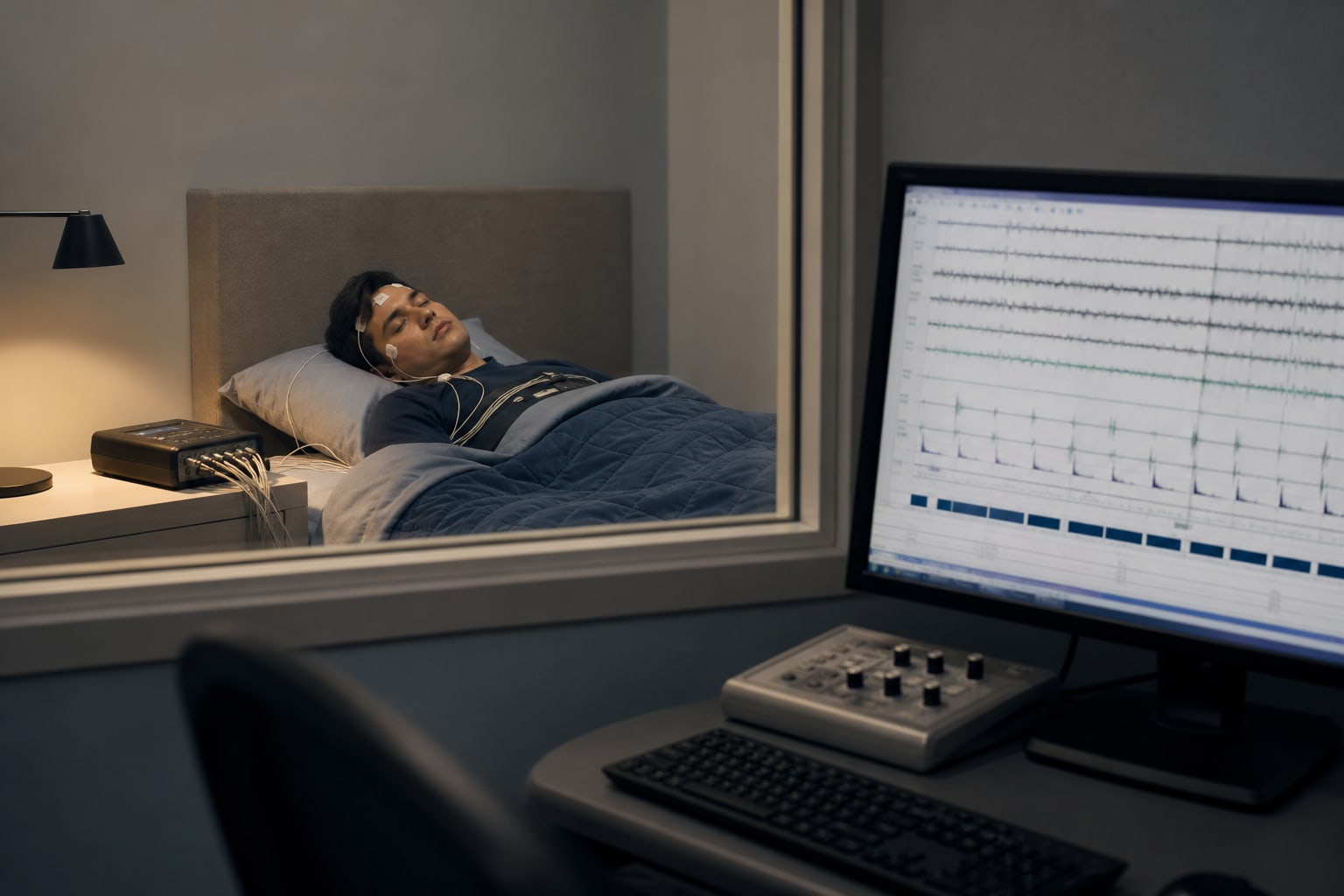
This study investigates the relationship between subjective sleepiness and objective sleep propensity in adults with ADHD compared to a clinical group with excessive daytime sleepiness. Findings indicate that while subjective sleepiness scores were similar, objective sleep propensity was different between the two groups.
Background
Excessive daytime sleepiness (EDS) is a common complaint among adults with ADHD, impacting their daily functioning. This study addresses a gap in the literature regarding how these two measures align in clinical populations referred for sleep evaluation.
Data Highlights
Group
Median ESS Score
Median Mean Sleep Latency (s)
MSLT Positivity (%)
ADHD
14.0
432.0
61.8
EDS-only
13.0
322.0
87.1
Key Findings
ESS scores were similar between ADHD and EDS-only groups (14.0 vs 13.0).
Mean sleep latency was significantly longer in the ADHD group (432.0 s) compared to the EDS-only group (322.0 s).
MSLT positivity was less frequent in the ADHD group (61.8%) than in the EDS-only group (87.1%).
Within the ADHD group, ESS scores did not correlate significantly with mean sleep latency.
A significant inverse correlation was found in the MSLT-positive EDS-only subgroup.
Clinical Implications
The findings indicate that clinicians should be cautious when interpreting subjective sleepiness in adults with ADHD, as it may not reflect objective sleep propensity.
Conclusion
This study highlights the disconnect between subjective sleepiness and objective sleep propensity in adults with ADHD.
Turns out biology tracks more than we thought — from a spit test that reads your all-nighter to a surgical outcome that still shows up in household chores two decades later. Plus: habits aren't built gradually. They snap.