Clinical Report: Tibial Plateau Fractures in Charcot Neuroarthropathy
Overview
This case series highlights two patients with tibial plateau fractures due to Charcot neuroarthropathy (CNA) in the context of diabetes mellitus. The contrasting outcomes underscore the importance of early diagnosis and appropriate management to prevent complications.
Background
Charcot neuroarthropathy (CNA) is a severe complication of diabetes that can lead to significant joint destruction and misdiagnosis, particularly in the knee. Tibial plateau fractures in patients with CNA present unique challenges due to the underlying bone fragility and the potential for inappropriate surgical interventions. Recognizing CNA early is crucial for optimizing patient outcomes and preventing further complications.
Data Highlights
No numerical data provided in the article.
Key Findings
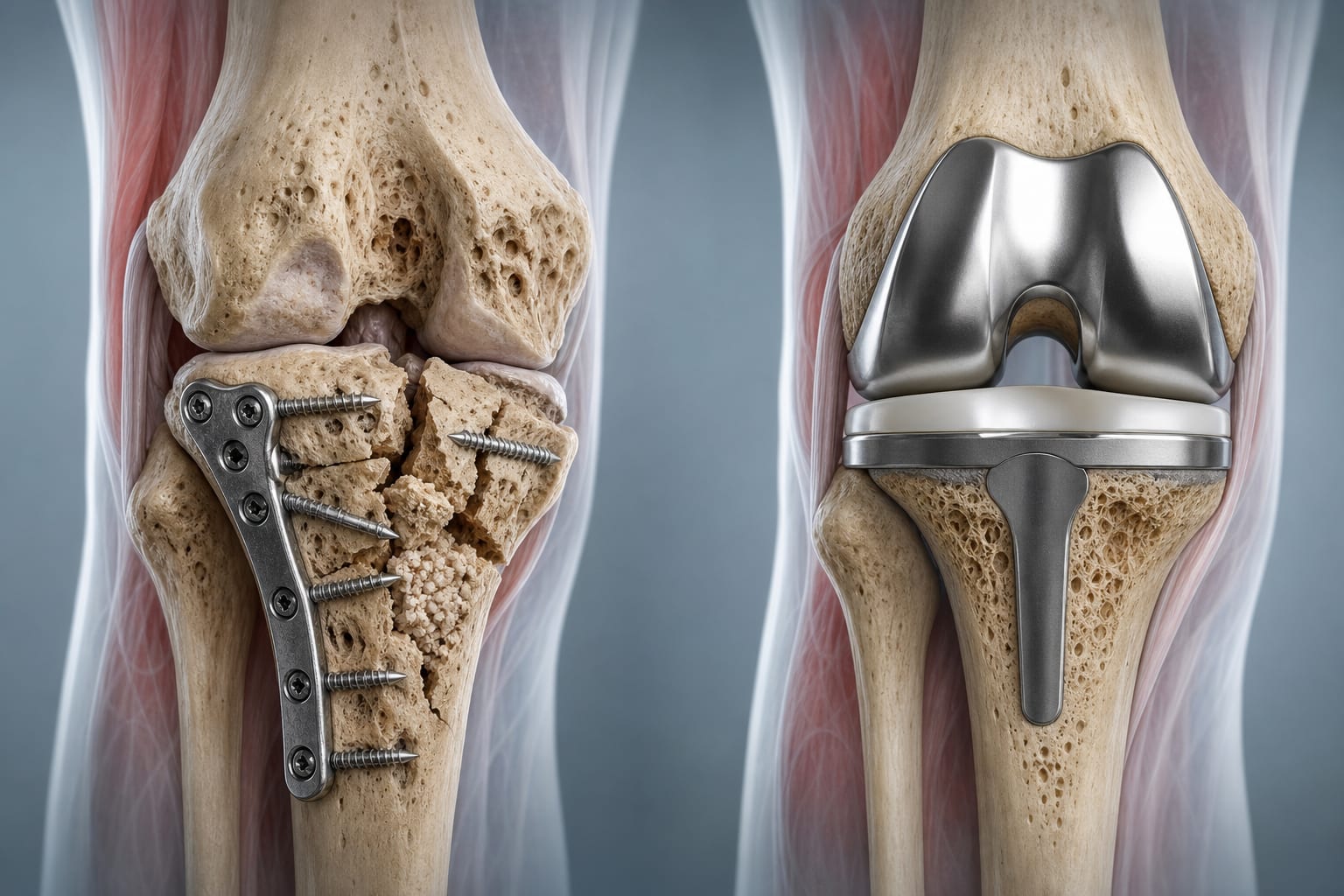
Case 1: A 55-year-old woman with poorly controlled diabetes had a tibial plateau fracture misdiagnosed as an old fracture, leading to failed surgical intervention.
Case 2: A 65-year-old man with well-controlled diabetes had an early diagnosis of CNA and underwent successful total knee arthroplasty after conservative management.
Intraoperative findings in the first case revealed severe bone fragmentation and osteoporosis, indicative of CNA.
Early recognition of CNA can prevent inappropriate surgical interventions and improve long-term outcomes.
When advanced joint destruction occurs, total knee arthroplasty can provide durable results.
Clinical Implications
Healthcare professionals should maintain a high index of suspicion for CNA in diabetic patients presenting with knee fractures. Early diagnosis and appropriate management strategies, including conservative treatment and timely surgical intervention, are essential to optimize patient outcomes.
Conclusion
This case series illustrates the critical need for awareness of CNA in diabetic patients with knee injuries. Timely recognition and intervention can significantly alter the prognosis and functional outcomes.