Clinical Report: Ensemble-Enhanced Skin Lesion Classification Using AI
Overview
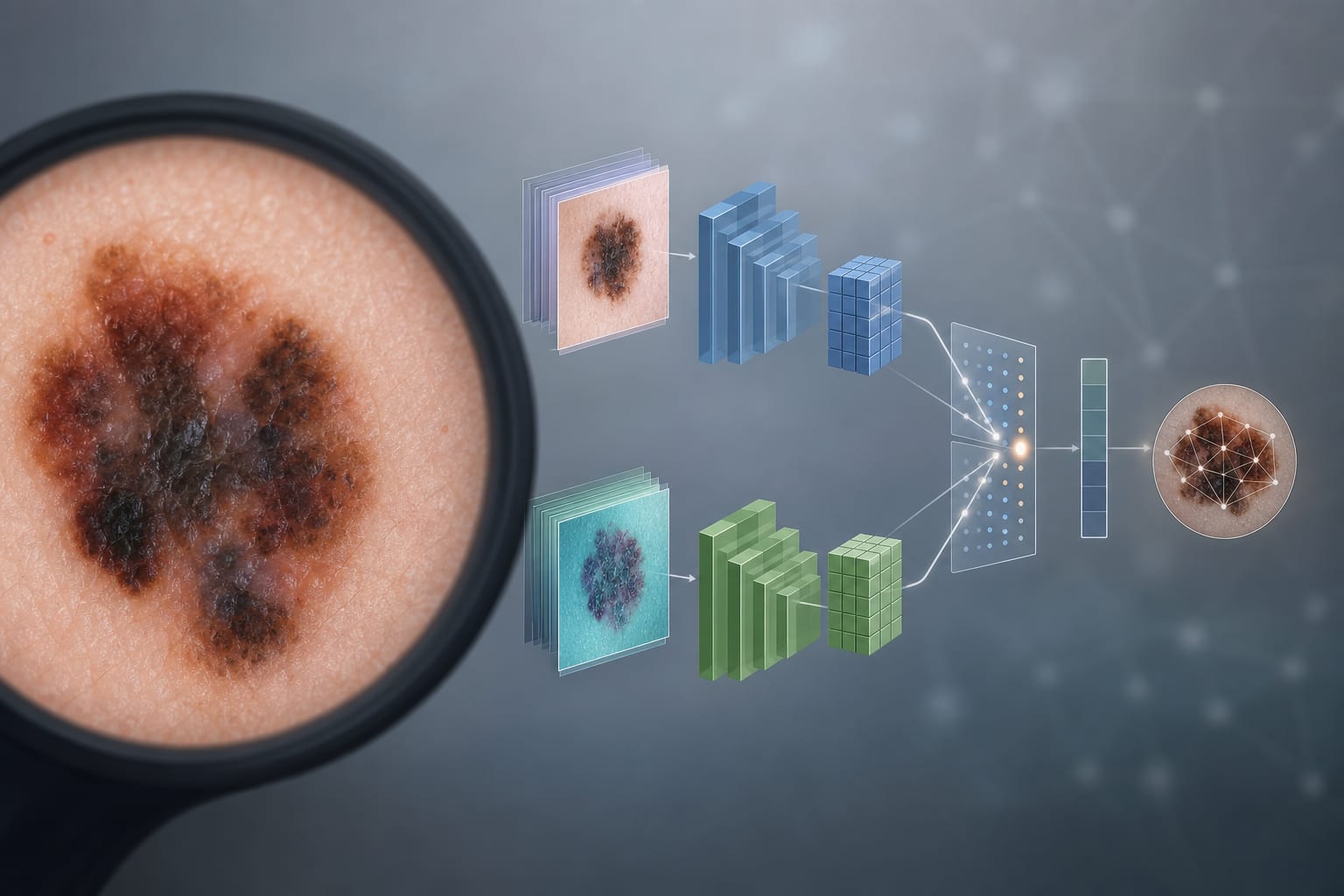
This report discusses a novel approach to skin lesion classification using ensemble learning and attention mechanisms. The study addresses class imbalance and enhances model robustness, demonstrating improved performance across various lesion types.
Background
Skin lesions are critical indicators of dermatological disorders, with melanoma being particularly lethal. Early detection is essential for effective treatment, yet many patients face barriers to timely diagnosis. Artificial intelligence (AI) offers promising solutions to enhance self-screening and improve diagnostic accuracy.
Data Highlights
No numerical data was provided in the source material.
Key Findings
Four augmentation strategies were evaluated to address class imbalance in the HAM10000 dataset.
Only Train Set Augmentation was identified as the optimal method for enhancing minority class representation.
Integration of attention mechanisms improved feature extraction and reduced background noise in lesion images.
A hybrid multi-branch ensemble framework demonstrated improved generalization and robustness compared to single-architecture models.
Evaluation metrics included accuracy, Precision, Recall, F1-score, Specificity, and ROC-AUC curves to provide a comprehensive performance assessment.
Clinical Implications
The findings suggest that employing ensemble learning and attention mechanisms can significantly enhance the accuracy of skin lesion classification. This approach may facilitate earlier detection of skin cancers, ultimately improving patient outcomes.
Conclusion
The study presents a robust framework for skin lesion classification that addresses existing limitations in AI models. Future applications may lead to more effective early detection strategies in dermatology.