Conexiant’s news site is now MDSpire News. Learn more
Advertisement
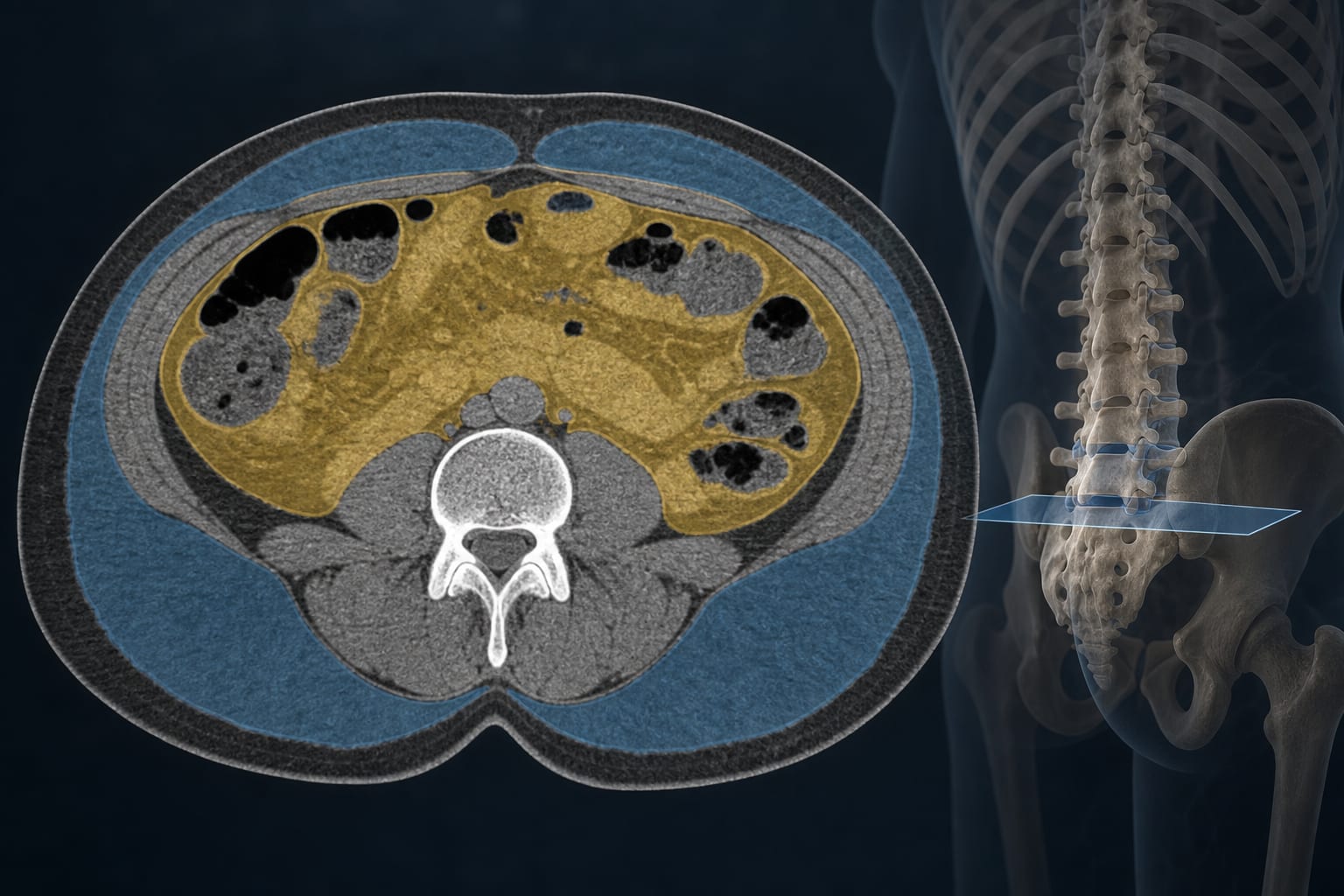
Assessing the L4–L5 Visceral-to-Subcutaneous Fat Ratio via CT as a Predictor of Wound Healing Complications Post-Posterior Lumbar Fusion: A Retrospective Analysis
Clinical Report: Assessing the L4–L5 Visceral-to-Subcutaneous Fat Ratio via CT
Overview
This study investigates the role of the visceral-to-subcutaneous fat area (VFA/SFA) ratio as a predictor of wound healing complications following posterior lumbar fusion (PLF). The findings indicate that a higher VFA/SFA ratio is significantly associated with impaired wound healing within 30 days post-surgery.
Background
Obesity is a known risk factor for postoperative complications in spine surgery, yet traditional metrics like body mass index (BMI) do not adequately reflect fat distribution. The VFA/SFA ratio, which can be measured via CT imaging, may provide a more accurate assessment of regional fat distribution and its impact on surgical outcomes. Understanding this relationship is crucial for improving patient care and reducing complications.
Data Highlights
Measure
Impaired Healing (n=59)
Good Healing (n=467)
p-value
BMI (kg/m²)
25.4 ± 4.0
23.1 ± 3.8
< 0.001
VFA/SFA Ratio
1.063 ± 0.246
0.895 ± 0.259
< 0.001
Key Findings
Impaired wound healing occurred in 11.2% of patients post-PLF.
Patients with impaired healing had a significantly higher BMI and VFA/SFA ratio compared to those with good healing.
Each 0.1 increase in VFA/SFA ratio was associated with an adjusted odds ratio of 1.32 for impaired wound healing.
The AUC for VFA/SFA was 0.70, indicating its predictive value beyond BMI.
Incorporating VFA/SFA into clinical models improved the AUC from 0.70 to 0.77.
Clinical Implications
The VFA/SFA ratio can serve as a valuable preoperative metric for assessing the risk of wound healing complications in patients undergoing PLF. This information may assist clinicians in identifying high-risk patients and tailoring perioperative management strategies accordingly.
Conclusion
The study establishes the VFA/SFA ratio as an independent predictor of impaired wound healing after PLF, highlighting its potential utility in preoperative risk assessment.
Researchers urge caution in interpreting joint replacement predictors, noting that surgery reflects access and decision-making as well as disease biology.