Blood-activating, depression-relieving formula alleviates post-stroke depression: mechanistic insights from network pharmacology and microglial validation - Report - MDSpire
Advertisement
Blood-activating, depression-relieving formula alleviates post-stroke depression: mechanistic insights from network pharmacology and microglial validation
Clinical Report: Herbal Formula for Enhancing Blood Flow and Alleviating Depression
Overview
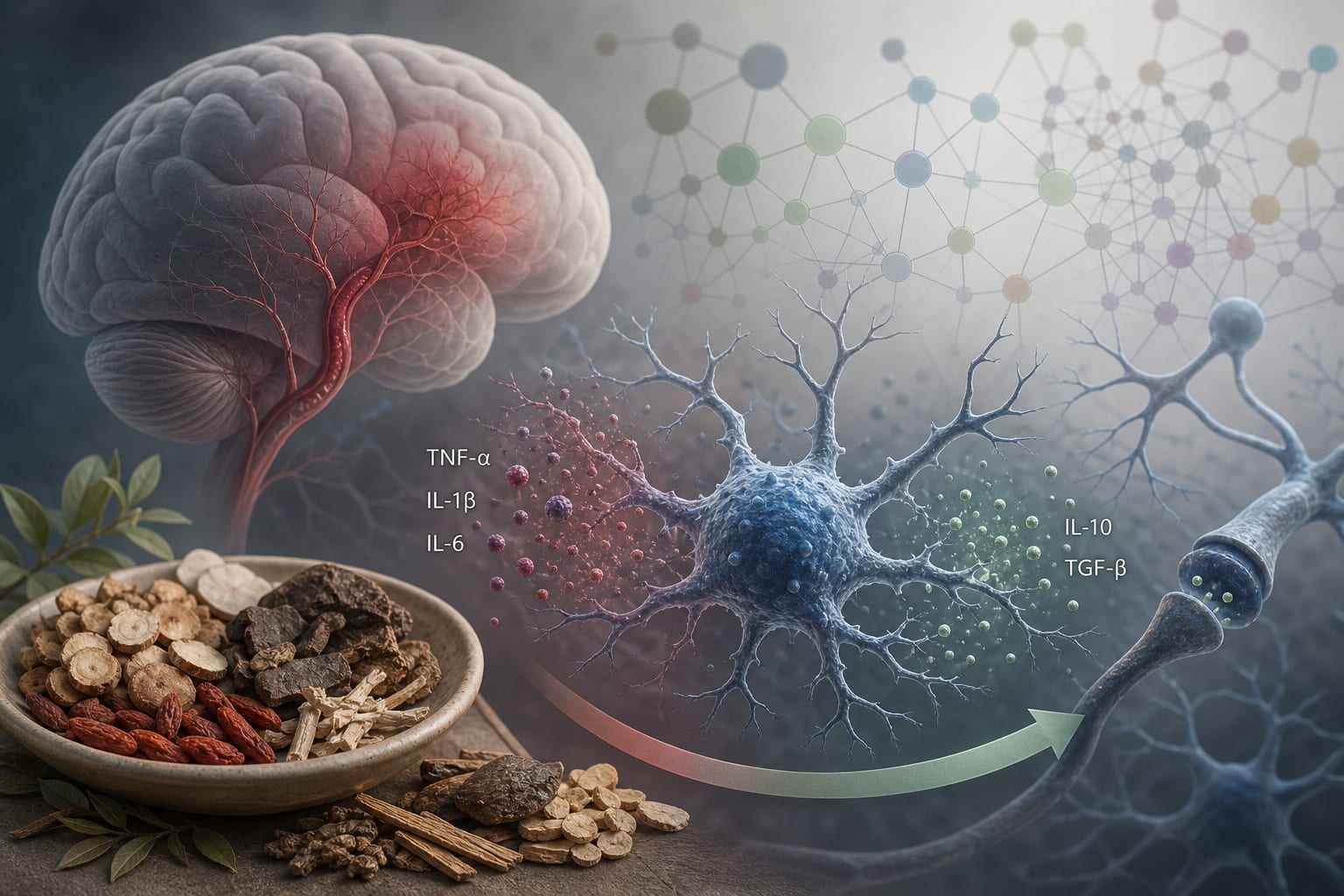
The Blood-Activating, Depression-Relieving (BADR) herbal formula targets neuroinflammation and promotes cell survival in the context of post-stroke depression (PSD). Network pharmacology and microglial studies provide insights into its interaction with molecular pathways associated with PSD.
Background
Post-stroke depression (PSD) is a prevalent condition that complicates recovery after a stroke. Current treatments often rely on single-target approaches.
Data Highlights
No numerical data or trial data provided in the source material.
Key Findings
The BADR herbal formula targets multiple molecular hubs relevant to PSD, including EGFR, STAT3, and PIK3CA.
Network analysis identified significant pathways such as PI3K-AKT and JAK-STAT involved in PSD.
BADR improved cell viability and decreased apoptosis in microglial cells.
BADR down-regulated key signaling molecules and restored BCL2 expression.
Clinical Implications
The findings suggest that BADR may offer a novel approach to managing PSD by addressing neuroinflammation and promoting cell survival. Further research is warranted to validate these effects in clinical settings.
Conclusion
The BADR herbal formula presents a promising multi-target strategy for treating post-stroke depression, warranting further investigation into its clinical applications.