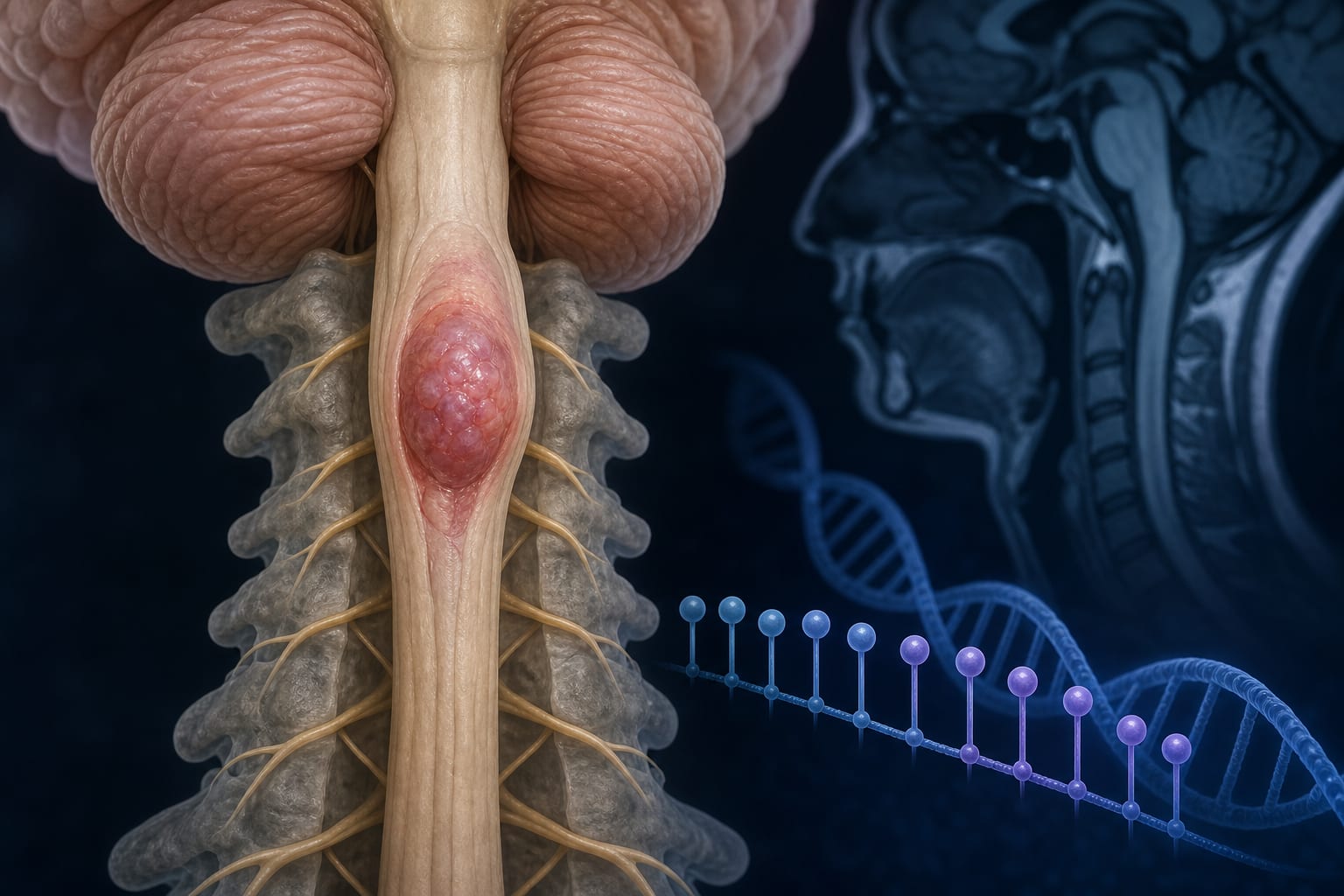
Cerebrospinal fluid proteomics identifies calcyphosine and follistatin-like 1 as exploratory candidate proteins of interest in hydrocephalus - Report - MDSpire
Advertisement
Cerebrospinal fluid proteomics identifies calcyphosine and follistatin-like 1 as exploratory candidate proteins of interest in hydrocephalus
Clinical Report: Cerebrospinal Fluid Proteomic Analysis Reveals Calcyphosine and Follistatin-like 1 as Potential Biomarkers in Hydrocephalus
Overview
This study identifies distinct cerebrospinal fluid (CSF) proteomic profiles in post-hemorrhagic hydrocephalus (PHH) and idiopathic normal pressure hydrocephalus (iNPH).
Background
Hydrocephalus is characterized by ventricular enlargement due to disturbed CSF dynamics, affecting both secondary and idiopathic forms.
Data Highlights
Group
Proteins
Expression Change
PHH
CAPS
Elevated
iNPH
FSTL1
Elevated
Both
General Proteomic Profile
Downregulated
Key Findings
Both PHH and iNPH showed predominantly downregulated CSF proteomic profiles compared to non-hydrocephalus controls.
CAPS was elevated in PHH, while FSTL1 was elevated in iNPH.
Functional annotation analyses identified inflammatory signaling and neural pathways as overrepresented in PHH.
In iNPH, decreased proteins were associated with synaptic function and cellular stress responses.
ELISA confirmed the proteomic findings for CAPS and FSTL1 in an expanded cohort.
Clinical Implications
Further validation in larger cohorts is necessary before clinical application can be considered.
Conclusion
Distinct CSF proteomic signatures in PHH and iNPH warrant further investigation.