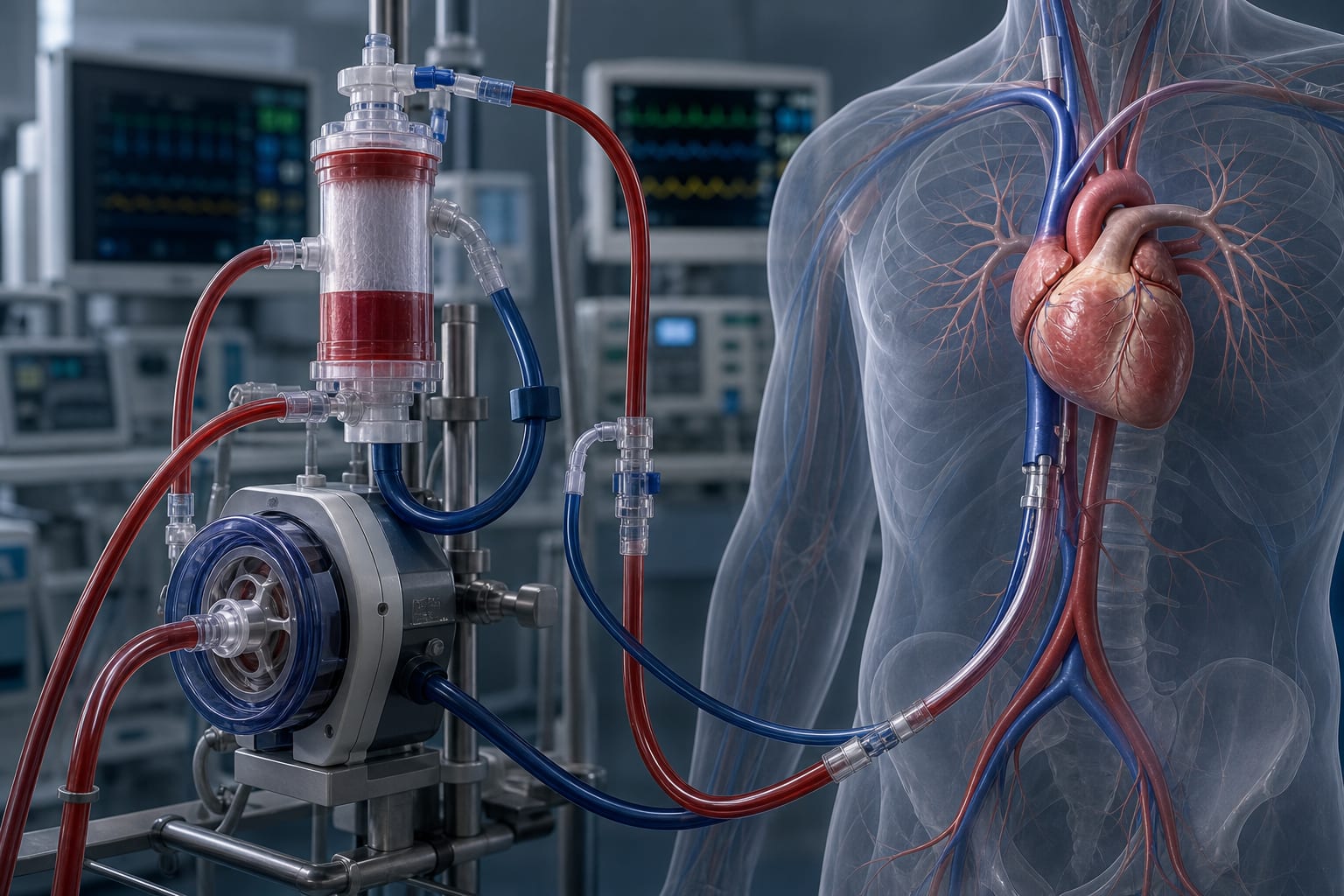
Venoarterial Extracorporeal Membrane Oxygenation for Adult Patients Experiencing Cardiogenic Shock
Overview
Venoarterial extracorporeal membrane oxygenation (VA ECMO) is a critical intervention for adults with cardiogenic shock who do not respond to less invasive treatments. VA ECMO is associated with significant complications.
Background
Cardiogenic shock remains a leading cause of mortality in hospitalized patients, with rates around 50%. The introduction of temporary mechanical circulatory support (tMCS) devices like VA ECMO has transformed management strategies. Current guidelines emphasize a structured, team-based approach to shock management.
Data Highlights
No numerical data available in the source material.
Key Findings
VA ECMO is used for patients with cardiogenic shock who do not respond to standard therapies.
Complications associated with VA ECMO include bleeding, acute kidney injury, stroke, and limb ischemia.
Management of VA ECMO is complex and varies based on the underlying cause of cardiogenic shock.
Recent trials have shown no survival advantage for early routine VA ECMO in acute myocardial infarction-related shock.
Guidelines emphasize the importance of team-based care and careful patient selection for tMCS.
Clinical Implications
Clinicians should be aware of the complications associated with VA ECMO and the need for a multidisciplinary approach in managing patients with cardiogenic shock.
Conclusion
VA ECMO represents a significant intervention for cardiogenic shock but is fraught with complications. Further research is necessary.