The SIRT1/STAT3 axis as a central regulator of immune, inflammatory, and lipid metabolic dysregulation in rheumatoid arthritis: therapeutic implications - Report - MDSpire
Advertisement
The SIRT1/STAT3 axis as a central regulator of immune, inflammatory, and lipid metabolic dysregulation in rheumatoid arthritis: therapeutic implications
Clinical Report: The Role of the SIRT1/STAT3 Pathway in Rheumatoid Arthritis
Overview
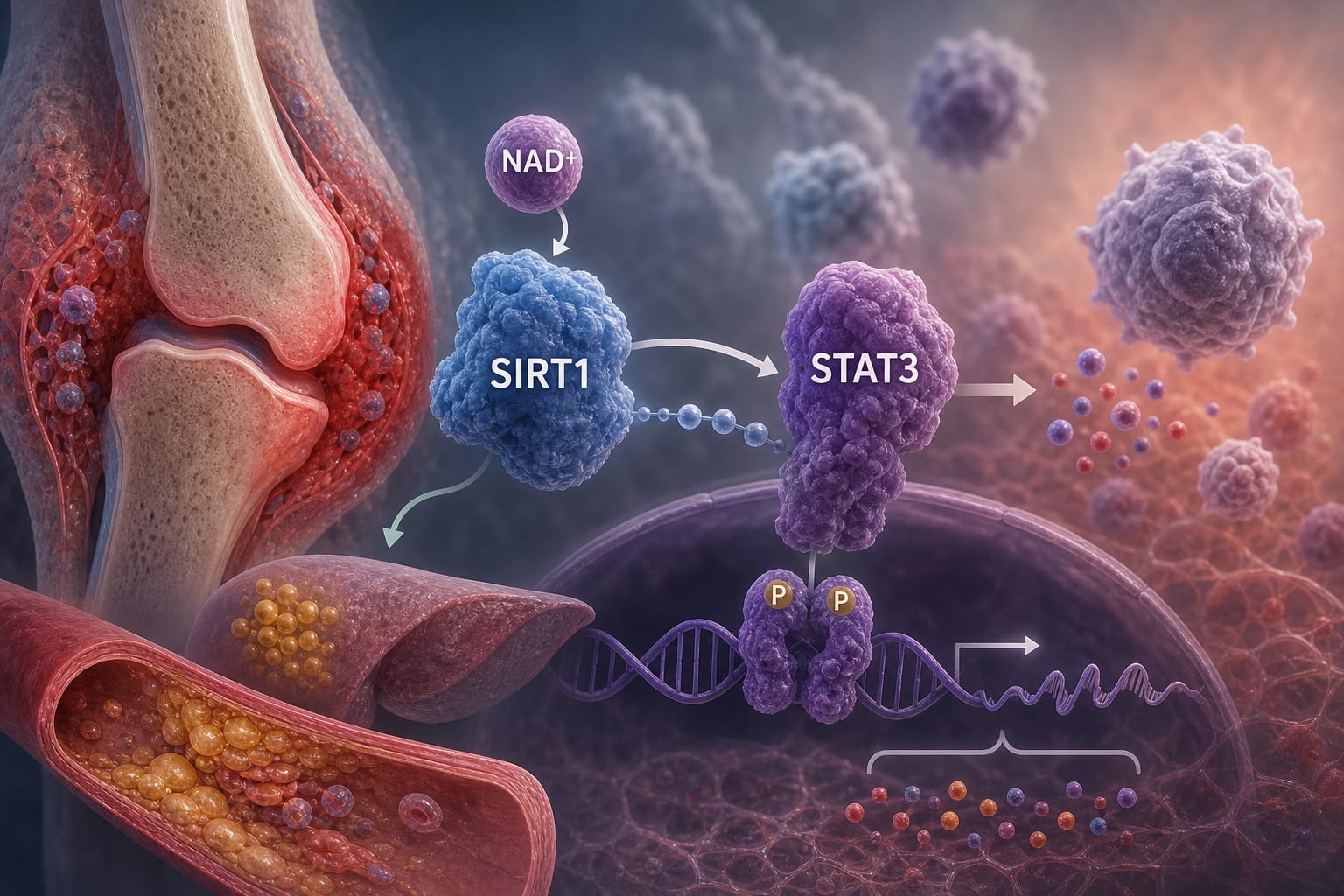
This report discusses the SIRT1/STAT3 pathway's role in regulating immune response, inflammation, and lipid metabolism in rheumatoid arthritis (RA). It highlights the antagonistic relationship between SIRT1 and STAT3 and proposes therapeutic strategies targeting this axis to improve patient outcomes.
Background
Rheumatoid arthritis (RA) is a prevalent autoimmune disease that leads to significant morbidity and increased cardiovascular disease risk due to dyslipidemia. Understanding the interplay between inflammation and lipid metabolism is crucial for developing effective treatments. The SIRT1/STAT3 pathway emerges as a key regulator in this context, linking immune dysregulation and metabolic disturbances.
Data Highlights
No numerical data or trial data presented in the article.
Key Findings
SIRT1 acts as a metabolic sensor with anti-inflammatory properties, while STAT3 promotes inflammation.
Chronic inflammation in RA suppresses SIRT1 and hyperactivates STAT3, creating a feedback loop that exacerbates the disease.
Therapeutic strategies targeting the SIRT1/STAT3 axis include SIRT1 activators and STAT3 inhibitors.
Dietary interventions, such as n-3 polyunsaturated fatty acids, may help mitigate inflammation and correct metabolic abnormalities in RA.
Understanding the immune-inflammatory–lipid metabolic disorder network is essential for developing integrated treatment approaches for RA.
Clinical Implications
Clinicians should consider the SIRT1/STAT3 pathway when evaluating treatment options for RA, as targeting this axis may improve both inflammatory and metabolic outcomes. Incorporating dietary strategies alongside pharmacological interventions could enhance patient management.
Conclusion
The SIRT1/STAT3 pathway represents a promising target for therapeutic intervention in rheumatoid arthritis, potentially leading to improved management of both inflammation and lipid metabolism. Further research is needed to validate these strategies in clinical practice.
In a UK cohort, patients with osteoarthritis who initiated centrally acting analgesics had a higher hazard of knee or hip replacement than those who initiated SSRIs, though residual confounding by pain severity remains a key limitation.