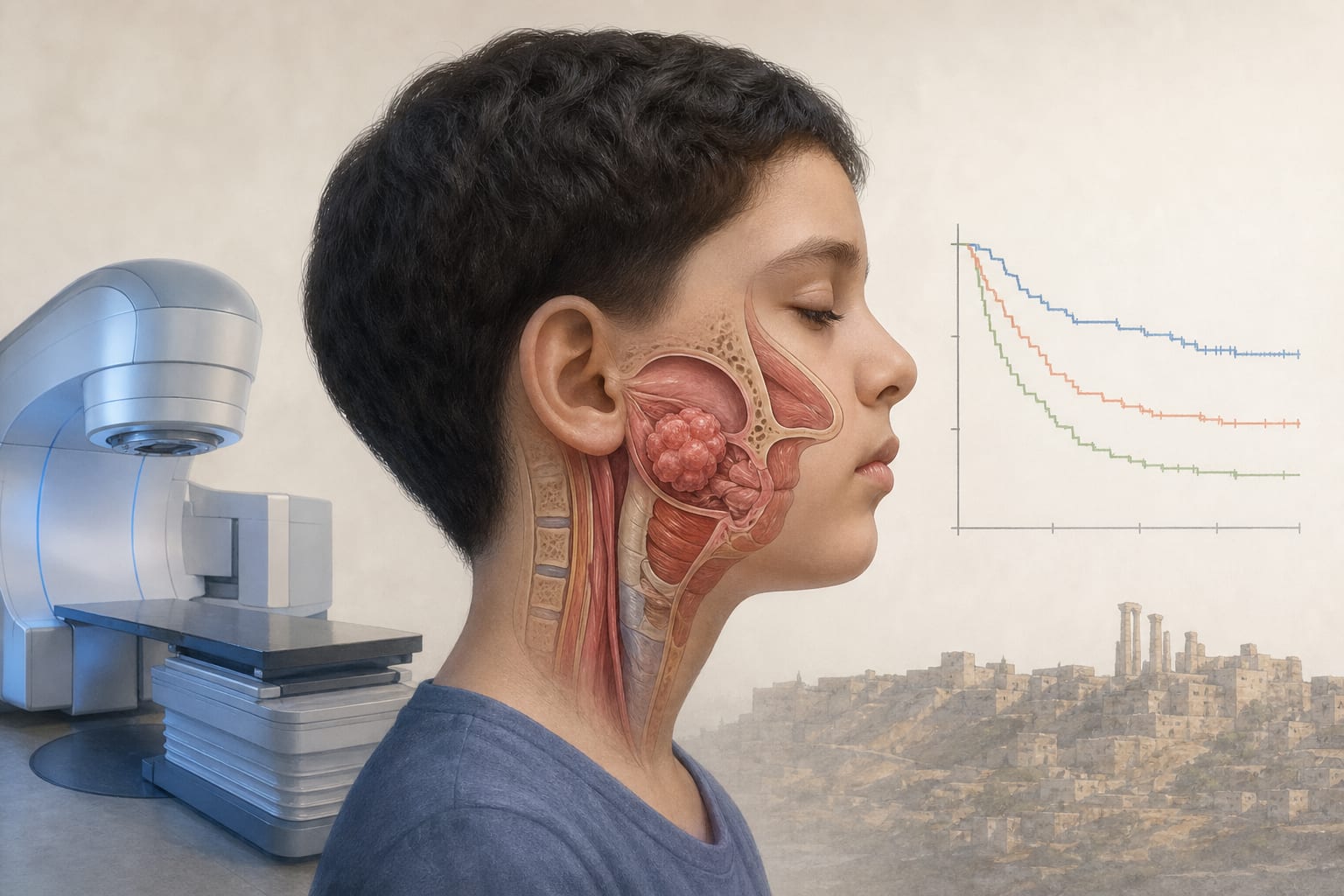
Clinical Report: A 24-Year Retrospective Study of Non-Metastatic Rhabdomyosarcoma
Overview
This study presents a retrospective analysis of pediatric patients with non-metastatic rhabdomyosarcoma (HNRMS) in Jordan, revealing a 5-year overall survival rate of 70.1%.
Background
Rhabdomyosarcoma is the most common soft-tissue sarcoma in children, with a significant impact on pediatric oncology. Understanding the clinical outcomes in different geographical settings, particularly in the Middle East and North Africa (MENA), is crucial for improving treatment protocols and patient management. This study addresses the gap in real-world data regarding HNRMS outcomes in Jordan.
Data Highlights
Parameter
Value
Number of patients
98
Non-metastatic cases
77 (79%)
Median age at diagnosis
5.9 years
5-year event-free survival (EFS)
66.1%
5-year overall survival (OS)
70.1%
Key Findings
Among 98 patients, 77 had non-metastatic disease.
The most common primary sites were parameningeal (40%) and orbital (26%).
Histology was embryonal in 66% of patients.
78% of patients were classified as intermediate risk.
30% experienced relapse or progression, primarily local recurrence.
5-year OS rates varied by primary site: orbital (91.7%), parameningeal (51.2%), and other HN primaries (76.1%).
Clinical Implications
The study highlights the importance of local control strategies for parameningeal tumors, which were associated with poorer outcomes.
Conclusion
The findings indicate that survival rates were achieved in this cohort, emphasizing the need for targeted local control strategies.