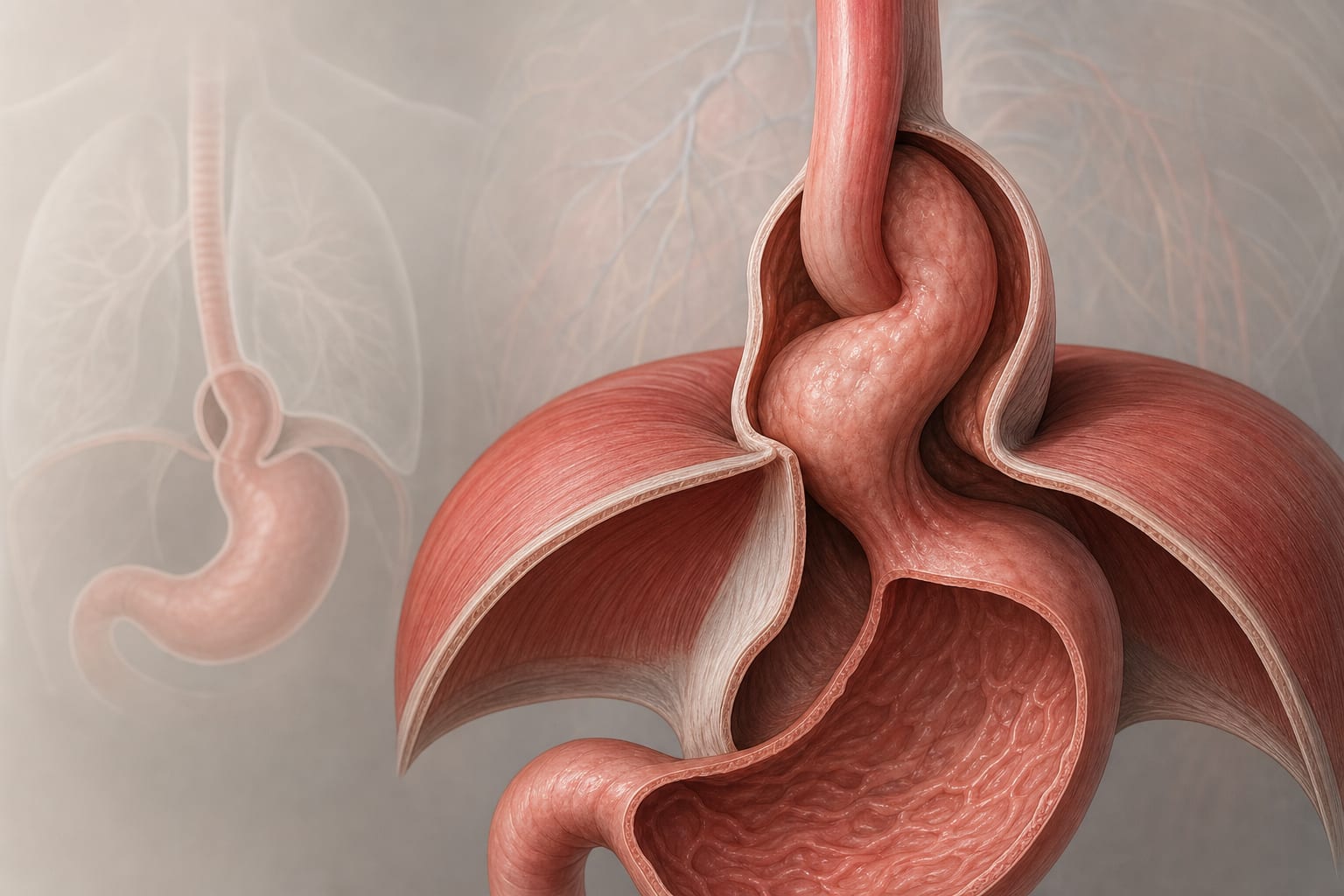
Reevaluating the Deprescribing of Proton Pump Inhibitors: Shifting from Tapering Approaches to Patient-Focused Management
-
By
-
Kenta Watanabe
-
Katsunori Iijima
-
June 27, 2026
Clinical Report: Reevaluating the Deprescribing of Proton Pump Inhibitors
Background
Proton pump inhibitors (PPIs) are commonly prescribed for acid-related gastrointestinal disorders, but their long-term use raises concerns about potential adverse effects. Observational studies have linked chronic PPI therapy to increased risks of enteric infections, fractures, and pneumonia. This has led to a clinical focus on optimizing deprescribing strategies to minimize unnecessary exposure.
Data Highlights
| Study | Success Rate at 24 Weeks | Success Rate at 48 Weeks |
|---|---|---|
| Hojo et al. | ~75% | ~75% |
Key Findings
- Approximately 75% of patients successfully discontinued PPI use after both immediate discontinuation and gradual tapering strategies.
- Transient symptom exacerbations after discontinuation should not be interpreted as treatment failure.
- Patients with GERD were less likely to discontinue therapy compared to those without GERD.
- Structured patient education and supportive strategies are essential for successful deprescribing.
- Rebound acid hypersecretion (RAHS) is a predictable response after PPI withdrawal, necessitating appropriate patient counseling.
Clinical Implications
Understanding RAHS can aid in counseling patients about potential transient symptoms during the deprescribing process.
Conclusion
The findings indicate that both immediate and gradual approaches to deprescribing PPIs can be effective.
Related Resources & Content
- Hojo et al., Multicenter Trial, Year -- Reevaluating the Deprescribing of Proton Pump Inhibitors
- American Gastroenterological Association, Clinical Guidance, Year -- De-prescribing proton pump inhibitors (PPIs)
- JAMA Internal Medicine, Year -- Deprescribing Intervention and Proton Pump Inhibitor Reduction in Primary Care
- Frontiers in Psychiatry — Toward clarifying ASAM’s inpatient and residential benzodiazepine tapering recommendations
- conexiant — Deprescribing Seen in T2D Care
- Drugs - Real World Outcomes — Examination of Long-Term and High-Dose Proton Pump Inhibitor Usage: A Cross-Sectional Analysis in Six Aged Care Facilities in South Australia
- The New Gastroenterologist — Managing GERD: Comparing Lifestyle Changes and Pharmacological Treatments
- Toward clarifying ASAM’s inpatient and residential benzodiazepine tapering recommendations
- Deprescribing Seen in T2D Care
- Examination of Long-Term and High-Dose Proton Pump Inhibitor Usage
- De-prescribing proton pump inhibitors (PPIs) - American Gastroenterological Association
- Deprescribing Intervention and Proton Pump Inhibitor Reduction in Primary Care
- Proton-Pump Inhibitors and Cardiovascular Adverse Events: A Meta-Analysis of Randomized Controlled Trials - PubMed
Based on findings from:
Rethinking proton pump inhibitor deprescribing: from tapering strategies to patient-centered management
Kenta Watanabe, Katsunori Iijima. Journal Of Gastroenterology, 2026.
https://link.springer.com/article/10.1007/s00535-026-02475-5
This content is an AI-generated, fully rewritten summary based on a published scholarly article. It does not reproduce the original text and is not a substitute for the original publication. Readers are encouraged to consult the source for full context, data, and methodology.