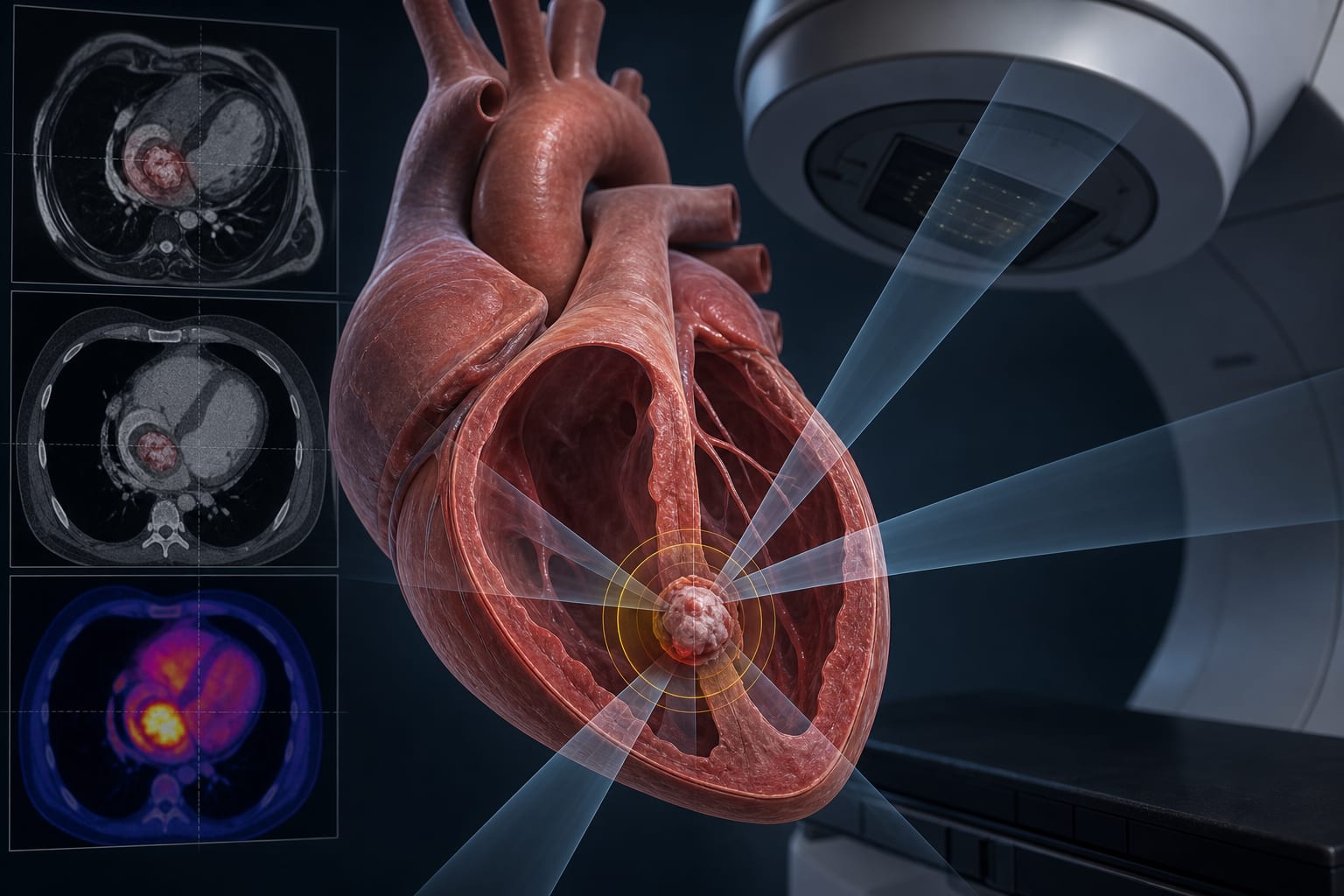
Ultrasound-Assisted Stellate Ganglion Block for Managing Refractory Sympathetically Mediated Arrhythmias After Acute Myocardial Infarction: A Guide and Case Illustrations
-
By
-
Ranwei Yao
-
Yingjie Che
-
Xiuling Wu
-
June 19, 2026
Ultrasound-Assisted Stellate Ganglion Block for Managing Refractory Arrhythmias
Overview
This case series evaluates the efficacy and safety of ultrasound-guided stellate ganglion block (SGB) in five patients with refractory sympathetically mediated arrhythmias following acute myocardial infarction (AMI). SGB successfully terminated arrhythmias in all cases.
Background
Sympathetic arrhythmias can occur after acute myocardial infarction and are often resistant to standard treatments. Stellate ganglion block (SGB) has emerged as a potential intervention to modulate cardiac sympathetic tone and manage these arrhythmias. The introduction of ultrasound guidance enhances the safety and accuracy of this procedure.
Data Highlights
| Outcome | Before SGB | After SGB |
|---|---|---|
| Defibrillations per patient | 4 (IQR: 2.5–21) | 0 (IQR: 0–1) |
Key Findings
- All 5 patients experienced successful termination of electrical storm (100% success rate).
- The median number of defibrillations per patient decreased significantly after SGB.
- All patients developed ipsilateral Horner syndrome, indicating successful sympathetic blockade.
- No procedure-related complications were observed.
Clinical Implications
Ultrasound-guided SGB may be considered a safe and effective bedside intervention for managing refractory sympathetically mediated arrhythmias in post-AMI patients.
Conclusion
Ultrasound-guided SGB demonstrates promise as a rescue therapy for refractory arrhythmias following AMI.
Related Resources & Content
- 2025 ACC/AHA/ACEP/NAEMSP/SCAI Guideline for the Management of Patients With Acute Coronary Syndromes | JACC, 2024 -- Electrical Complications and Prevention of Sudden Cardiac Death After ACS
- Stellate ganglion block for refractory ventricular arrhythmias: an updated systematic review - PubMed
- Efficacy of percutaneous stellate ganglion block according to ventricular arrhythmia cycle length: A post hoc subanalysis of the STAR study - ScienceDirect
- Frontiers in Cardiovascular Medicine — Cardiac autonomic ganglion ablation for refractory coronary artery spasm after PCI: a case report
- Frontiers in Cardiovascular Medicine — Chemogenetic activation of cholinergic intrinsic cardiac ganglia improves border zone oxygenation and reduces arrhythmias during acute local ischemia
- Pain Medicine — Focused anatomic review: ultrasound-guided peripheral nerve stimulation of the saphenous, lateral femoral cutaneous, and genicular nerves
- Clinical Research in Cardiology — Clinical Outcomes in Patients Exhibiting Dual Conduction Pathways in the Atrioventricular Node: Findings from a Multicenter Observational Study
- 2025 ACC/AHA/ACEP/NAEMSP/SCAI Guideline for the Management of Patients With Acute Coronary Syndromes: A Report of the American College of Cardiology/American Heart Association Joint Committee on Clinical Practice Guidelines | JACC
- https://academic.oup.com/eurheartj/article/45/10/823/7592053
- Efficacy of percutaneous stellate ganglion block according to ventricular arrhythmia cycle length: A post hoc subanalysis of the STAR study - ScienceDirect
- Stellate ganglion block for refractory ventricular arrhythmias: an updated systematic review - PubMed
- Stellate ganglion blockade for treatment of ventricular electrical storm: an updated meta-analysis - PMC
- Stellate Ganglion Block for the Treatment of Refractory Ventricular Tachycardia and Electrical Storm. A Narrative Review - ScienceDirect
- Spotlight on the 2022 ESC guideline management of ventricular arrhythmias and prevention of sudden cardiac death: 10 novel key aspects | EP Europace | Oxford Academic
Based on findings from:
Ultrasound-guided stellate ganglion block for refractory sympathetically mediated arrhythmia following acute myocardial infarction: a tutorial and examples
Ranwei Yao, Yingjie Che, Xiuling Wu. Frontiers In Cardiovascular Medicine, 2026.
https://www.frontiersin.org/journals/cardiovascular-medicine/articles/10.3389/fcvm.2026.1846647/full
This content is an AI-generated, fully rewritten summary based on a published scholarly article. It does not reproduce the original text and is not a substitute for the original publication. Readers are encouraged to consult the source for full context, data, and methodology.