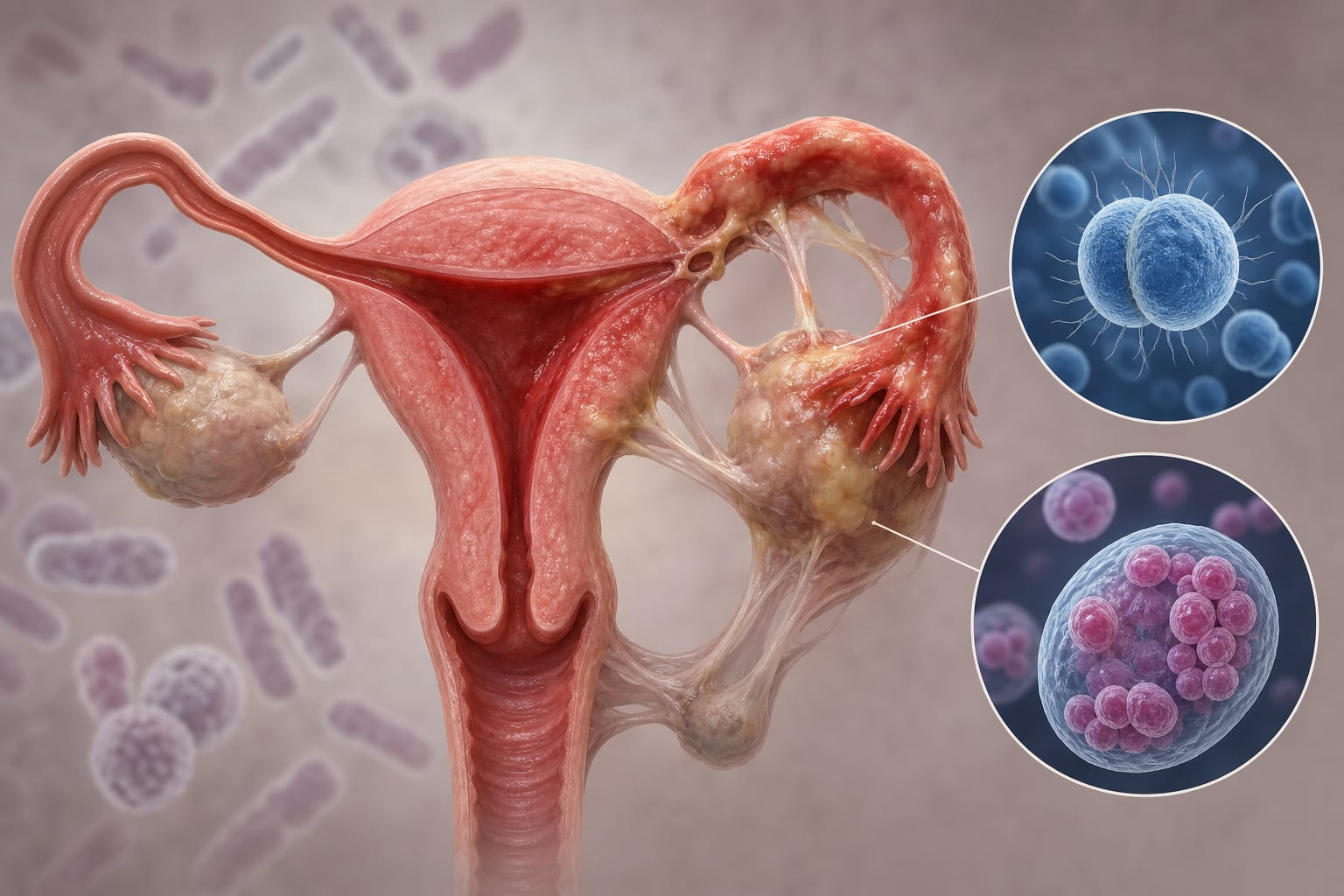
Clinical Report: Factors Contributing to Pelvic Inflammatory Disease and Associated Complication Risks
Overview
This review synthesizes evidence on the factors inducing pelvic inflammatory disease (PID) and its associated complication risks.
Background
Pelvic inflammatory disease (PID) is an infectious condition affecting women's reproductive health, with a high prevalence among sexually active women aged 15 to 25 years. The disease can lead to reproductive sequelae and complications, necessitating an understanding of its risk factors and management strategies.
Data Highlights
No numerical data available in the source material.
Key Findings
PID is primarily caused by sexually transmitted infections, notably Neisseria gonorrhoeae and Chlamydia trachomatis.
Complications of PID include tubal infertility, ectopic pregnancy, and chronic pelvic pain.
Risk factors for PID include cervicovaginal dysbiosis, iatrogenic procedures, anatomical abnormalities, and lifestyle habits.
PID is associated with systemic complications, including cardiovascular and metabolic disorders.
Early diagnosis and appropriate antimicrobial treatment are critical for clinical outcomes.
Clinical Implications
Healthcare providers should consider empiric therapy in suspected PID cases to prevent complications.
Conclusion
Understanding the multifactorial nature of PID and its complications is important for management.
Neighborhood vulnerability was associated with poorer survival among women with epithelial ovarian cancer, with a stronger association among Black women.