Consensus Guidelines from the Italian Thoracic Surgery Society on Factors Influencing, Assessing, and Managing Intraoperative Bleeding in Thoracic Procedures - Report - MDSpire

Consensus Guidelines from the Italian Thoracic Surgery Society on Factors Influencing, Assessing, and Managing Intraoperative Bleeding in Thoracic Procedures

  • By

  • Domenico Galetta

  • Federico Rea

  • Stefano Margaritora

  • Agostini Vanessa

  • Francesco Facciolo

  • Franca Melfi

  • Gianluca Guggino

  • Roberto Crisci

  • Collaborators and Participating Institutions

  • April 28, 2026

  • 0 min

Share

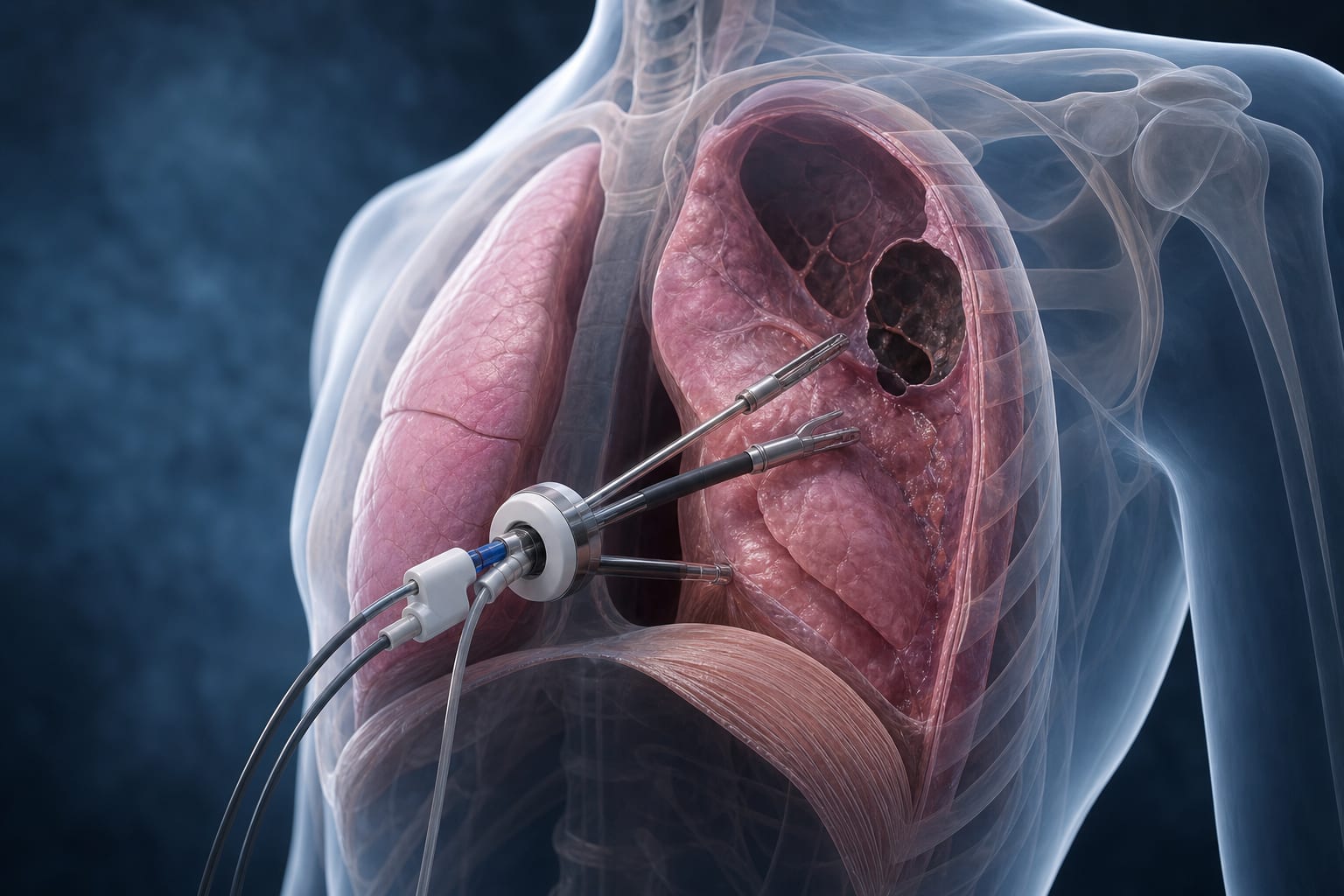
Clinical Report: Consensus Guidelines on Intraoperative Bleeding in Thoracic Surgery

Overview

A national consensus among Italian thoracic surgeons has established guidelines on factors influencing intraoperative bleeding, the use of a validated bleeding scale (VIBeS), and management strategies. The consensus reached significant agreement on the impact of medical and surgical factors on bleeding and the necessity of standardized assessment and management protocols.

Background

Intraoperative bleeding is a critical complication in thoracic surgery that can lead to severe outcomes. Understanding the factors that contribute to bleeding, as well as effective management strategies, is essential for improving surgical outcomes and reducing morbidity. The establishment of guidelines based on expert consensus aims to standardize practices and minimize variations in treatment approaches among surgeons.

Data Highlights

Consensus IssuesAgreement (%)
Influence of medical factors90
Influence of surgical factors90
Acceptance of VIBeS90
Effects of BTS73
Management strategiesBroad positive consensus

Key Findings

  • Consensus reached on 35 out of 39 issues (89.7%).
  • Medical and surgical factors significantly influence intraoperative bleeding.
  • VIBeS is widely accepted for assessing intraoperative bleeding.
  • Effects of bleeding on surgeon stress and postoperative complications were acknowledged.
  • Management strategies should include appropriate hemostatic products based on coagulation status.

Clinical Implications

Surgeons should incorporate the VIBeS for consistent assessment of intraoperative bleeding. Awareness of medical and surgical factors that influence bleeding can guide preoperative planning and risk mitigation strategies. Standardized management protocols can help reduce practice variation and improve patient outcomes.

Conclusion

The consensus guidelines provide a framework for addressing intraoperative bleeding in thoracic surgery, emphasizing the importance of standardized assessment and management. These recommendations aim to enhance surgical safety and patient care.

References

  1. European Society of Intensive Care Medicine, Intensive Care Medicine, 2021 -- Guidelines for Blood Transfusion Approaches in Critically Ill Adults with Bleeding
  2. Updates in Surgery, 2022 -- Evaluating the Effectiveness of Patient Blood Management Strategies in an Italian City Hospital: Impact on Red Blood Cell Transfusion Rates
  3. Obesity Surgery, 2024 -- Impact of Managing Intraoperative Blood Pressure on Postoperative Bleeding Following Bariatric Surgery
  4. 2024 Guideline for Perioperative Cardiovascular Management for Noncardiac Surgery - American Heart Association
  5. Proposal for a Simplified Binary Classification of Estimated Blood Loss in Colorectal Surgery
  6. 2024 Guideline for Perioperative Cardiovascular Management for Noncardiac Surgery - Professional Heart Daily | American Heart Association
  7. Clinical implementation of the Validated Intraoperative Bleeding Scale: Perioperative patient management and effective team communication from the nurses’ perspective - PMC
  8. Bleeding and long-term survival after lung resections: nationwide observational cohort study - PMC

Original Source(s)

Related Content