Enhanced Prediction of HER2 Status in Breast Cancer through the Integration of Intratumoral and Peritumoral Radiomic Features from DCE-MRI - Report - MDSpire
Advertisement
Enhanced Prediction of HER2 Status in Breast Cancer through the Integration of Intratumoral and Peritumoral Radiomic Features from DCE-MRI
Clinical Report: Enhanced Prediction of HER2 Status in Breast Cancer
Overview
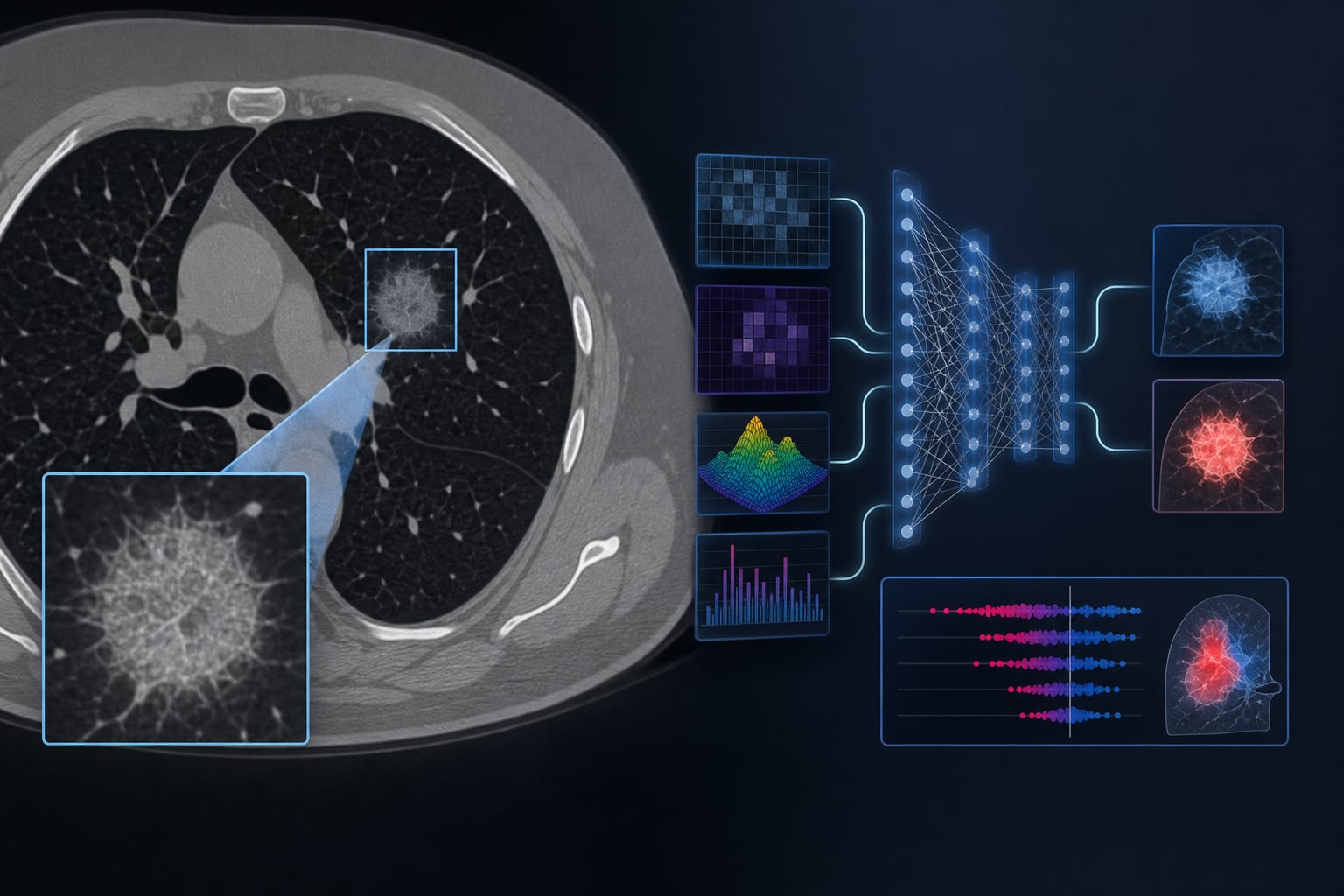
This study evaluates a novel prediction model for HER2 status in breast cancer using intratumoral and peritumoral radiomic features from DCE-MRI. The findings suggest that integrating these features can enhance the accuracy of HER2 status prediction, particularly for the HER2-low subtype.
Background
HER2 status is crucial for determining treatment strategies and prognosis in breast cancer. The emergence of targeted therapies has improved outcomes for HER2-positive patients, but there is a growing need for non-invasive methods to assess HER2 expression, especially for the HER2-low subtype. This study addresses the limitations of traditional biopsy methods by exploring radiomic features derived from MRI.
Data Highlights
No numerical data available in the provided source material.
Key Findings
The study developed a prediction model utilizing intratumoral and peritumoral radiomic features from DCE-MRI.
HER2-low breast cancer has been identified as a distinct therapeutic target, necessitating accurate assessment methods.
Traditional methods for HER2 status evaluation are invasive and may miss low-level expressions.
Radiomics can bridge the gap between imaging and precision medicine, offering a non-invasive alternative for HER2 status prediction.
The peritumoral region's features are underexplored but may provide critical insights into tumor microenvironments.
Clinical Implications
The integration of radiomic features from MRI may provide a reliable, non-invasive method for assessing HER2 status, particularly for patients with HER2-low breast cancer. This approach could enhance treatment personalization and improve patient outcomes.
Conclusion
The study highlights the potential of radiomics in improving HER2 status prediction in breast cancer, particularly for the HER2-low subtype, thereby supporting the need for further research in this area.
The Eugene M. & Christine E. Lynn Cancer Institute at Boca Raton Regional Hospital, part of Baptist Health, reached an important milestone in the advancement of cancer care with the successful treatment of its first patient utilizing proton therapy, according to physicians at both the Institute and the hospital.
One of the most promising developments in advanced-stage Hodgkin lymphoma is the nivolumab-AVD regimen, which combines nivolumab with doxorubicin, vinblastine, and dacarbazine. This article provides practical knowledge for advanced practitioners to effectively manage the most common toxicities associated with nivolumab-AVD.