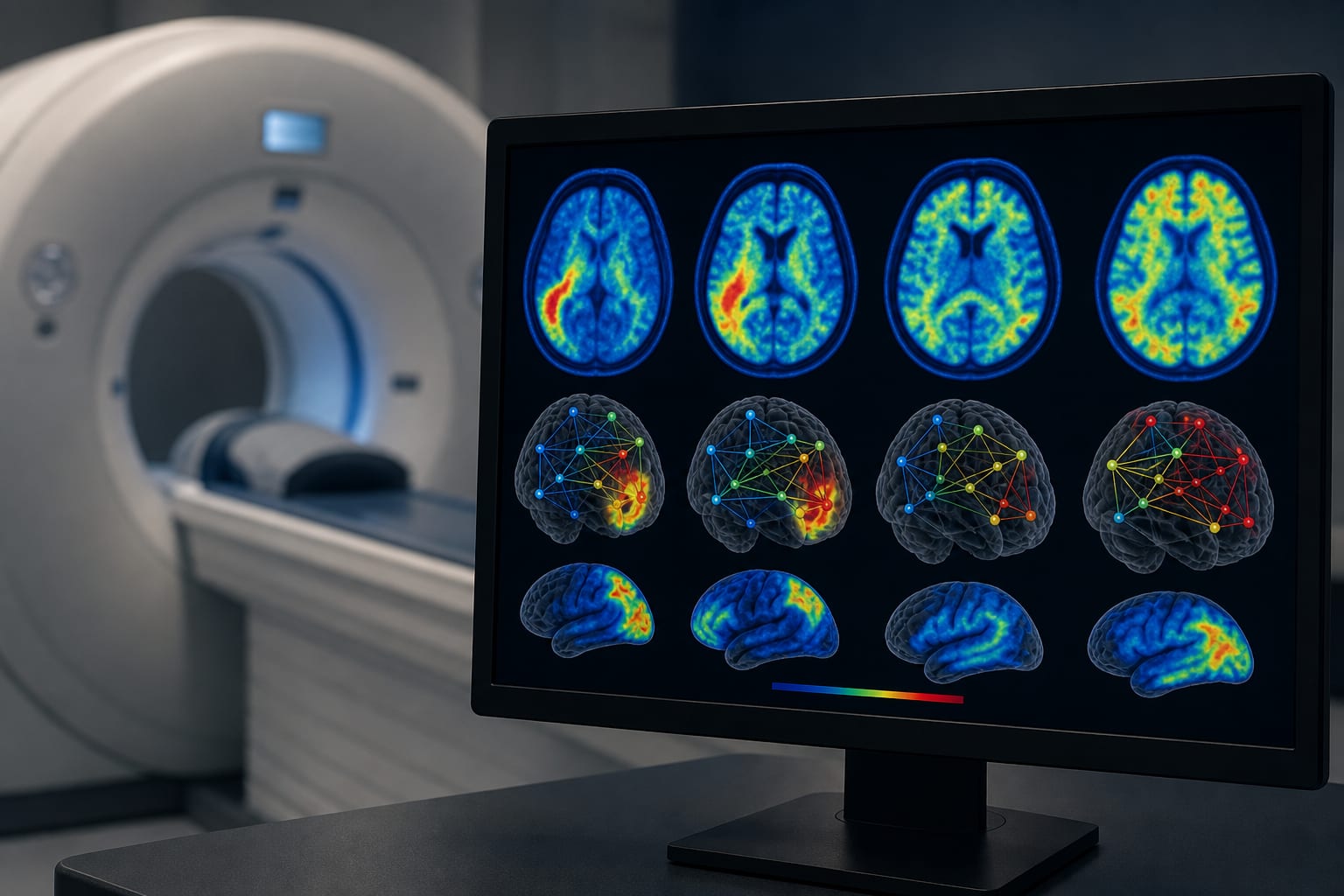
Clinical Report: Laminar fMRI Enhances Understanding of Human Epilepsy Microcircuits
Overview
Laminar functional MRI (fMRI) offers a novel, non-invasive method to investigate layer-specific brain activity alterations in epilepsy, bridging the gap between nano-scale drug targets and macro-scale clinical observations. This technique may improve insights into seizure generation and propagation, potentially refining treatment strategies including surgical targeting and antiseizure medication effects.
Background
Epilepsy is a multi-scale disorder involving dysfunction from nano-scale ion channels to macro-scale brain networks. Current antiseizure medications primarily target nano-scale structures but are assessed clinically at the macro-scale, creating a disconnect that limits treatment efficacy. Microcircuits, particularly cortical layers, serve as a critical intermediate scale where seizures initiate and propagate. Laminar fMRI can resolve activity across cortical depths, providing a promising tool to study these microcircuits in humans.
Data Highlights
Drug-resistant epilepsy affects 25%–30% of patients despite available antiseizure medications. ASMs target nano-scale ion channels and receptors but are measured at macro-scale using EEG and conventional fMRI. Laminar fMRI enables resolution of activity across cortical layers, potentially linking molecular dysfunctions to observed seizure activity. This technique may improve understanding of seizure mechanisms and treatment responses.
Key Findings
Approximately one-third of epilepsy patients are resistant to current antiseizure medications.
ASMs act on nano-scale targets but clinical effects are measured at macro-scale, creating a critical knowledge gap.
Seizure initiation and propagation occur in microcircuits, especially deep cortical layers, bridging nano- and macro-scales.
Laminar fMRI can non-invasively measure layer-specific brain activity alterations in humans with epilepsy.
This technique complements animal and electrophysiological studies, offering insights into microcircuit dysfunction in seizure generation.
Laminar fMRI holds potential to improve surgical targeting and elucidate mechanistic effects of antiseizure medications.
Clinical Implications
Laminar fMRI may enhance clinical management by providing detailed insights into the microcircuit-level mechanisms of epilepsy, enabling more precise localization of seizure onset zones for surgery. Understanding layer-specific drug effects could guide personalized antiseizure medication strategies, potentially improving outcomes in drug-resistant epilepsy. This approach may reduce empirical treatment reliance and optimize therapeutic interventions.
Conclusion
Laminar fMRI represents a promising advancement in epilepsy research and clinical care by bridging the gap between molecular dysfunction and large-scale brain activity. Its application could lead to improved understanding, diagnosis, and treatment of epilepsy at the microcircuit level.
References
Review Article, 2024 -- Exploring the Role of Laminar Functional MRI in Enhancing Insights into Human Epilepsy
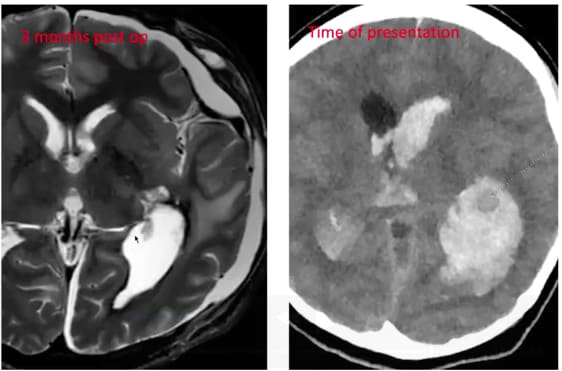
This Neuroscience Grand Rounds session, led by Muhammad Osama, MD, provides a pediatric neurosurgeon’s perspective on arteriovenous malformations (AVMs) in children, rare but high-risk vascular lesions that can lead to seizures, neurological deficits, or life-threatening hemorrhage.