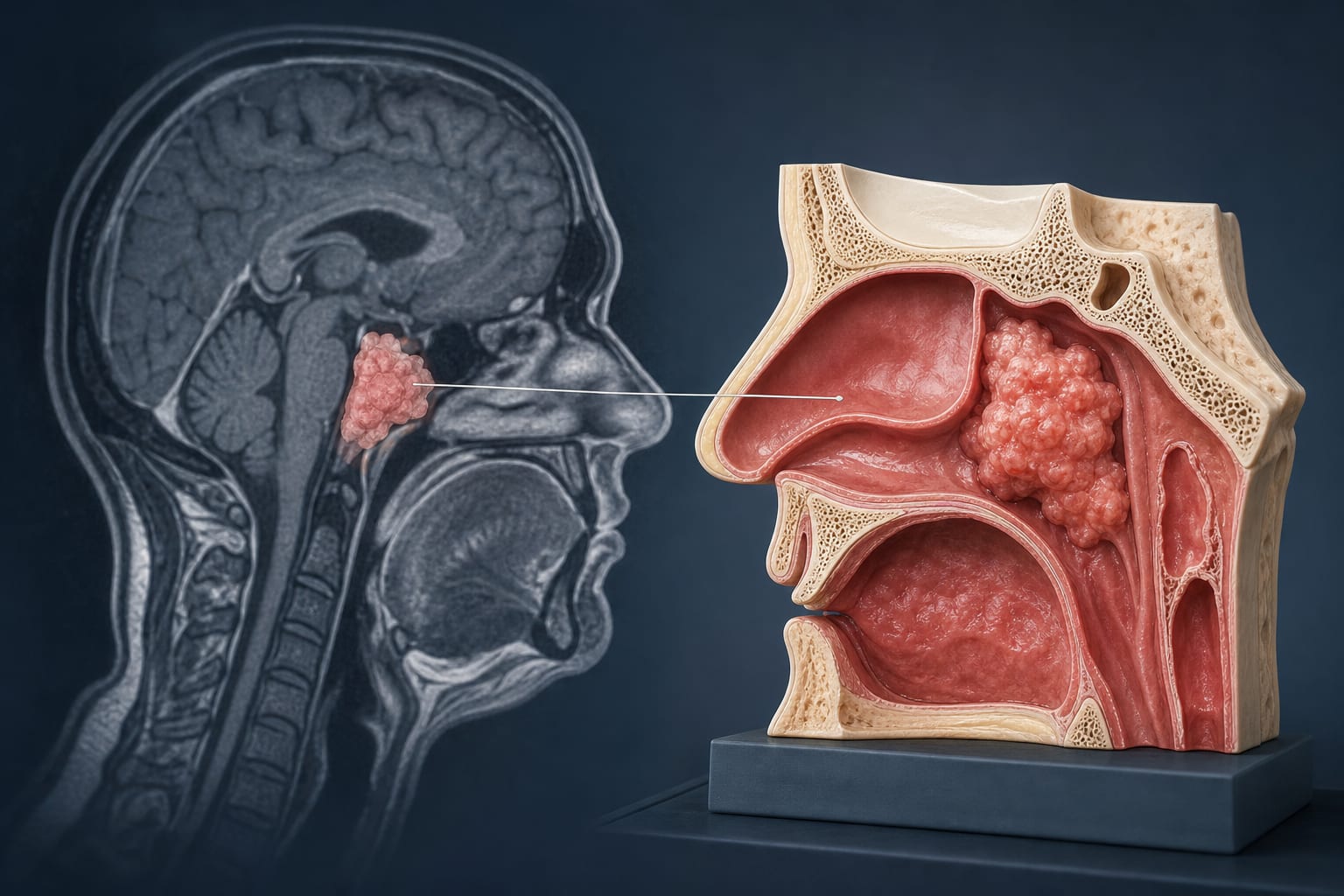
Clinical Report: Evaluation of the 9th Edition TNM Classification for Staging NPC
Overview
This study evaluates the impact of the 9th edition TNM classification on staging nasopharyngeal carcinoma (NPC) in Vietnamese patients. Significant changes in stage distribution were observed, with 88.3% of patients experiencing overall stage changes compared to the 8th edition.
Background
Nasopharyngeal carcinoma (NPC) is a prevalent malignancy in East and Southeast Asia, particularly in Vietnam, where it poses a significant cancer burden. The TNM classification system is crucial for staging and treatment decisions in cancer care. The introduction of the 9th edition aims to address limitations of the previous edition and improve prognostic assessment.
Data Highlights
Characteristic
8th Edition
9th Edition
Mean Age
51.8 ± 13.5 years
N/A
Male-to-Female Ratio
2.53/1
N/A
T Stage Distribution
T1: 25.4%, T2: 25.9%, T3: 23.4%, T4: 24.3%
Specific percentages for T stages not provided
N Stage Distribution
N0: 13.3%, N1: 37.8%, N2: 33.0%, N3: 15.9%
Specific percentages for N stages not provided
Stage III-IVA
64.1%
Specific data not provided
Overall Stage Change
N/A
88.3% of patients
Key Findings
555 newly diagnosed NPC patients were included in the study.
99.3% of patients had non-keratinizing squamous cell carcinoma, undifferentiated subtype.
88.3% of patients experienced changes in overall stage when reassessed using the 9th edition TNM classification.
1 patient had their standard treatment approach modified based on the 9th edition classification.
Stage distribution according to the 8th edition included 64.1% in Stage III-IVA.
Clinical Implications
The findings suggest that the 9th edition TNM classification may lead to significant changes in staging and treatment decisions for NPC patients. Clinicians should be aware of these changes to optimize patient management.
Conclusion
The 9th edition of the TNM classification for NPC introduces important changes that could enhance prognostic assessment and treatment strategies.