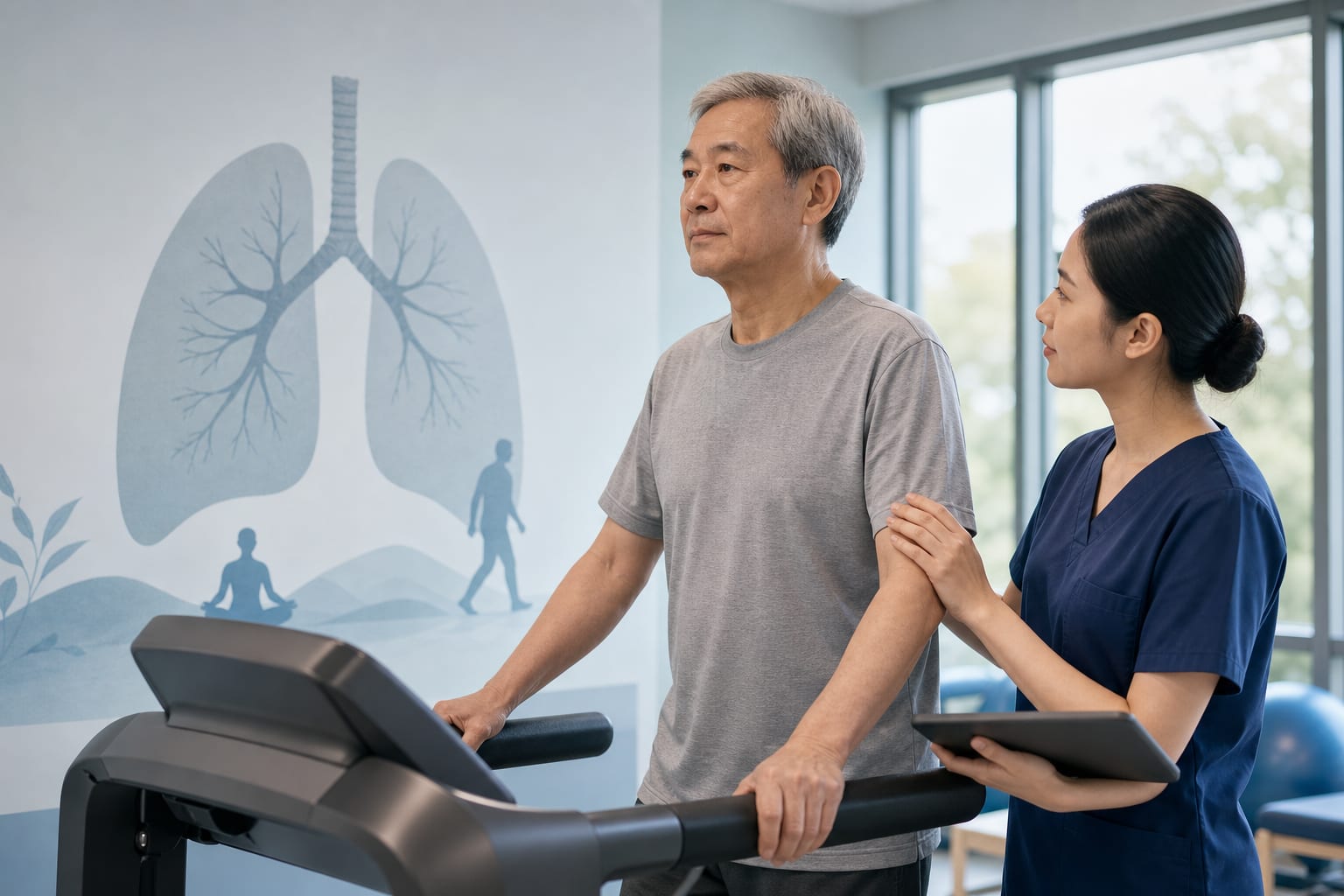
Immediate Evaluation of Exercise Rehabilitation and Symptoms in Inpatients with COPD
Overview
This study investigates the real-time associations between exercise rehabilitation and symptoms in hospitalized patients with COPD, highlighting the role of self-efficacy. Findings indicate that dyspnea and irritability negatively impact exercise behavior, while self-efficacy promotes active rehabilitation.
Background
Chronic obstructive pulmonary disease (COPD) is a leading cause of mortality globally, with significant implications for patients' physical and mental well-being. Pulmonary rehabilitation is essential for improving health outcomes, yet many patients struggle with exercise adherence due to symptom burden. Understanding the dynamics of exercise behavior in relation to symptoms can enhance rehabilitation strategies.
Data Highlights
Variable
Coefficient (β)
p-value
Dyspnea
−0.928
< 0.001
Irritability
−0.469
0.004
Self-efficacy
0.319
0.001
Self-efficacy moderating irritability
−0.039
< 0.05
Key Findings
Dyspnea significantly predicts low active exercise rehabilitation behavior (β = −0.928, p < 0.001).
Irritability also negatively impacts active exercise rehabilitation behavior (β = −0.469, p = 0.004).
Self-efficacy positively predicts active exercise rehabilitation behavior (β = 0.319, p = 0.001).
Self-efficacy buffers the negative effect of irritability on exercise behavior (β = −0.039, p < 0.05).
Only 26-30% of COPD patients meet WHO physical activity recommendations.
In-hospital rehabilitation can reduce hospital stays and improve post-discharge exercise adherence.
Clinical Implications
Healthcare providers should monitor symptoms dynamically and incorporate strategies to enhance self-efficacy in pulmonary rehabilitation programs. Addressing dyspnea and irritability may improve patient engagement in active exercise rehabilitation.
Conclusion
The study underscores the importance of managing symptoms and fostering self-efficacy to enhance exercise rehabilitation in COPD patients. These findings can inform clinical practices aimed at improving patient outcomes.