An exploratory case series of sequential stereotactic body radiotherapy and tislelizumab after platinum-doublet chemotherapy in stage IIIB/C–IV non-squamous NSCLC - Report - MDSpire
Conexiant’s news site is now MDSpire News. Learn more
Advertisement
A Pilot Case Series Investigating the Efficacy of Sequential Stereotactic Body Radiotherapy and Tislelizumab Following Platinum-Doublet Chemotherapy in Patients with Stage IIIB/C–IV Non-Squamous Non-Small Cell Lung Cancer
Clinical Report: Efficacy of SBRT and Tislelizumab in Advanced NSCLC
Overview
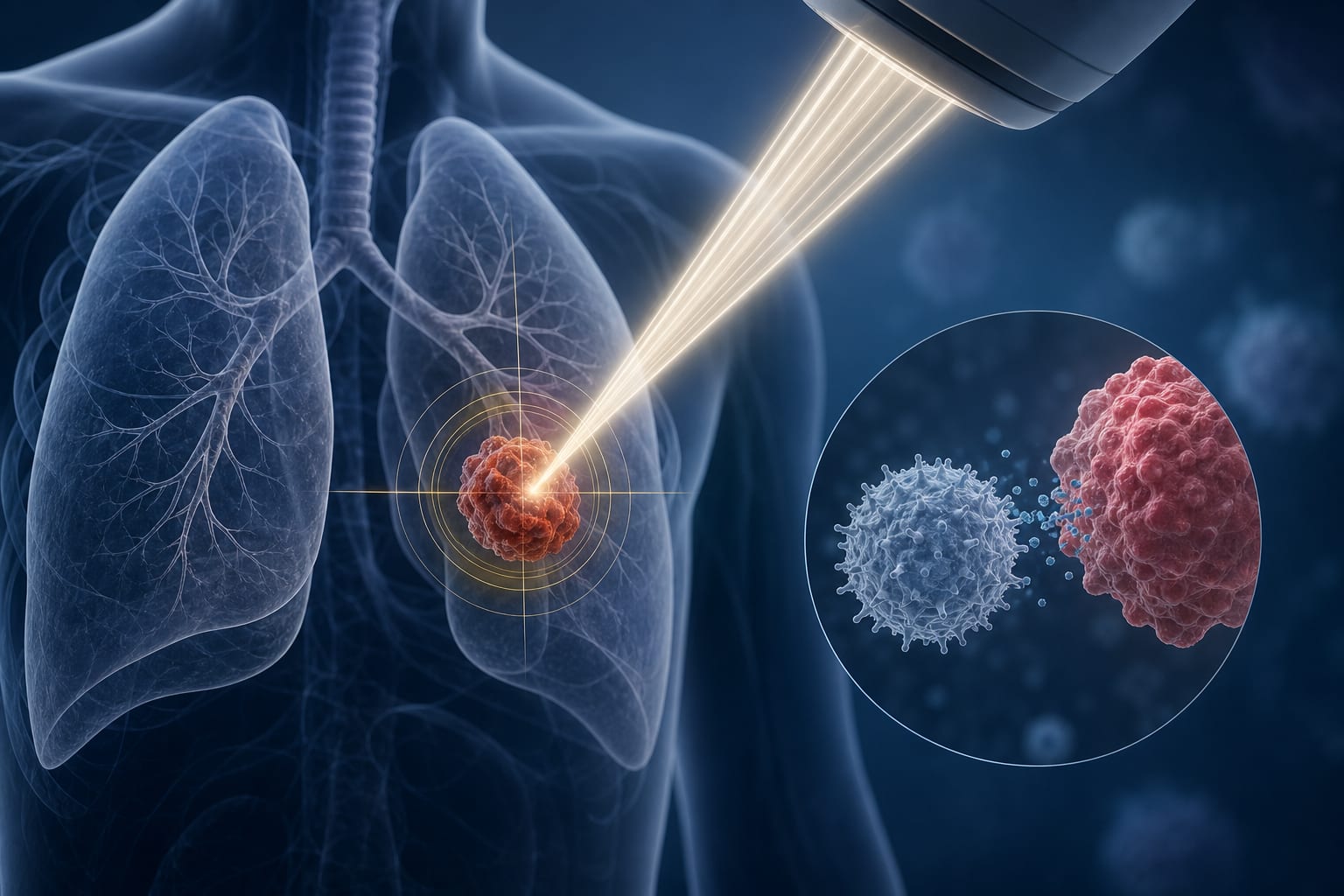
This pilot case series explores the efficacy and safety of sequential stereotactic body radiotherapy (SBRT) and tislelizumab following platinum-doublet chemotherapy in patients with advanced non-squamous non-small cell lung cancer (NSCLC). Preliminary findings report a 1-year progression-free survival rate of 25% and a median overall survival of 26.89 months.
Background
Lung cancer remains the leading cause of cancer-related mortality globally, particularly in advanced stages where treatment options are limited. Non-small cell lung cancer (NSCLC) accounts for approximately 85% of lung cancer cases, and patients without actionable driver mutations face significant therapeutic challenges. This study investigates a treatment approach combining SBRT and immunotherapy.
Data Highlights
Endpoint
Value
1-year PFS rate
25%
Median PFS
10.14 months (95% CI: 3.65–17.38)
Median OS
26.89 months (95% CI: 17.68–30.19)
1-year OS rate
100%
2-year OS rate
62.5%
Best Overall Response Rate (BOR)
87.5%
Overall Response Rate (ORR)
12.5%
Disease Control Rate (DCR)
100%
Grade ≥3 TRAEs
62.5%
Key Findings
The 1-year progression-free survival (PFS) rate was 25%.
Median overall survival (OS) was 26.89 months.
Best overall response rate (BOR) was 87.5%, with 7 patients achieving partial response.
All patients experienced treatment-related adverse events (TRAEs), with 62.5% having grade ≥3 TRAEs.
The study population consisted of patients with unresectable stage IIIB/C–IV NSCLC lacking actionable driver mutations.
Individualized SBRT regimens varied in dose and fractionation from 3–10 Gy/fx.
Clinical Implications
The findings indicate that sequential SBRT and tislelizumab were evaluated in patients with advanced NSCLC. Further investigation in larger, controlled trials is necessary.
Conclusion
This pilot case series provides preliminary insights into the combination of SBRT with tislelizumab in advanced NSCLC, but further research is required.
The goal of this clinical trial is to learn if Adaptive Radiation Therapy (ART) is safe and effective in treating patients with locally advanced pancreatic cancer.