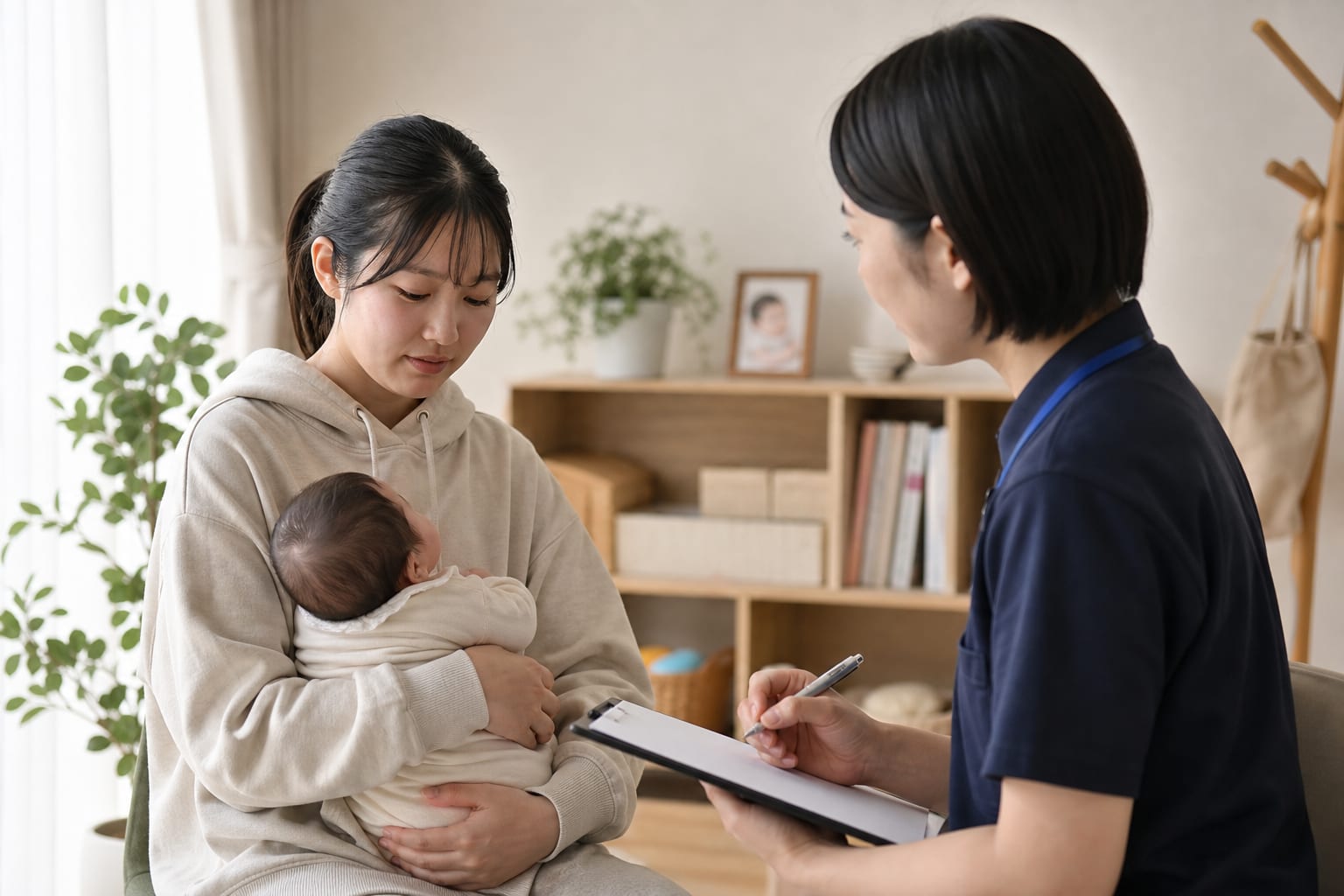
Impact of Home Visiting Interventions on Psychosocial Needs and Postnatal Depression
Overview
The Early Partnership programme, co-designed with young mothers, aimed to evaluate the effectiveness of a home visiting intervention on perceived fulfilment of psychosocial needs and postnatal depressive symptoms among first-time adolescent and young adult mothers.
Background
Adolescent and young adult mothers face significant psychosocial challenges and are at a heightened risk for postnatal depression. Traditional perinatal care often lacks the non-judgmental support these mothers need, leading to unmet needs and health disparities. Home visiting programmes have been proposed as a solution to provide tailored support and improve maternal mental health outcomes.
Data Highlights
Outcome
Intervention Group
Control Group
Mean Difference (95% CI)
Fulfilment of Psychosocial Needs at 6 months
Improved
Less Improvement
4.16 (1.35 to 6.97)
Fulfilment of Psychosocial Needs at 12 months
Improved
Less Improvement
3.93 (0.63 to 7.23)
Postnatal Depressive Symptoms at 6 months
Lower
Higher
-1.54 (-2.70 to -0.38)
Postnatal Depressive Symptoms at 12 months
Lower
Higher
-1.55 (-2.74 to -0.36)
Key Findings
The Early Partnership programme involved 151 participants in the intervention group and 158 in the control group.
Retention rates at 12 months were high: 82.1% for the intervention group and 82.9% for the control group.
Significant improvements in psychosocial needs were observed at both 6 and 12 months postnatally.
Postnatal depressive symptoms were significantly lower in the intervention group at both 6 and 12 months.
Well-being improved at each time point, although estimates were imprecise.
Clinical Implications
The findings suggest that a co-designed, relationship-based home visiting model may address the psychosocial needs and mental health of young mothers.
Conclusion
The Early Partnership programme demonstrates the potential of tailored home visiting interventions to enhance psychosocial support and reduce depressive symptoms in young mothers. Further research may help to solidify these findings and inform future maternal health strategies.