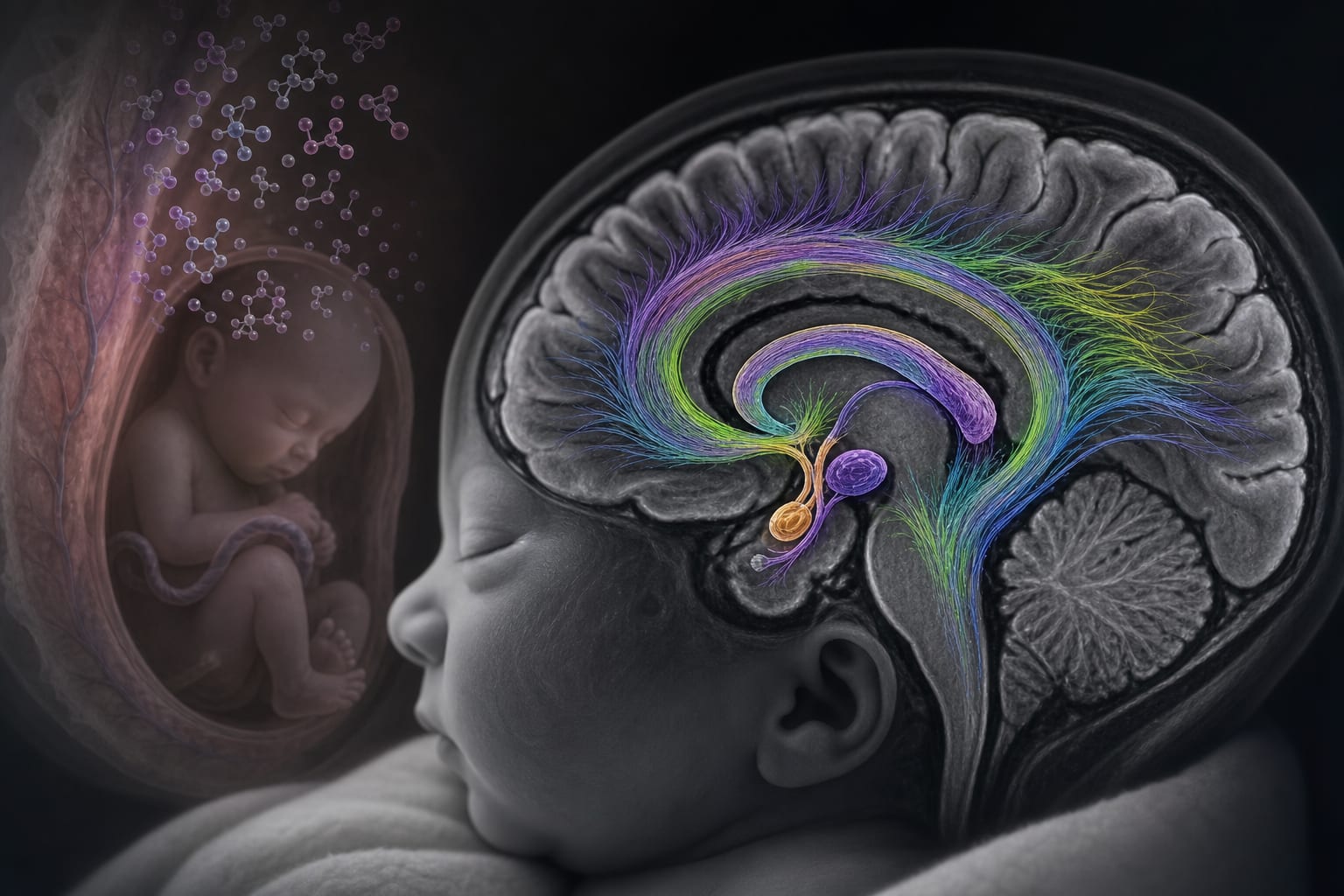
Microstructural Changes in the Limbic System of Newborns Exposed to Opioids During Pregnancy
Overview
This study investigates microstructural changes in the limbic system of neonates exposed to opioids during pregnancy. Using diffusion tensor imaging (DTI), the research compares brain microstructural organization between opioid-exposed and unexposed newborns, focusing on specific brain regions affected by antenatal opioid exposure.
Background
Antenatal opioid exposure is a significant public health issue in the US, with increasing rates of substance use during pregnancy. Opioids can cross the placenta and affect fetal brain development, particularly in the limbic system, which is crucial for emotional regulation and other vital functions. Understanding these changes is essential for addressing the implications of opioid exposure on neonatal health, as evidenced by rising rates of neonatal opioid withdrawal syndrome.
Data Highlights
No numerical data or trial data was provided in the source material, which limits the ability to quantify the findings.
Key Findings
Antenatal opioid exposure is associated with changes in the developing human brain, particularly in the limbic system.
Opioids can disrupt oligodendrocyte lineage and myelination processes in the fetal brain.
Neonates exposed to opioids exhibit disrupted white matter microstructure in various brain areas.
Clinical Implications
Clinicians should monitor neonates exposed to opioids during pregnancy for potential microstructural brain changes that may impact their development and health.
Conclusion
This research highlights the importance of understanding the neurodevelopmental consequences of antenatal opioid exposure, particularly regarding limbic system changes in newborns.
by María Guadalupe Mora Álvarez, Josepheen De Asis-Cruz, Kushal Kapse, Yao Wu, Stephanie L. Merhar, Carla M. Bann, Jamie E. Newman, Nicole Mack, Sara B. DeMauro, Namasivayam Ambalavanan, Scott A. Lorch, Deanne Wilson-Costello, Brenda B. Poindexter, Myriam Peralta-Carcelen, Jonathan M. Davis, Catherine Limperopoulos