Type 3 Innate Lymphoid Cells Predominate in the ILC Population of Advanced Lung Disease
Overview
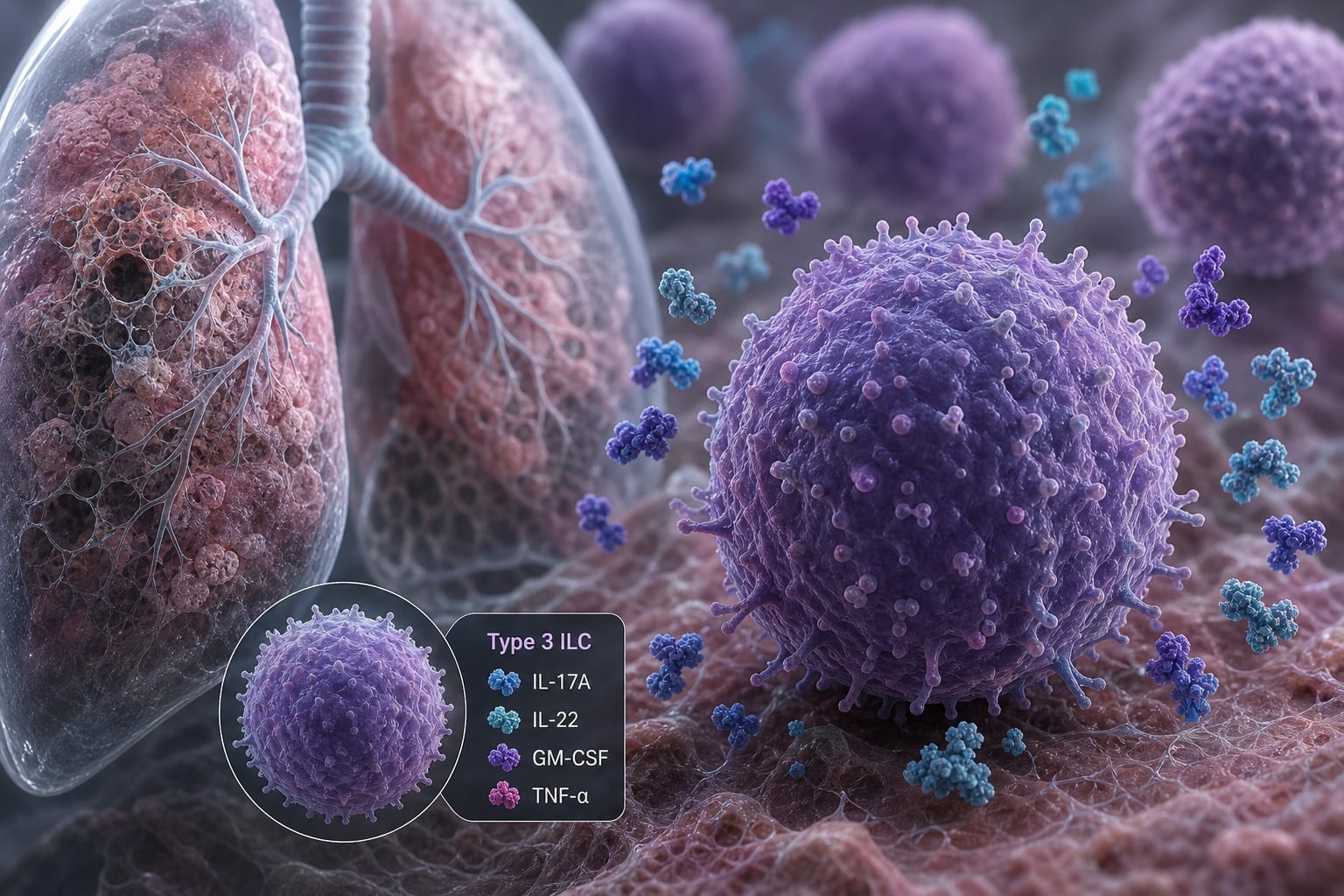
This study characterizes the predominance of type 3 innate lymphoid cells (ILCs) in the lungs and lymph nodes of patients with advanced lung diseases, revealing significant differences compared to healthy tissue. Type 3 ILCs contribute to a pro-inflammatory environment, while type 2 ILCs are more prevalent in the peripheral blood of stable cystic fibrosis patients receiving CFTR modulator therapy.
Background
Innate lymphoid cells (ILCs) are crucial in immune responses and chronic inflammation, particularly in lung diseases. Understanding the distribution and function of ILCs in endstage lung diseases such as cystic fibrosis, COPD, and pulmonary fibrosis is essential for developing targeted therapies. This research highlights the role of ILCs in sustaining inflammation and their potential as therapeutic targets.
Data Highlights
Condition
ILC Type
Dominance
Cystic Fibrosis
Type 2
Increased in PB
COPD/Emphysema
Type 3
Predominant in lungs
Pulmonary Fibrosis
Type 3
Predominant in lungs
Key Findings
Type 3 ILCs dominate the ILC population in lungs and lymph nodes of patients with advanced lung diseases.
Type 1 ILCs are the major population in healthy lung tissue.
Type 2 ILCs are increased in the peripheral blood of clinically stable cystic fibrosis patients.
ILC composition changes persist in cystic fibrosis patients receiving CFTR modulator therapy for up to 24 months.
Type 3 ILCs contribute to a pro-inflammatory cytokine environment in endstage lung disease.
Clinical Implications
The findings suggest that type 3 ILCs play a significant role in the inflammatory processes of advanced lung diseases, indicating a need for targeted therapies that address this ILC subtype. Additionally, the persistence of altered ILC populations in cystic fibrosis patients despite treatment highlights the complexity of managing chronic lung inflammation.
Conclusion
This study underscores the importance of ILCs in the pathogenesis of advanced lung diseases and suggests that targeting these cells may offer new therapeutic avenues. Further research is needed to explore the implications of ILC dynamics in chronic lung disease management.