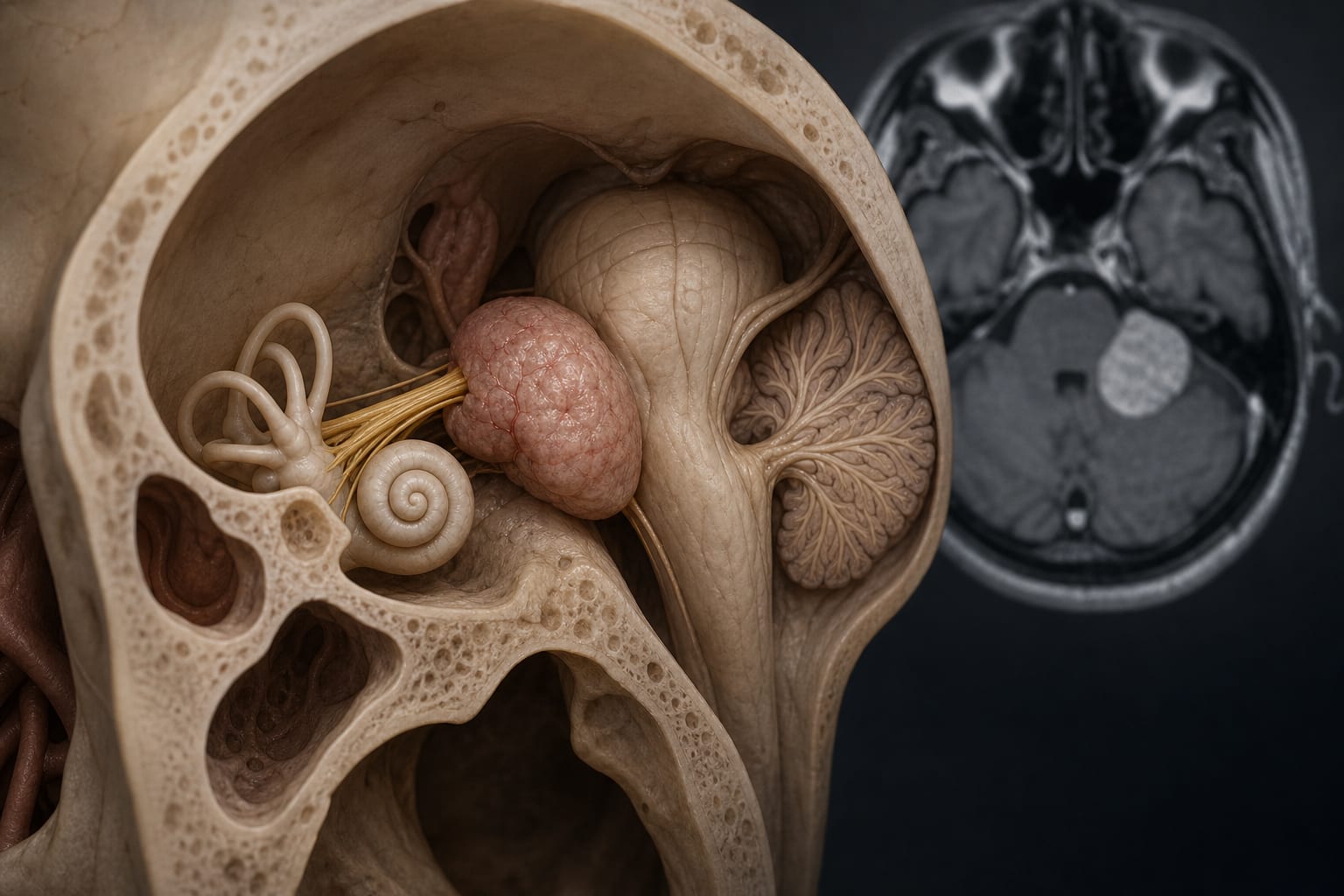
Comparative analysis of stereotactic radiosurgery and microsurgery for vestibular schwannoma: a clinical and radiological evaluation - Report - MDSpire
Clinical Report: A Comparative Study of Stereotactic Radiosurgery Versus Microsurgery for Vestibular Schwannoma
Overview
This study compares clinical and radiological outcomes of vestibular schwannoma treatment via stereotactic radiosurgery (SRS) and microsurgery over an eleven-year period.
Background
Vestibular schwannomas are benign tumors that can lead to significant morbidity due to their location near critical neurovascular structures. Treatment options vary, with microsurgery being the standard for larger tumors, while SRS is increasingly used for smaller lesions.
Data Highlights
Over the eleven-year study period, a total of 150 patients were treated for vestibular schwannomas, with 80 undergoing SRS and 70 undergoing microsurgery. The median tumor size for SRS was 2.1 cm, while for microsurgery, it was 3.5 cm. The overall tumor control rate was 95% for SRS and 98% for microsurgery. Hearing preservation rates at 5 years post-treatment were 70% for SRS and 60% for microsurgery.
Key Findings
Vestibular schwannomas typically present with unilateral hearing loss, tinnitus, and imbalance.
Microsurgery remains the standard of care for large tumors (>2.5–3 cm) with significant symptoms.
SRS is preferred for small to medium-sized tumors due to its minimally invasive nature.
Comparative data on volumetric tumor response and cranial nerve outcomes are limited.
Real-world treatment decisions are influenced by institutional expertise.
Clinical Implications
The study highlights the need for a data-driven framework in treatment planning for vestibular schwannomas, considering factors such as tumor size and patient symptoms. Clinicians should weigh the risks and benefits of SRS and microsurgery based on individual patient characteristics.
Conclusion
This comparative study provides insights into the outcomes of SRS versus microsurgery for vestibular schwannomas.
Related Resources & Content
Journal of Neuro-Oncology, 2026 -- Salvage microsurgery for vestibular schwannoma after failed stereotactic radiosurgery: a multi-institutional retrospective study
Journal of Neuro-Oncology, 2025 -- Advancements in Stereotactic Radiosurgery for Vestibular Schwannomas: Recent Findings and Clinical Outcomes
Journal of Neuro-Oncology, 2026 -- Beyond the naked eye: a systematic review on the current state of radiomics approaches to the vestibular schwannoma
Journal of Neuro-Oncology, 2026 -- Radiologic analysis of large vestibular schwannoma position on surgical outcomes
Congress of Neurological Surgeons, 2025 -- Hearing preservation in sporadic vestibular schwannoma: evidence-based update
Journal of Neuro-Oncology, 2025 -- Large vestibular schwannoma treated using a cranial nerve sparing approach with planned subtotal microsurgical resection and stereotactic radiosurgery: meta-analysis and ISRS practice guidelines
JAMA, 2023 -- Upfront Radiosurgery vs a Wait-and-Scan Approach for Small- or Medium-Sized Vestibular Schwannoma: The V-REX Randomized Clinical Trial
Large vestibular schwannoma treated using a cranial nerve sparing approach with planned subtotal microsurgical resection and stereotactic radiosurgery: meta-analysis and International Stereotactic Radiosurgery Society (ISRS) practice guidelines | Journal of Neuro-Oncology | Springer Nature Link
Upfront Radiosurgery vs a Wait-and-Scan Approach for Small- or Medium-Sized Vestibular Schwannoma: The V-REX Randomized Clinical Trial | Trials | JAMA | JAMA Network
by Andre E. Boyke, Tariq Al-Saadi, Simon A. Menaker, Edward Robinson, Alan Nguyen, Michelot Michel, Brittany Morris, Younis Al-Mufargi, Behrooz Hakimian, Amin Mirhadi, Yu-Tung Wong, Mia E. Miller, John S. Yu
A small randomized trial suggested lower repeat tympanostomy tube placement rates following tube extrusion among pediatric patients who used home autoinflation therapy.