Clinical Report: Impact of Maternal Immunization on Antibody Transfer to Newborns
Overview
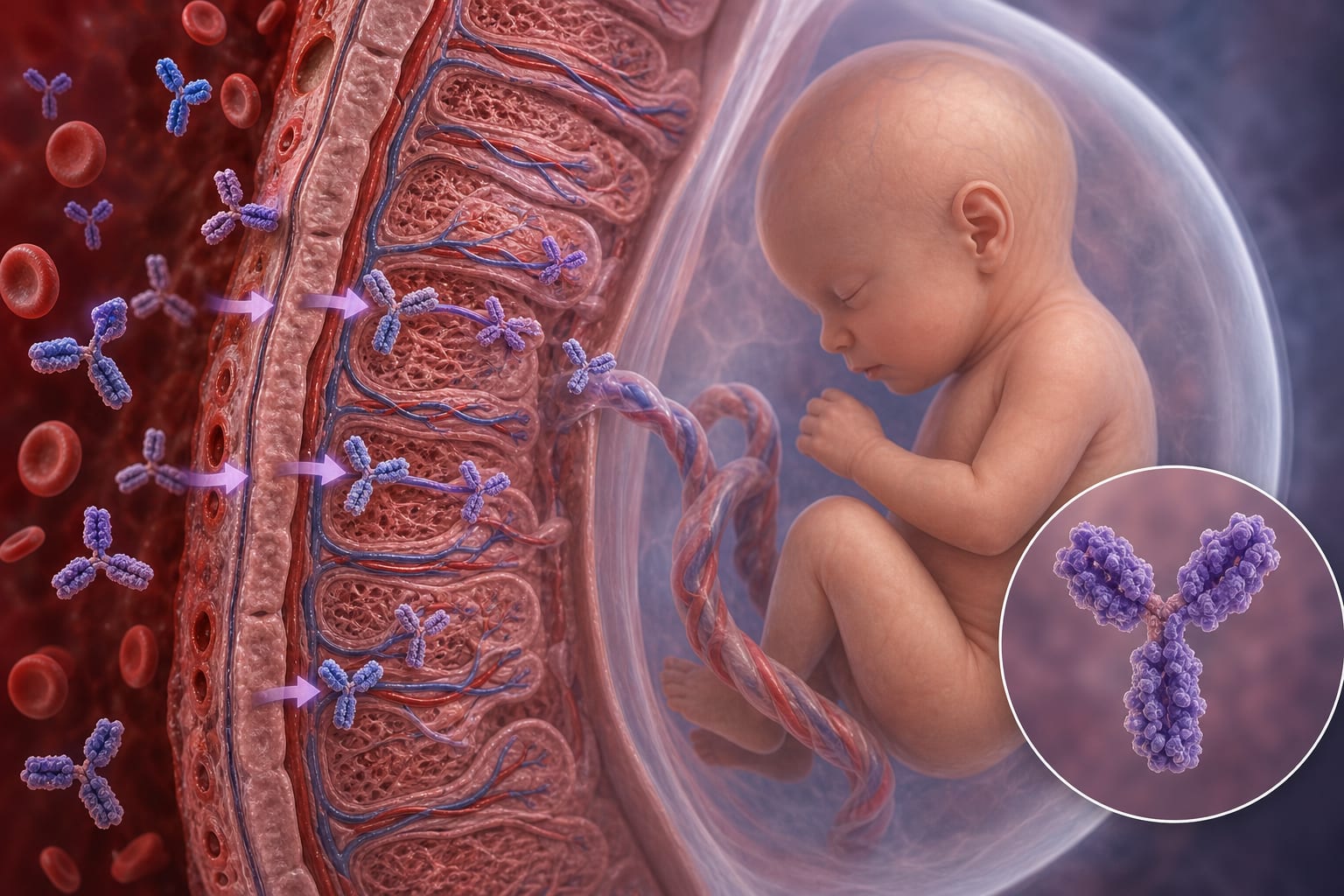
This study investigates the transfer of SARS-CoV-2 antibodies from vaccinated and infected mothers to their newborns. Findings indicate that hybrid immunity in mothers enhances antibody levels in neonates, potentially improving their early-life protection against COVID-19.
Background
Maternal vaccination against SARS-CoV-2 is crucial as it can provide passive immunity to newborns, who are particularly vulnerable to infections. Understanding the dynamics of antibody transfer is essential for optimizing maternal immunization strategies and ensuring infant health during the ongoing pandemic.
Data Highlights
Finding
Percentage
Mothers with detectable IgG
95%
Neonates acquiring antibodies trans placentally
87%
Mothers with hybrid immunity
65.5%
Key Findings
95% of mothers had detectable IgG antibodies against SARS-CoV-2.
87% of neonates acquired antibodies through transplacental transfer.
Hybrid immunity in mothers was linked to higher anti-RBD IgG levels in newborns.
Neutralizing antibodies in umbilical cord samples showed the highest capacity.
Combined natural infection and vaccination in mothers enhances neonatal passive immunity.
Clinical Implications
The findings suggest that healthcare providers should consider the maternal immunization status when assessing newborns' immunity to SARS-CoV-2. Enhanced antibody transfer from vaccinated mothers may provide critical early-life protection for infants.
Conclusion
This study highlights the importance of maternal vaccination in enhancing antibody transfer to newborns, which may play a significant role in protecting infants from COVID-19.
by J. Gómez-Carballo, R. González-Losa, L. Conde-Ferráez, C. Cen-Baas, N. Kantun-Moreno, H. Puerta-Guardo, J. A. Cruz-Cárdenas, M. E. G. Brunck, Y. Leal-Herrera, G. Valencia-Pacheco, M. García-Knight, G. Ayora-Talavera
Guideline recommends screening, diagnosis, positive airway pressure therapy, and postpartum reassessment while highlighting the very low certainty of available evidence.