Predicting Gram-negative bloodstream infection in elderly patients after isolation of GNB from non-blood specimens: a machine learning-based tool - Report - MDSpire
Advertisement
Predicting Gram-negative bloodstream infection in elderly patients after isolation of GNB from non-blood specimens: a machine learning-based tool
Clinical Report: Machine Learning for Forecasting Gram-Negative BSIs in Elderly
Overview
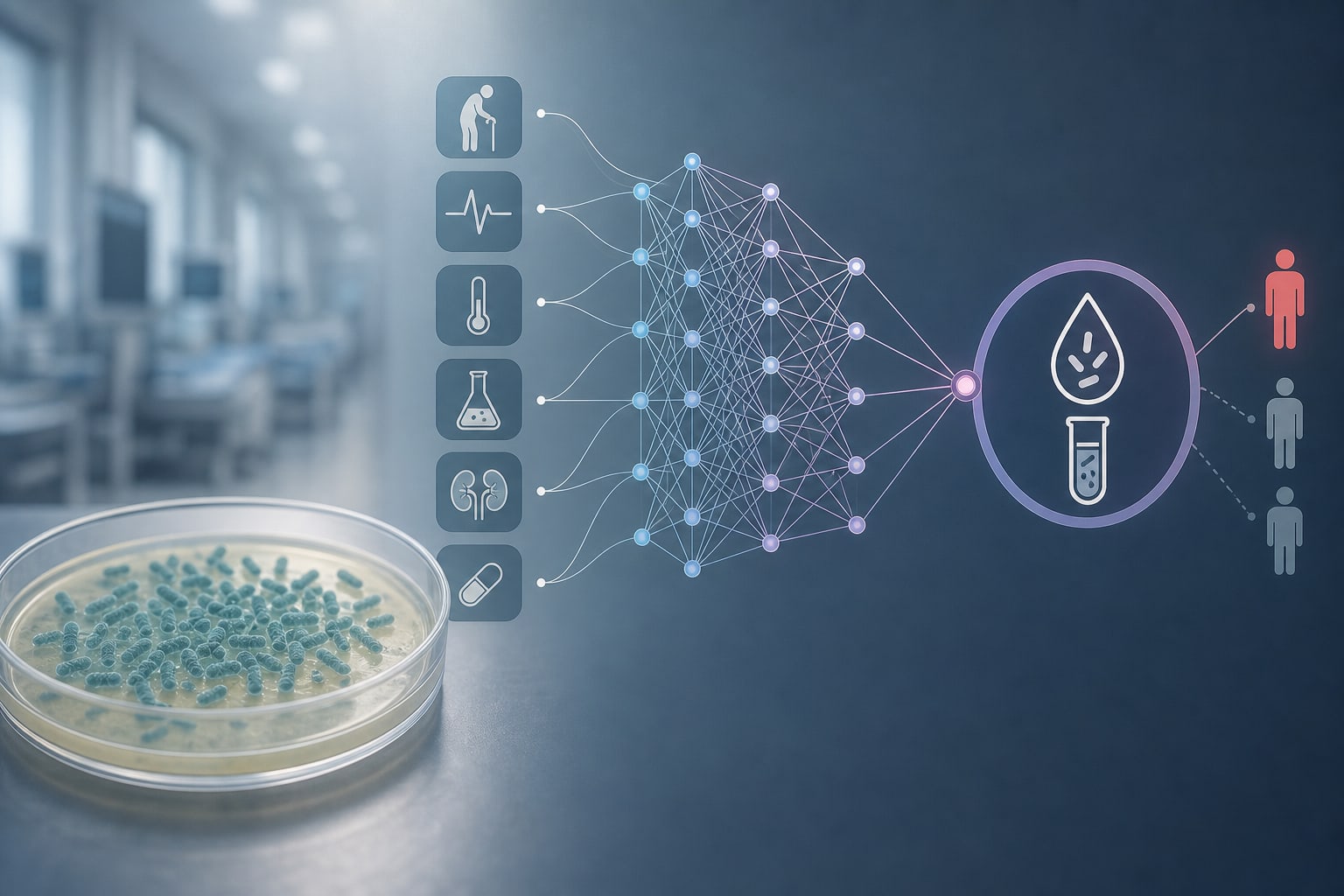
This study developed a machine learning model to identify elderly inpatients at high risk for Gram-negative bloodstream infections (GNB-BSI) following the detection of Gram-negative bacteria in non-blood samples. The XGBoost model showed optimal performance with an AUC of 0.816.
Background
Bloodstream infections (BSI) are a significant public health issue, particularly among the elderly, who are at increased risk due to multiple comorbidities and immune dysfunction. Gram-negative bacteria are the leading cause of BSI, with high incidence and mortality rates. Early identification of at-risk patients is crucial.
Data Highlights
Model
AUC
Accuracy
Recall
XGBoost
0.816 (95% CI: 0.766–0.861)
0.733
0.760
Key Findings
The study enrolled 9,646 elderly inpatients with Gram-negative bacteria positivity.
Seven predictive variables were identified: maximum procalcitonin level, max neutrophil percentage, maximum C-reactive protein level, minimum white blood cell count, venous catheter, age, and length of hospital stay.
XGBoost demonstrated optimal performance.
External validation confirmed the model's generalizability using the MIMIC-IV database.
SHAP analysis indicated maximum procalcitonin level and length of hospital stay as top predictors.
Clinical Implications
The machine learning model provides a timely tool for clinicians to identify high-risk elderly patients for GNB-BSI, potentially allowing for earlier interventions. Understanding the predictive variables can guide clinical decision-making and resource allocation.
Conclusion
The developed predictive model aids in the identification of GNB-BSI in elderly patients.