Cardiac morphology in children at 2 and 10 years of age after congenital diaphragmatic hernia repair: a comparative MRI-based analysis of ECMO and non-ECMO patients - Report - MDSpire
Conexiant’s news site is now MDSpire News. Learn more
Advertisement
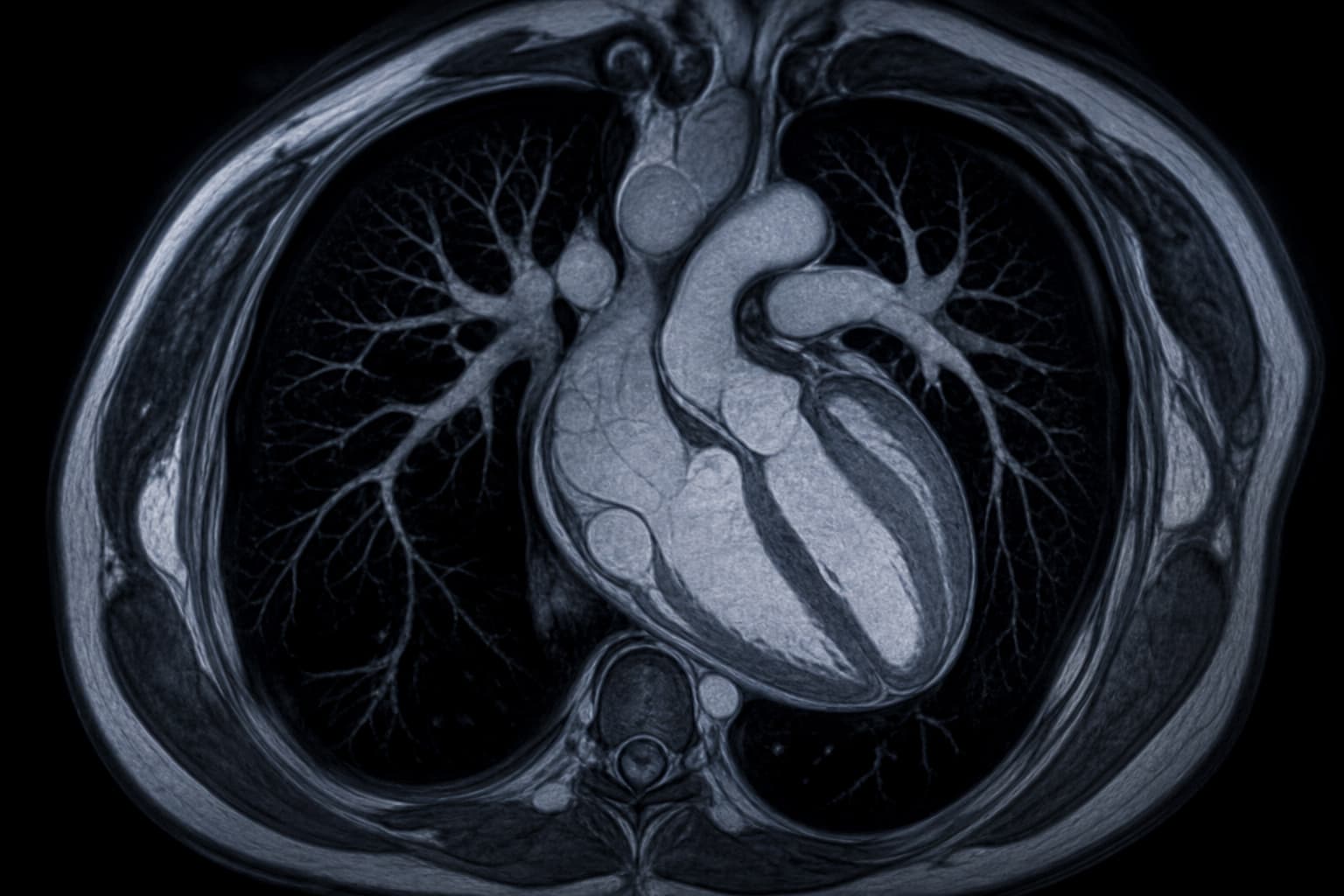
Cardiac Structure in Pediatric Patients at Ages 2 and 10 Following Repair of Congenital Diaphragmatic Hernia: A Comparative MRI Study of ECMO and Non-ECMO Cases
Clinical Report: Cardiac Structure in Pediatric Patients Following CDH Repair
Overview
This study investigates long-term cardiac alterations in pediatric patients with congenital diaphragmatic hernia (CDH) who underwent repair, comparing those who required extracorporeal membrane oxygenation (ECMO) with those who did not. MRI-derived parameters were evaluated at ages 2 and 10 to assess cardiac morphology and function.
Background
Congenital diaphragmatic hernia (CDH) is a significant congenital anomaly that can lead to severe pulmonary complications and long-term morbidity. Advances in treatment have improved survival rates, but many patients experience ongoing cardiopulmonary issues, particularly those who required ECMO.
Data Highlights
Parameter
ECMO Group (n=31)
Non-ECMO Group (n=26)
PA/Ao Ratio
Data not provided
Data not provided
RV/LV Ratio
Data not provided
Data not provided
Eccentricity Index
Data not provided
Data not provided
Key Findings
CDH affects approximately 1 in 2000–5000 live births.
PAH is a significant determinant of outcomes in CDH patients.
Patients requiring ECMO face a higher risk of long-term complications.
Postnatal ventricular disproportion is linked to increased mortality and ECMO requirement.
The study utilized MRI to assess cardiac morphology and function at ages 2 and 10.
Clinical Implications
The findings highlight the need for ongoing cardiopulmonary surveillance in CDH patients, particularly those who required ECMO. Clinicians should consider the long-term cardiac assessments as part of the follow-up care for these patients.
Conclusion
This study underscores the importance of understanding cardiac changes in pediatric CDH patients, particularly in those who underwent ECMO, to inform long-term management strategies.
by Schanas Jawhar, Greta Thater, Stefan Appelhaus, Michael Boettcher, Julia Elrod, Frank G. Zoellner, Florian Kipfmueller, Marcia Matos-Karaorman, Stefan O. Schoenberg, Meike Weis
Investigators examined Life’s Essential 8 scores and carotid ultrasonography measures across cardiovascular-kidney-metabolic stages in 1,283 young adults.
Research highlights expanding diagnostic capabilities but persistent gaps in antiviral therapy and vaccine coverage for pediatric enterovirus infections.