Single-Pass Gateway Balloon-Assisted Neuroform Atlas Stenting Without Exchange
Overview
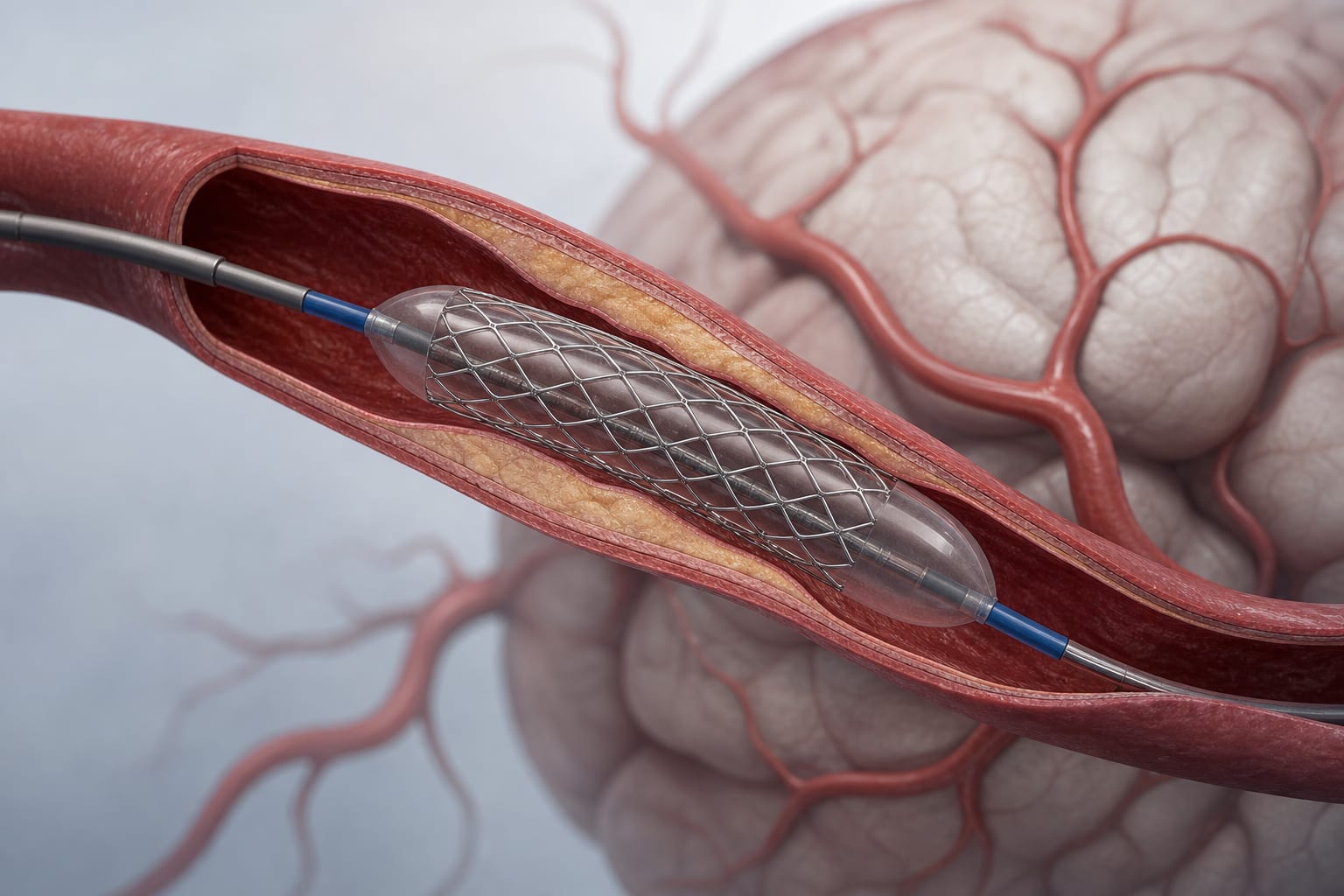
This study evaluates the safety and early angiographic outcomes of an exchange-free, single-pass Gateway balloon-assisted Neuroform Atlas stenting strategy for symptomatic high-grade intracranial atherosclerotic stenosis (sICAS). The results indicate a 100% technical success rate with low complication rates.
Background
Symptomatic high-grade intracranial atherosclerotic stenosis (sICAS) poses a significant risk for recurrent ischemic events despite optimized medical therapy. Traditional angioplasty-to-stent workflows often involve complex exchange maneuvers, which can complicate procedures in delicate brain regions. This study explores a novel stenting approach that may simplify the procedure and improve patient outcomes.
Data Highlights
Parameter
Value
Technical success rate
100%
30-day mortality rate
1.8%
Median stenosis pre-procedure
87%
Median stenosis post-procedure
21.5%
In-stent restenosis >50% at 3 months
7.1%
Key Findings
The technical success rate of the procedure was 100%.
No significant complications such as flow-limiting dissections or acute in-stent thromboses were observed.
The median stenosis improved significantly from 87% pre-procedure to 21.5% post-procedure.
In-stent restenosis >50% occurred in 7.1% of patients at 3 months.
All early in-stent restenosis events were noted in basilar artery lesions.
Clinical Implications
The exchange-free Gateway–Atlas stenting technique demonstrates a low complication rate and significant improvement in stenosis for patients with medically refractory sICAS.
Conclusion
The findings indicate that the Gateway–Atlas stenting method is associated with a favorable safety profile and significant angiographic outcomes.