Clinical Report: Thromboembolic Events in Post-COVID Syndrome
Overview
This systematic review and meta-analysis investigates the prevalence of thromboembolic events in individuals with post-COVID syndrome. The findings indicate a significant thromboembolic risk, emphasizing the need for early detection and tailored preventive treatments.
Background
Post-COVID syndrome presents a growing challenge for healthcare systems, characterized by persistent symptoms following COVID-19 infection. One major concern is the potential for a prothrombotic state, which may lead to increased risks of thromboembolic events. Understanding this relationship is crucial for informing clinical management and monitoring strategies.
Data Highlights
The systematic review included 20 studies, with 5 contributing to quantitative synthesis, revealing significant thromboembolic risks among post-COVID syndrome patients.
Key Findings
Post-COVID syndrome is associated with a heterogeneous range of symptoms persisting beyond the acute phase of infection.
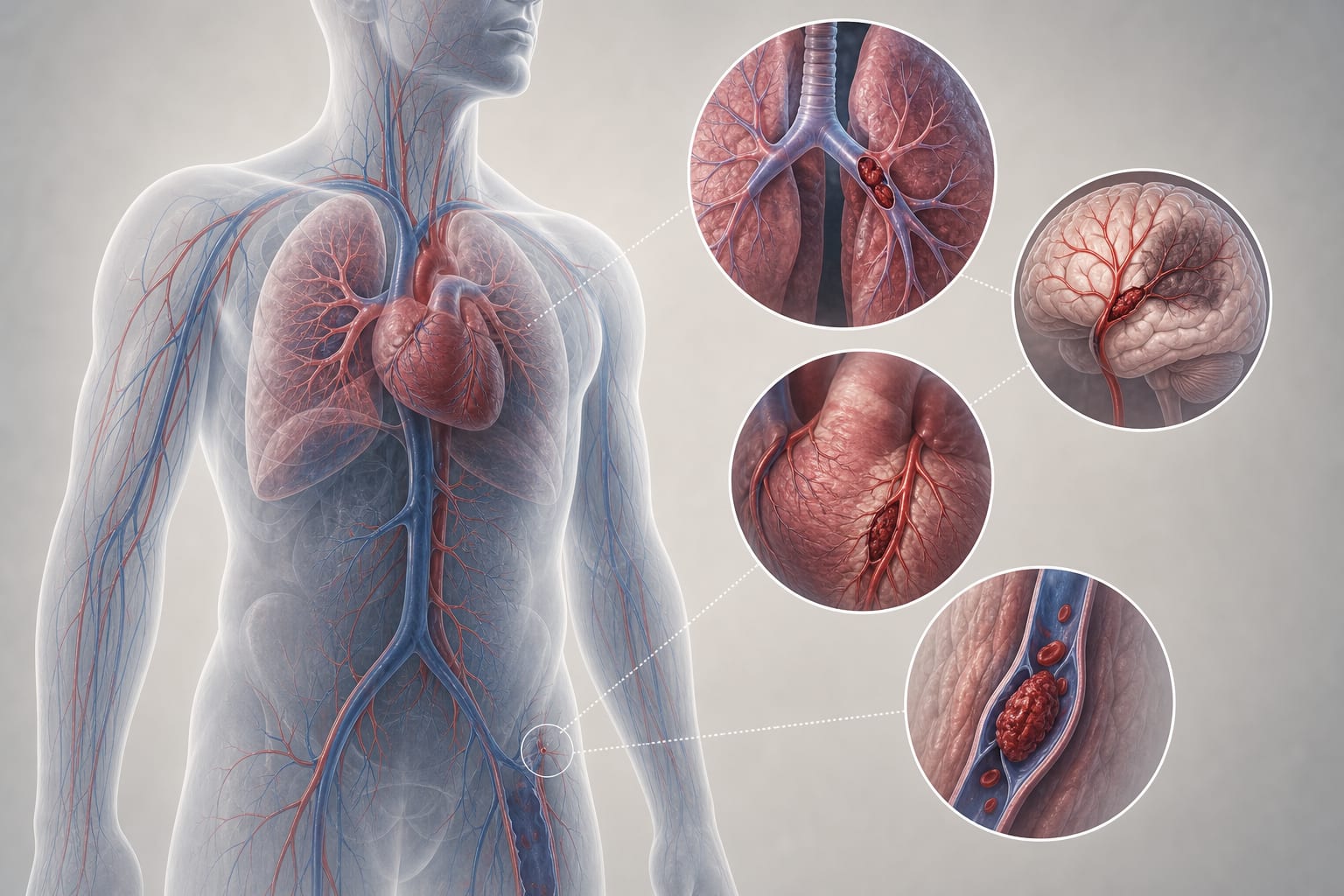
Individuals with post-COVID syndrome may experience an increased risk of venous and arterial thromboembolic events.
Elevated inflammatory markers and coagulation abnormalities during the acute phase may persist, contributing to thromboembolic risks.
Clinical manifestations of thromboembolic events can include myocardial infarction, ischemic stroke, and peripheral arterial occlusion.
Early detection and proactive monitoring are essential for managing thromboembolic risks in this population.
Clinical Implications
Healthcare providers should be vigilant in monitoring patients with post-COVID syndrome for thromboembolic events. Tailored preventive treatments, including anticoagulant therapy, may be necessary for at-risk individuals.
Conclusion
The findings highlight a significant thromboembolic risk in patients with post-COVID syndrome, necessitating further research and clinical attention.
by Jesús Endara-Mina, Cristopher-Josue Escudero, Cesar Intriago, Lisseth Coloma-Ramirez, Wilson Cabrera, Rosa Gonzaga, Sebastian Fuentes, Dario Chicaiza, Carlos Carvajal, Rafael Lopez-Carrera, Belen Baño-Jimenez, Jordy Ruilova, Erick Atahualpa, Josue Aldaz, Mayuri Quishpe, Katherine Simbaña-Rivera