Treatment outcomes of antegrade versus retrograde approaches in tandem occlusion: a single-center retrospective study from Vietnam - Report - MDSpire

Treatment outcomes of antegrade versus retrograde approaches in tandem occlusion: a single-center retrospective study from Vietnam

  • By

  • Tuan Anh Tran

  • Ton Duy Mai

  • Anh Minh Nguyen

  • Hoa Thi Truong

  • June 24, 2026

  • 0 min

Share

Comparative Analysis of Antegrade and Retrograde Techniques in Tandem Occlusion Management

Overview

This study compares the clinical and angiographic outcomes of antegrade and retrograde endovascular approaches in patients with tandem occlusion.

Background

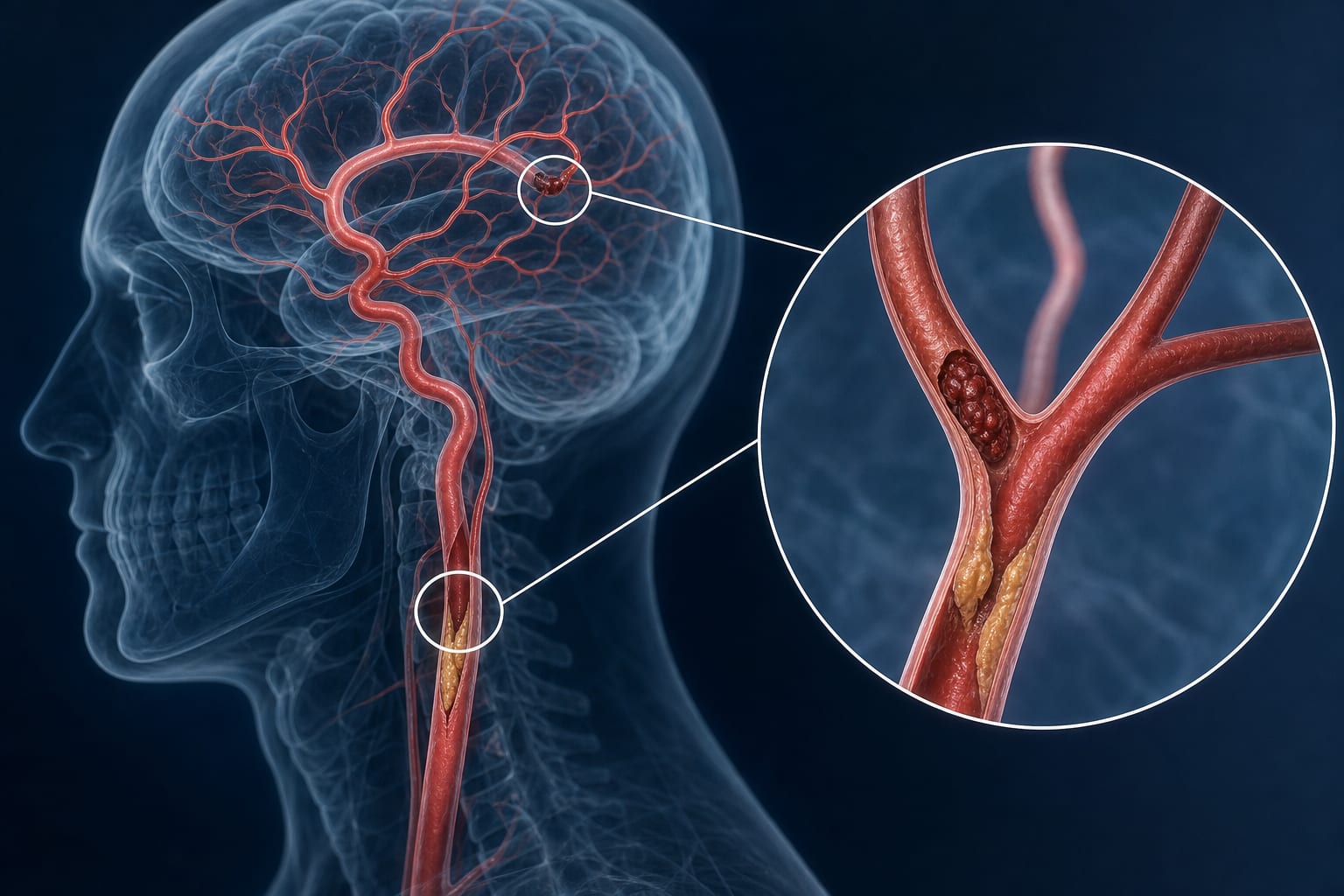
Tandem occlusion is a critical condition characterized by concurrent extracranial and intracranial arterial occlusion, often leading to poor clinical outcomes. The optimal treatment strategy remains controversial, with varying practices regarding antegrade and retrograde approaches. Understanding the efficacy of these techniques is essential for improving patient management in acute ischemic stroke.

Data Highlights

OutcomeAntegradeRetrogradeP-value
Successful Reperfusion (mTICI ≥2b)94.6%91.9%N/A
Favorable Functional Outcome (mRS ≤ 2) at 90 days45.9%40.5%0.639
Symptomatic Intracerebral Hemorrhage (sICH)8.1%N/A0.999
Mortality10.8%N/A0.999

Key Findings

  • The median age of patients was 67 years, with a predominance of males (81.1%).
  • Hypertension was present in 36.5% of patients.
  • Successful reperfusion rates were 94.6% for the antegrade group and 91.9% for the retrograde group.
  • Favorable functional outcomes at 90 days were observed in 45.9% of the antegrade group and 40.5% of the retrograde group (p = 0.639).
  • Symptomatic intracerebral hemorrhage occurred in 8.1% of patients, with no significant difference between groups (p = 0.999).
  • Overall mortality was 10.8%, with no significant difference between the two approaches (p = 0.999).

Clinical Implications

The findings suggest that both antegrade and retrograde techniques yield comparable outcomes in terms of reperfusion success and functional recovery. Clinicians may consider operator preference and individual patient anatomy when selecting a procedural approach.

Conclusion

This study indicates no significant advantage of either antegrade or retrograde techniques in managing tandem occlusions.
Related Resources & Content

  1. Author(s)/Org, Source, Year -- Title
  2. Emergent Carotid Stenting for Acute Anterior Circulation Ischemic Stroke With Tandem Lesions | Neurology
  3. Emergent Carotid Stenting for Acute Anterior Circulation Ischemic Stroke With Tandem Lesions: The Multicenter CERES-TANDEM Study - PubMed
  4. compendium — Comparison of Different Centric Relation Recording Techniques Using a Digital Occlusal Analyzer: An In Vivo Study
  5. Frontiers in Ophthalmology — Adjunctive ab-interno goniotomy in chronic angle-closure glaucoma: a retrospective proof-of-concept pilot study using doubly robust learning
  6. Evaluation of Endovascular Approaches for Treating Anterior Choroidal Aneurysms: Insights from a Single-Center Study Involving 80 Cases
  7. Comparative Analysis of Percutaneous Balloon Compression versus Radiofrequency Thermocoagulation in Treating Trigeminal Neuralgia
  8. Endovascular Management of Tandem Occlusions: Current Evidence and Future Directions - PMC
  9. ESO annual stroke evidence update 2025 | European Stroke Journal | Oxford Academic
  10. Immediate Carotid Artery Stenting or Deferred Treatment in Patients With Tandem Carotid Lesions Treated Endovascularly for Acute Ischaemic Stroke - ScienceDirect
  11. Emergent Carotid Artery Stenting in Patients With Acute Ischemic Stroke With Tandem Lesions: One-Year Follow-Up Results From the SECURIS Study - PubMed
  12. Emergent Carotid Stenting for Acute Anterior Circulation Ischemic Stroke With Tandem Lesions | Neurology
  13. Emergent Carotid Stenting for Acute Anterior Circulation Ischemic Stroke With Tandem Lesions: The Multicenter CERES-TANDEM Study - PubMed
  14. PRESS RELEASE
  15. Effects of Emergent Carotid Stenting Performed before or after Mechanical Thrombectomy in the Endovascular Management of Patients with Tandem Lesions: A Multicenter Retrospective Matched Analysis - PubMed
  16. Abstract 145: Antegrade Versus Retrograde Approach In Endovascular Treatment For Large Vessel Occlusion Stroke With Tandem Lesions: Updated Meta‐Analysis Of 2,897 Patients - PMC
  17. Safety, efficacy and timing of antithrombotic therapy in emergency stenting of acute stroke patients with tandem lesions, German multicenter data-analysis
  18. Emergency carotid artery stenting during endovascular treatment of tandem lesions in acute ischemic stroke: a single-center retrospective study | CVIR Endovascular | Springer Nature Link

Original Source(s)

Related Content