Clinical Report: Sustained Efficacy of AAV Vector-Based SARS-CoV-2 Prevention
Overview
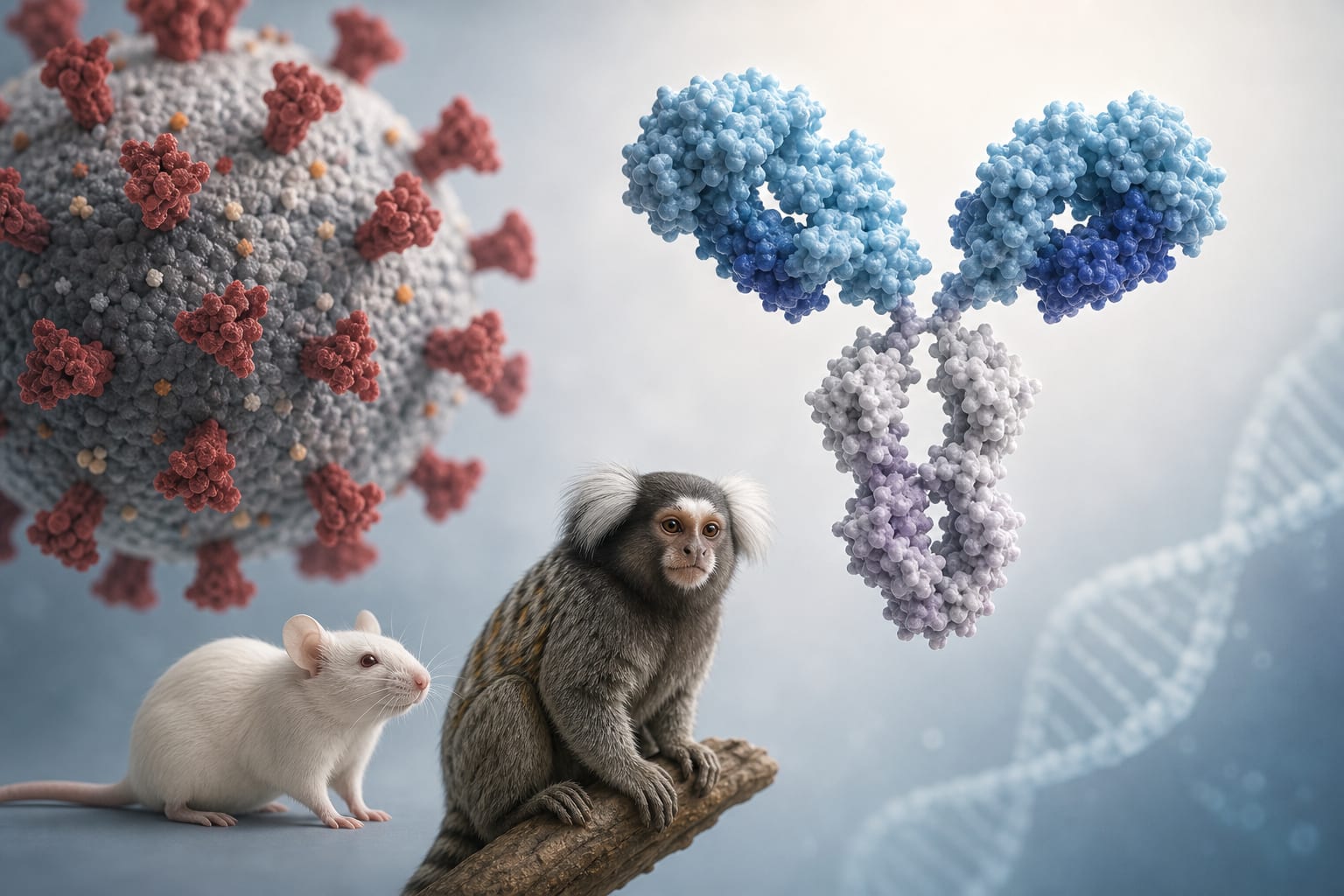
This study evaluates the long-term efficacy of an rAAV vector delivering the P2C5-Fc antibody in murine models and common marmosets. Results indicate sustained antibody expression and protective efficacy against SARS-CoV-2 variants for over a year.
Background
The COVID-19 pandemic has highlighted the need for effective preventive strategies against SARS-CoV-2, particularly for high-risk populations. Traditional vaccines may not provide adequate protection due to rapid viral evolution and immune evasion. rAAV-mediated delivery of neutralizing antibodies offers a promising alternative for long-term prophylaxis.
Data Highlights
Species
Peak Antibody Detection (Days)
Duration of Protective Levels (Days)
Mice
120
480+
Marmosets
120
1120
Key Findings
Single intramuscular injection of rAAV-P2C5-Fc resulted in rapid antibody production.
Peak serum concentrations were reached by approximately 120 days.
Neutralizing titers provided complete protection against lethal SARS-CoV-2 challenges for up to 460 days in mice.
Biodistribution showed minimal off-target spread, with predominant localization at the injection site and lymph nodes.
Moderate anti-AAV capsid antibody responses were detected, while anti-drug antibodies against P2C5-Fc remained undetectable.
Clinical Implications
The findings suggest that rAAV vectors could serve as a viable option for long-term SARS-CoV-2 prophylaxis, particularly in immunocompromised populations. Further studies are needed to evaluate the safety and efficacy in human subjects.
Conclusion
This study supports the potential of rAAV-mediated antibody delivery as a durable immunoprophylaxis strategy against SARS-CoV-2, warranting further investigation in clinical settings.
by Ekaterina I. Ryabova, Artem A. Derkaev, Ilias B. Esmagambetov, Mikhail A. Dovgiy, Ilya V. Gordeychuk, Inna V. Shuliakova, Rosa M. Hossain, Anton A. Blinov, Anna A. Iliukhina, Daria M. Grousova, Ilya D. Zorkov, Daria V. Avdoshina, Stanislav A. Gulyaev, Vasiliy D. Apolokhov, Tatiana V. Gulyaeva, Irina A. Favorskaya, Dmitry V. Shcheblyakov, Alexander L. Gintsburg, Denis Y. Logunov