Spatial immune archetypes in gastric and colorectal cancer: a proposed conceptual framework for immunotherapy resistance and therapeutic remodeling - Report - MDSpire
Advertisement
Spatial immune archetypes in gastric and colorectal cancer: a proposed conceptual framework for immunotherapy resistance and therapeutic remodeling
Clinical Report: Immune Spatial Patterns in Gastric and Colorectal Cancers
Overview
This report discusses the spatial immune archetypes in gastric and colorectal cancers, highlighting the mechanisms of immune evasion in MSS/pMMR tumors. It emphasizes the need for a deeper understanding of tissue architecture to improve immunotherapy outcomes.
Background
Gastric and colorectal cancers are significant contributors to global cancer mortality, with most patients exhibiting primary resistance to immune checkpoint inhibitors. Understanding the tumor microenvironment's role in immune evasion is crucial for developing effective therapies, particularly for the majority of patients with MSS/pMMR disease who do not respond to current immunotherapies.
Data Highlights
No numerical data or trial data provided in the source material.
Key Findings
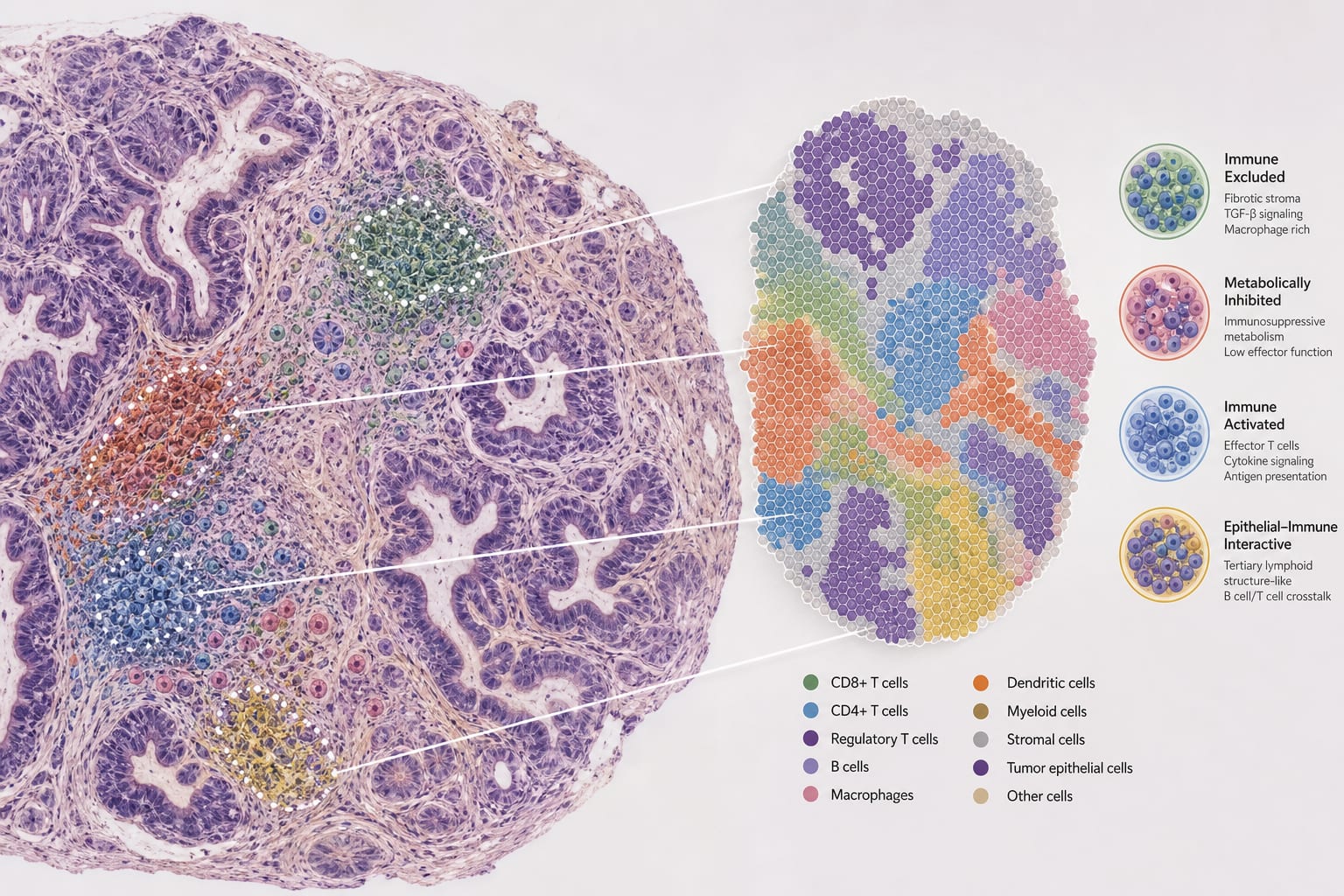
Immunotherapy outcomes in gastric and colorectal cancers are influenced by spatial immune archetypes rather than lymphocyte abundance alone.
Four spatial immune archetypes were identified: stromal-excluded barrier niche, myeloid-suppressive metabolic niche, inflamed lymphoid-reactive niche, and epithelial-immune interface niche.
Microbial ecologies, such as H. pylori and F. nucleatum, shape the prevalence of these archetypes in gastric and colorectal cancers.
Current profiling methods fail to capture the complexity of tissue architecture, which is critical for understanding immune responses.
Targeted microenvironment-remodeling strategies may enhance the efficacy of immunotherapy in historically refractory MSS/pMMR gastrointestinal cancers.
Clinical Implications
The findings suggest that clinicians should consider the spatial immune architecture when evaluating treatment options for gastric and colorectal cancers. Developing archetype-guided spatial biomarkers could lead to more effective immunotherapeutic strategies for patients with MSS/pMMR tumors.
Conclusion
A comprehensive understanding of immune spatial patterns is essential for improving immunotherapy outcomes in gastric and colorectal cancers. Future research should focus on translating these insights into clinical practice.