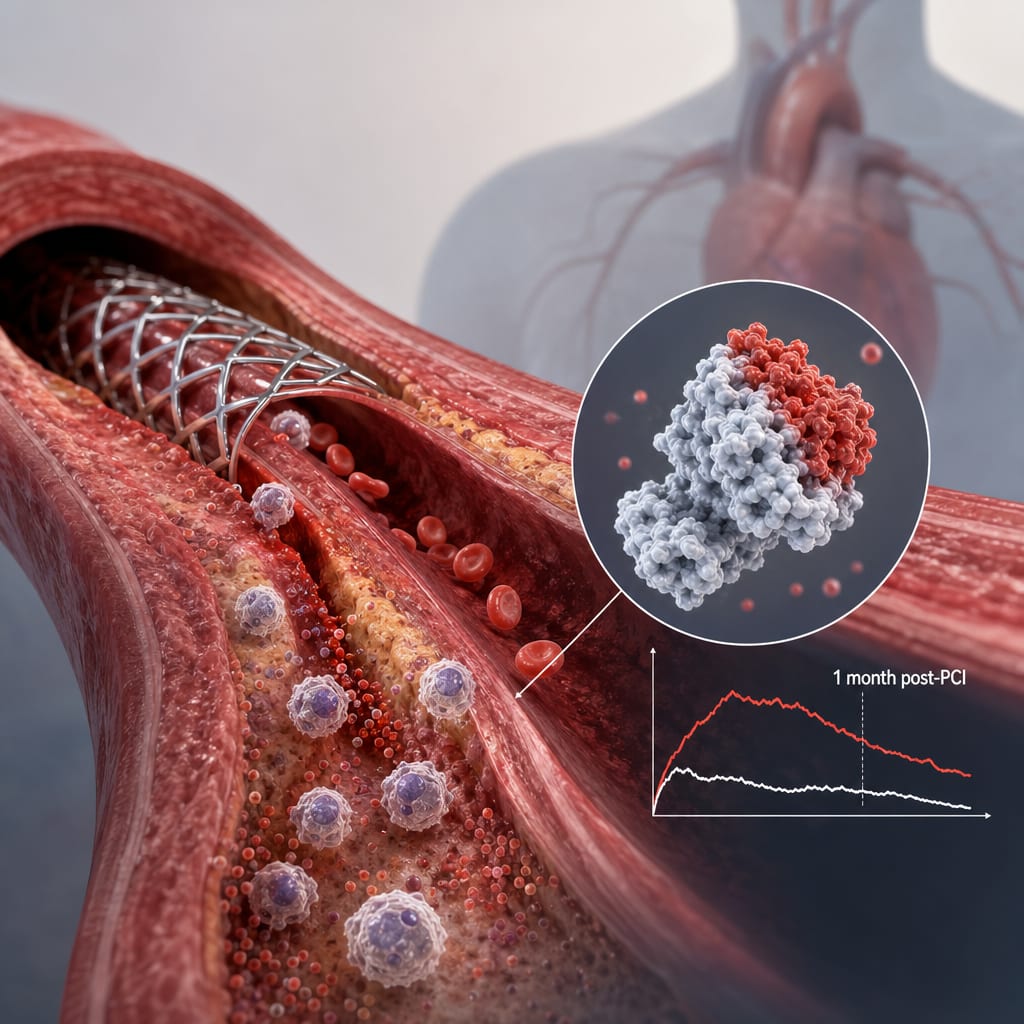
Clinical Report: Ongoing Residual Inflammatory Risk One Month Post-PCI
Overview
This report highlights the significant prevalence of ongoing residual inflammatory risk (RIR) in patients one month after contemporary percutaneous coronary intervention (PCI), with approximately 43% exhibiting elevated hsCRP levels. Persistent RIR is linked to increased risks of major adverse cardiovascular events (MACE) and all-cause mortality, underscoring the need for regular hsCRP monitoring and dual-target treatment strategies.
Background
Despite advancements in PCI techniques and lipid-lowering therapies, a notable percentage of patients continue to experience recurrent MACE. This indicates that coronary atherosclerosis is not solely driven by lipid levels but is also influenced by inflammation. Monitoring residual inflammatory risk through hsCRP levels may provide critical insights for improving patient outcomes post-PCI.
Data Highlights
Outcome
Risk Ratio (RR)
Confidence Interval (CI)
12-month MACE
1.64
1.33–2.03
All-cause mortality
3.25
2.49–4.25
Non-fatal myocardial infarction
1.46
1.00–2.12
Non-fatal stroke
1.64
1.14–2.37
Key Findings
43% of patients exhibit persistent high RIR (hsCRP ≥2 mg/L) one month post-PCI.
Elevated hsCRP at one month is an independent predictor of 12-month MACE (RR 1.64).
Persistent RIR correlates with a 3.25-fold increase in all-cause mortality.
Isolated residual inflammatory risk shows the highest 1-year MACE rate (5.1%) compared to other risk categories.
Routine hsCRP reassessment at one month is suggested for optimal secondary prevention.
Clinical Implications
Healthcare providers should consider regular hsCRP monitoring one month after PCI to identify patients at risk for recurrent cardiovascular events. Implementing a dual-target treatment strategy that addresses both LDL-C and hsCRP levels may enhance secondary prevention efforts and improve patient outcomes.
Conclusion
The findings underscore the importance of addressing residual inflammatory risk in patients post-PCI, advocating for a dual-target approach to optimize cardiovascular risk management.
The nurse practitioner profession claims the No. 1 spot across three categories in the U.S. News & World Report 2026 Best Jobs rankings for the third consecutive year.