Successful management of life-threatening acute pulmonary embolism during anesthesia induction for comminuted intertrochanteric fracture surgery: a case report - Report - MDSpire
Advertisement
Successful management of life-threatening acute pulmonary embolism during anesthesia induction for comminuted intertrochanteric fracture surgery: a case report
Clinical Report: Effective Intervention for Critical Acute Pulmonary Embolism
Background
Acute perioperative pulmonary embolism (APE) is a significant complication in elderly patients, particularly those with major fractures requiring prolonged immobilization. The risk of venous thromboembolism (VTE) increases with age and is exacerbated by comorbidities and delays in surgical intervention. Understanding the management of APE is crucial for improving outcomes in this vulnerable population. Recent studies indicate that advanced age is a powerful independent risk factor for preoperative deep vein thrombosis (DVT), driven by a hypercoagulable state and systemic inflammation.
Data Highlights
No numerical data or trial data available in the source material, which limits the generalizability of the findings.
Key Findings
The patient exhibited a profound hypercoagulable state prior to anesthesia induction.
Sudden cardiovascular collapse occurred immediately after induction, with new-onset atrial fibrillation and right bundle branch block.
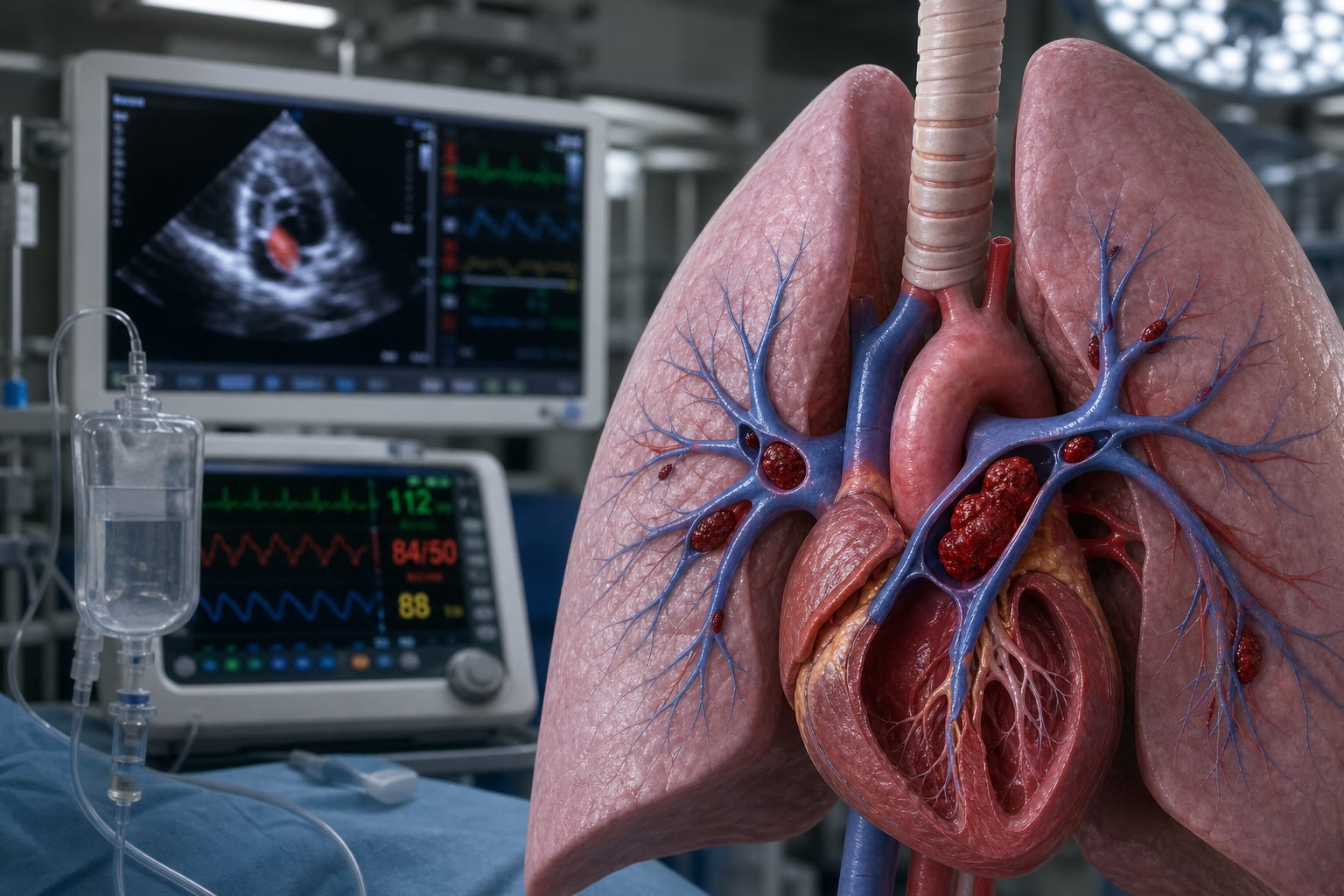
Bedside echocardiography confirmed right ventricular enlargement due to massive APE.
Emergency low-dose systemic thrombolysis (50 mg alteplase) was successfully administered.
Post-thrombolysis evaluations indicated consumptive coagulopathy and transient anemia, managed with supportive care.
The patient achieved complete clinical recovery at one-year follow-up.
Clinical Implications
Intraoperative monitoring using point-of-care ultrasound and ECG is essential for early detection of APE in high-risk patients. However, the risks associated with low-dose systemic thrombolysis should be carefully considered.
Conclusion
This case highlights the need for rapid recognition and intervention in cases of APE during anesthesia induction.