Even mild elevations of C-reactive protein levels predict long-term prognosis in heart failure with mildly reduced ejection fraction - Report - MDSpire
Advertisement
Even mild elevations of C-reactive protein levels predict long-term prognosis in heart failure with mildly reduced ejection fraction
Clinical Report: Mild Increases in C-Reactive Protein Levels Indicate Long-Term Outcomes in Heart Failure with Mildly Reduced Ejection Fraction
Overview
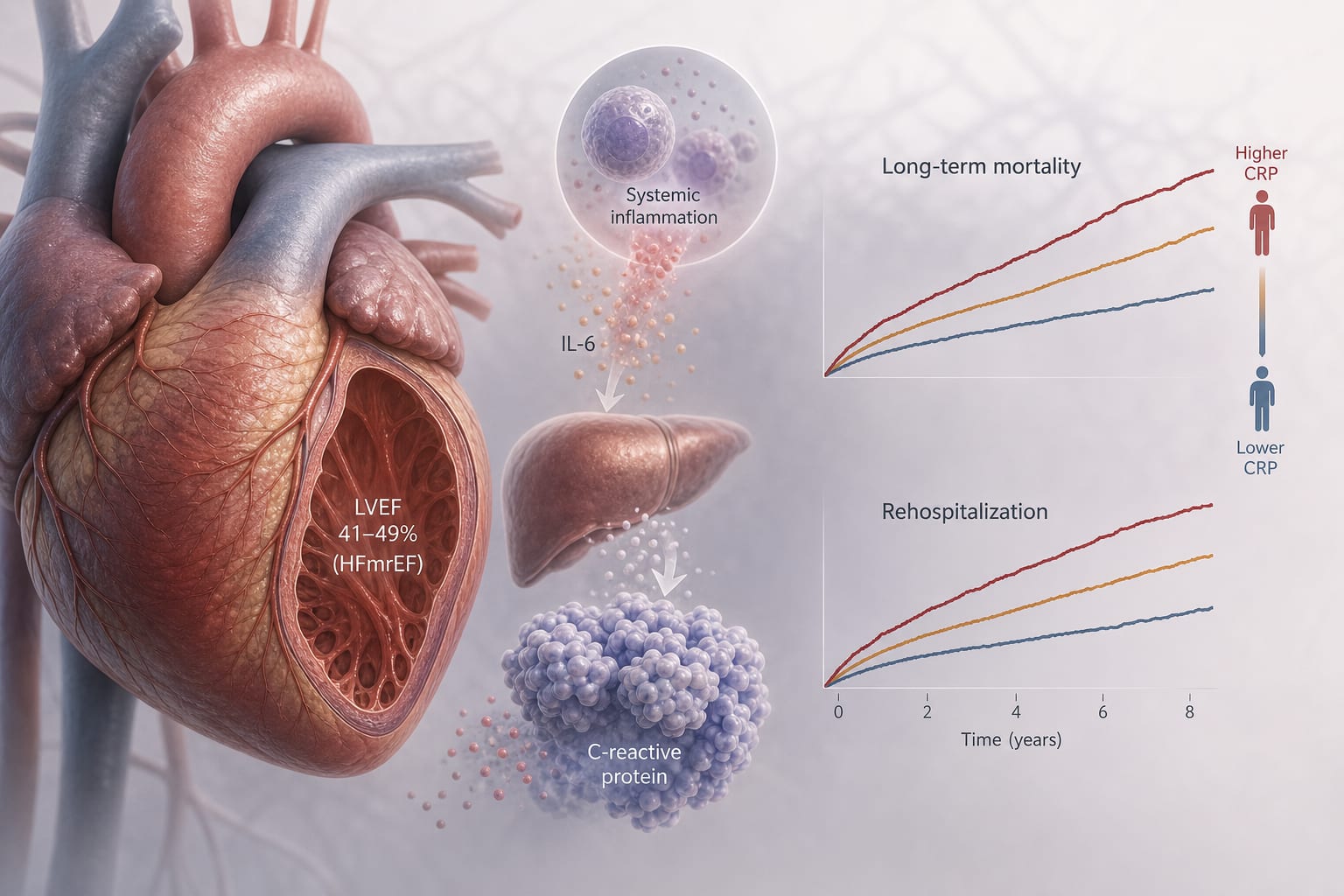
This study investigates the prognostic impact of C-reactive protein (CRP) levels in patients with heart failure with mildly reduced ejection fraction (HFmrEF). Elevated CRP levels were associated with long-term all-cause mortality and heart failure-related rehospitalization in this patient population.
Background
Heart failure (HF) is a significant cause of morbidity and mortality, with HFmrEF representing a notable subgroup that is often underrepresented in clinical studies. Understanding the role of inflammatory markers like CRP in this population is crucial, as systemic inflammation is a recognized feature of heart failure and may influence patient outcomes. This study aims to fill the evidence gap regarding the long-term prognostic value of CRP in HFmrEF patients.
Data Highlights
No specific numerical data or trial results were provided in the source material.
Key Findings
HFmrEF patients represent about one quarter of the heart failure population.
CRP is linked to adverse outcomes in heart failure, including mortality and rehospitalization.
Elevated baseline CRP levels were found in patients with stable heart failure.
CRP levels at 30 days post-admission were associated with all-cause mortality at 180 days in acute heart failure patients.
The study was conducted at a single center and included patients hospitalized with HFmrEF from January 2016 to December 2022.
Clinical Implications
Monitoring CRP levels in patients with HFmrEF may provide valuable prognostic information regarding long-term outcomes. Clinicians should consider the inflammatory status of these patients when assessing their risk for adverse events.
Conclusion
The findings suggest that CRP levels may serve as a useful prognostic marker in patients with HFmrEF, highlighting the need for further research in this area.
by Jonas Dudda, Michael Behnes, Michelle Goertz, Felix Lau, Alexander Schmitt, Marielen Reinhardt, Noah Abel, Svetlana Hetjens, Daniel Duerschmied, Mohammad Abumayyaleh, Ibrahim Akin, Tobias Schupp