Social anxiety but not callous-unemotional traits predicts shame coping in conduct disorder - Report - MDSpire

Social anxiety but not callous-unemotional traits predicts shame coping in conduct disorder

  • By

  • Laura M. Derks

  • Kelly Melvin-Hilmer

  • Martin Holtmann

  • Tanja Legenbauer

  • June 11, 2026

  • 0 min

Share

Social Anxiety Influences Shame Coping Mechanisms in Conduct Disorder

Overview

Revise to clarify the relationship between callous-unemotional traits and shame coping mechanisms.

Background

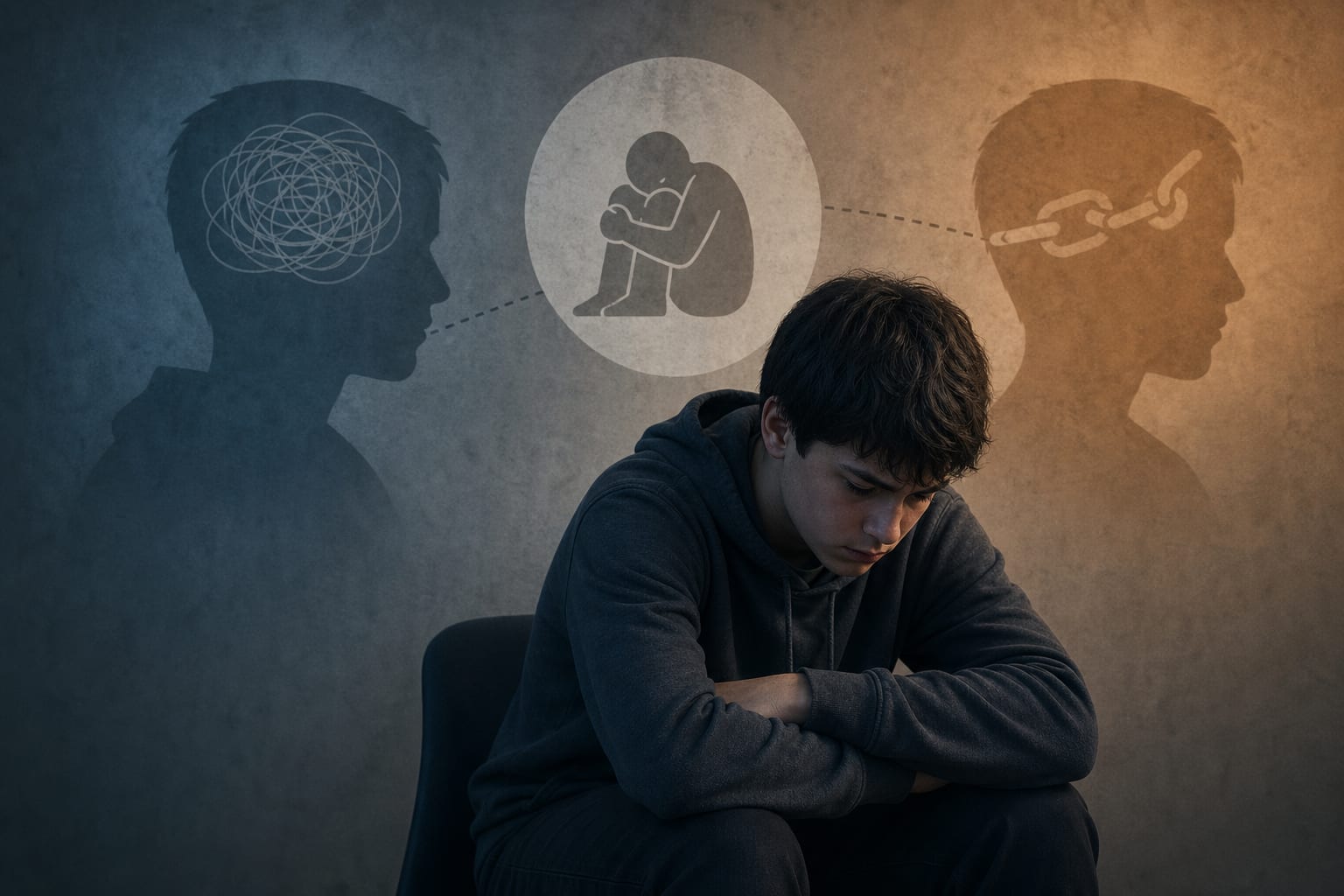
Conduct disorders are marked by emotional dysregulation, with heightened levels of callous-unemotional traits and social anxiety. Understanding the interplay between these traits and emotional responses like shame is crucial for developing effective interventions. This research highlights the importance of addressing social anxiety in therapeutic contexts for adolescents with conduct disorder.

Data Highlights

No numerical data available.

Key Findings

  • Social anxiety positively correlates with shame proneness in adolescents with conduct disorder.
  • Social anxiety is a significant predictor of internalizing shame coping strategies.
  • Callous-unemotional traits do not correlate with shame proneness or shame coping mechanisms.
  • No predictors were identified for externalizing shame coping in this population.
  • Mediation analyses showed that neither shame proneness nor social anxiety mediated the relationship between CU traits and shame coping.

Clinical Implications

Clinicians should focus on addressing social anxiety in adolescents with conduct disorder to improve emotional regulation and coping strategies. The lack of association between callous-unemotional traits and shame coping suggests that interventions may need to prioritize anxiety management rather than focusing solely on CU traits.

Conclusion

The findings underscore the pivotal role of social anxiety in shaping shame coping mechanisms in conduct disorder, indicating a need for targeted therapeutic approaches.

Related Resources & Content

  1. Frontiers, 2026 -- Social Anxiety but not Callous-Unemotional Traits Predicts Shame Coping in Conduct Disorder
  2. NICE guideline CG158, 2026 -- April 2026 exceptional surveillance of antisocial behaviour and conduct disorders in children and young people: recognition and management
  3. BMC Psychiatry (Springer) — Psychological Factors Associated with Nonsuicidal Self-Injury in Women Diagnosed with Borderline Personality Disorder: A Cross-Sectional Analysis to Guide Mindfulness-Based Treatments
  4. BMC Psychiatry (Springer) — The Impact of Childhood Trauma on Non-Suicidal Self-Injury in Depressed Children and Adolescents: Investigating the Roles of Shame and Gender Differences
  5. BMC Psychiatry (Springer) — Dominant depressive temperament and psychological resilience in obsessive-compulsive disorder
  6. BMC Psychiatry (Springer) — Emotional Reactivity and Regulation in Children and Adolescents with Diagnostic and Trait-Level ADHD: A Cross-Sectional Analysis
  7. April 2026 exceptional surveillance of antisocial behaviour and conduct disorders in children and young people: recognition and management (NICE guideline CG158)
  8. Psychosocial Interventions for Disruptive Behavior in Children and Adolescents: A Meta-Analysis | Pediatrics | American Academy of Pediatrics
  9. Frontiers | Social Anxiety but not Callous-Unemotional Traits Predicts Shame Coping in Conduct Disorder

Original Source(s)

Related Content